CEC projects bring together experts, governments and communities to share knowledge, build capacity, pilot scalable solutions and strengthen cooperation.
Explore in-depth reports, scientific and technical analyses, case studies and practical resources addressing North America’s most pressing environmental challenges.
Home » Events » Join CEC’s Public Forums in Oaxaca, Mexico: Trinational Indigenous Forum & JPAC Public Forum, 27-29 November 2023
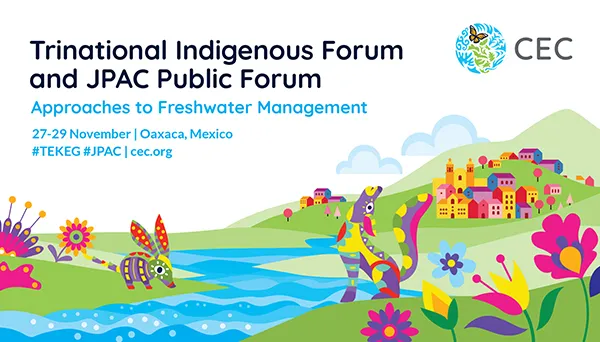
Join CEC’s Public Forums in Oaxaca, Mexico: Trinational Indigenous Forum & JPAC Public Forum, 27-29 November 2023
The Commission for Environmental Cooperation (CEC) Traditional Ecological Knowledge (TEK) Expert Group and Joint Public Advisory Committee (JPAC) are pleased to invite all interested groups and individuals to participate in two public forums in Oaxaca, Mexico from 27 to 29 November 2023.
The environmental challenges we face today, as a result of climate change, biodiversity loss and pollution, are impacting the whole of society, but Indigenous Peoples and local communities as well as marginalized and vulnerable populations are experiencing these impacts much more deeply.
Properly managing freshwater resources to address increased pollution, habitat degradation, and extreme weather events, among other emerging challenges, has never been more critical. Across North America, protecting this precious resource is a shared concern for communities, governments and industry. Indigenous-led and community-led conservation efforts to sustainably manage land and waters, as well as drive nature-positive outcomes, have never been more crucial.
Agenda
27 November 2023
Trinational Forum on Indigenous Approaches to Freshwater Management in North America
Traditional ecological knowledge (TEK) plays a key role in ensuring the sustainable and responsible use of our planet’s most vital resource—fresh water. By recognizing the need to respect Indigenous rights and self-determination, the importance of TEK and by collaborating with Indigenous governments and communities, we can promote inclusive, equitable, and resilient freshwater management practices, protecting water for present and future generations.
The Trinational Forum on Indigenous Approaches to Freshwater Management seeks to explore the vital role of Traditional Ecological Knowledge, Indigenous stewardship practices and the intersection with Indigenous rights in freshwater management across North America.
Time Zone: Central Mexico
8:00–9:00
Registration of Public Participants
9:00–9:15
Salón Tehuantepec, Hotel Misión Oaxaca
Welcoming Ceremony
9:15–920
Forum Overview
Julian Portilla
Forum Facilitator and Consultant in Mediation, Facilitation and Multistakeholder Consensus-building Processes
Julian Portilla
Forum Facilitator and Consultant in Mediation, Facilitation and Multistakeholder Consensus-building Processes
Kathy L. Hodgson-Smith is a Saskatoon lawyer who practices criminal and Aboriginal law, as well as on behalf of the Métis Legal Research Education Foundation. She has litigated in all levels of court including the Provincial Court and Court of Queen’s Bench in Saskatchewan, the Courts of Appeal in Saskatchewan and Alberta, the Federal Court of Appeal, and as co-counsel at the Supreme Court of Canada.
She has worked on various national policy initiatives for the Métis National Council (MNC), including the Aboriginal Human Resources Development Agreement Strategy, Canada-Aboriginal Peoples Roundtables, the Kelowna Accord, and Post-Powley. She has also given evidence at the Canadian Aboriginal Affairs Standing Committee on the effects of McIvor decision on the Métis. She has researched and presented on Métis Aboriginal rights law and traditional knowledge at local, provincial, national, and international forums and conducted research for the Royal Commission on Aboriginal Peoples, the Canadian Education Association and the Canada Council on Learning and conducts traditional land-use studies for the Métis.
Internationally, she also represents the MNC on the United Nations World Intellectual Property Organization (WIPO) Committee on the Protection of Indigenous Traditional Knowledge and Genetic Resources, and on the Canadian Delegation to the Convention on Biological Diversity.
She has chaired a number of committees, including the MNC National Research Strategy and Urban Aboriginal Strategy committee, National Environment Committee, in addition to the Canadian Standards Association Technical Committee, which established a national standard for the operation of Mètis Nation Registries.
9:30–11:00
Session 1 – Traditional Ecological Knowledge (TEK) and Freshwater Management: CEC Case Studies
This panel will focus on how Indigenous communities in North America have developed and utilized traditional ecological knowledge to manage freshwater. It will feature the three project case studies and a concluding comparative analysis by the TEKEG Facilitator.
Kathy L. Hodgson-Smith is a Saskatoon lawyer who practices criminal and Aboriginal law, as well as on behalf of the Métis Legal Research Education Foundation. She has litigated in all levels of court including the Provincial Court and Court of Queen’s Bench in Saskatchewan, the Courts of Appeal in Saskatchewan and Alberta, the Federal Court of Appeal, and as co-counsel at the Supreme Court of Canada.
She has worked on various national policy initiatives for the Métis National Council (MNC), including the Aboriginal Human Resources Development Agreement Strategy, Canada-Aboriginal Peoples Roundtables, the Kelowna Accord, and Post-Powley. She has also given evidence at the Canadian Aboriginal Affairs Standing Committee on the effects of McIvor decision on the Métis. She has researched and presented on Métis Aboriginal rights law and traditional knowledge at local, provincial, national, and international forums and conducted research for the Royal Commission on Aboriginal Peoples, the Canadian Education Association and the Canada Council on Learning and conducts traditional land-use studies for the Métis.
Internationally, she also represents the MNC on the United Nations World Intellectual Property Organization (WIPO) Committee on the Protection of Indigenous Traditional Knowledge and Genetic Resources, and on the Canadian Delegation to the Convention on Biological Diversity.
She has chaired a number of committees, including the MNC National Research Strategy and Urban Aboriginal Strategy committee, National Environment Committee, in addition to the Canadian Standards Association Technical Committee, which established a national standard for the operation of Mètis Nation Registries.
Sarah James and Edward Alexander
TEKEG member / Gwich’in Council International Download Presentation
Sarah James and Edward Alexander
TEKEG member / Gwich’in Council International
Cessia Esther Chuc-Uc and Eunice Uc Gonzalez
TEKEG member / Archeologist, INAH Download Presentation
Cessia Esther Chuc-Uc and Eunice Uc Gonzalez
TEKEG member / Archeologist, INAH
Charmaine Thom
Spokesperson of Taku River Tinglit First Nation Download Presentation
Charmaine Thom
Spokesperson of Taku River Tinglit First Nation
11:00–11:15
Break
11:15–12:15
Session 2– Indigenous-led Water Restoration and Conservation Projects across North America: Strengthening Collaboration between Indigenous Peoples, Local Communities and Other Key Actors on Freshwater Management
This panel will showcase Indigenous-led freshwater governance. It will explore collaborative models of freshwater management that involve Indigenous Peoples and local communities, national and subnational governments, academia, industry and nongovernmental organizations. It will showcase examples of effective partnerships, co-management arrangements, and enabling mechanisms that respect Indigenous rights, knowledge, and sovereignty while fostering collaboration and shared decision-making.
Presenters:
Opening remarks by Amelia Reyna Monteros Guijon
TEKEG Member
Opening remarks by Amelia Reyna Monteros Guijon
TEKEG Member
Ernesto Santiago Martínez
President, Coordinadora de Pueblos en Defensa del Agua (COPUDA)
Ernesto Santiago Martínez
President, Coordinadora de Pueblos en Defensa del Agua (COPUDA)
Jeanette Wolfley
Shoshone-Bannock Nation, Fort Hall Reservation, Idaho, USA Download Presentation
Jeanette Wolfley
Shoshone-Bannock Nation, Fort Hall Reservation, Idaho, USA
12:15–13:15
Lunch [provided]
13:15–14:45
Continuation: Session 2 – Indigenous-led Water Restoration and Conservation Projects across North America: Strengthening Collaboration between Indigenous Peoples, Local Communities and Other Key Actors on Freshwater Management.
Presenters:
Opening remarks by María del Pilar García Hernández
TEKEG member
Opening remarks by María del Pilar García Hernández
TEKEG member
Sharon M. Day
Founder and Executive Director of the Indigenous Peoples Task Force, Asabiikone-zaaga’iganiing Nation Download Presentation
Sharon M. Day
Founder and Executive Director of the Indigenous Peoples Task Force, Asabiikone-zaaga’iganiing Nation
Indigenous Leader, Machi-Ko, San Juanito, Chihuahua, Mexico
14:45–15:00
Break
15:00–16:55
Session 3 – Dialogue and Recommendations (in-person only)
This session will provide an opportunity to break out into smaller groups to discuss how the day’s panel presentations differ from or relate to the experiences of participants. Facilitative questions will be used to develop recommendations for existing policy frameworks of national/subnational governments, industry and other key actors on freshwater governance.
Facilitated Discussion by Julian Portilla
Consultant in Mediation, Facilitation and Multistakeholder Consensus-building Processes
Facilitated Discussion by Julian Portilla
Consultant in Mediation, Facilitation and Multistakeholder Consensus-building Processes
Kathy L. Hodgson-Smith is a Saskatoon lawyer who practices criminal and Aboriginal law, as well as on behalf of the Métis Legal Research Education Foundation. She has litigated in all levels of court including the Provincial Court and Court of Queen’s Bench in Saskatchewan, the Courts of Appeal in Saskatchewan and Alberta, the Federal Court of Appeal, and as co-counsel at the Supreme Court of Canada.
She has worked on various national policy initiatives for the Métis National Council (MNC), including the Aboriginal Human Resources Development Agreement Strategy, Canada-Aboriginal Peoples Roundtables, the Kelowna Accord, and Post-Powley. She has also given evidence at the Canadian Aboriginal Affairs Standing Committee on the effects of McIvor decision on the Métis. She has researched and presented on Métis Aboriginal rights law and traditional knowledge at local, provincial, national, and international forums and conducted research for the Royal Commission on Aboriginal Peoples, the Canadian Education Association and the Canada Council on Learning and conducts traditional land-use studies for the Métis.
Internationally, she also represents the MNC on the United Nations World Intellectual Property Organization (WIPO) Committee on the Protection of Indigenous Traditional Knowledge and Genetic Resources, and on the Canadian Delegation to the Convention on Biological Diversity.
She has chaired a number of committees, including the MNC National Research Strategy and Urban Aboriginal Strategy committee, National Environment Committee, in addition to the Canadian Standards Association Technical Committee, which established a national standard for the operation of Mètis Nation Registries.
9:15–10:45
Session 4 – Applying and Co-Applying Indigenous-Science to Freshwater Management: Bridging Knowledge Systems
This panel will explore the potential for bridging Indigenous knowledge systems, Indigenous science and western scientific approaches to freshwater management. It will discuss technical programming, data collection, and protecting TEK, as well as respectful methodologies for co-applying knowledge systems, and the challenges/benefits associated with combining Indigenous and scientific perspectives for understanding and addressing complex water-related challenges.
Kathy L. Hodgson-Smith is a Saskatoon lawyer who practices criminal and Aboriginal law, as well as on behalf of the Métis Legal Research Education Foundation. She has litigated in all levels of court including the Provincial Court and Court of Queen’s Bench in Saskatchewan, the Courts of Appeal in Saskatchewan and Alberta, the Federal Court of Appeal, and as co-counsel at the Supreme Court of Canada.
She has worked on various national policy initiatives for the Métis National Council (MNC), including the Aboriginal Human Resources Development Agreement Strategy, Canada-Aboriginal Peoples Roundtables, the Kelowna Accord, and Post-Powley. She has also given evidence at the Canadian Aboriginal Affairs Standing Committee on the effects of McIvor decision on the Métis. She has researched and presented on Métis Aboriginal rights law and traditional knowledge at local, provincial, national, and international forums and conducted research for the Royal Commission on Aboriginal Peoples, the Canadian Education Association and the Canada Council on Learning and conducts traditional land-use studies for the Métis.
Internationally, she also represents the MNC on the United Nations World Intellectual Property Organization (WIPO) Committee on the Protection of Indigenous Traditional Knowledge and Genetic Resources, and on the Canadian Delegation to the Convention on Biological Diversity.
She has chaired a number of committees, including the MNC National Research Strategy and Urban Aboriginal Strategy committee, National Environment Committee, in addition to the Canadian Standards Association Technical Committee, which established a national standard for the operation of Mètis Nation Registries.
Paul MacDonald
Director, Indigenous Science Division, Environment and Climate Change Canada Download Presentation
Paul MacDonald
Director, Indigenous Science Division, Environment and Climate Change Canada
Gail Small
TEKEG member
Gail Small
TEKEG member
Gisela Herrerías
Alternatives and Participation Processes, A.C. (Alternativas y Procesos de Participación, A.C.) Download Presentation
Gisela Herrerías
Alternatives and Participation Processes, A.C. (Alternativas y Procesos de Participación, A.C.)
10:45–11:00
Break
11:00–12:45
Session 5: The CEC’s Mandate, Projects, Initiatives
The CEC offers a unique platform to increase collaboration and knowledge-sharing between Indigenous and non-Indigenous communities in the three countries, which share ecosystems and migratory species and can benefit from a continental approach to sustainable freshwater management.
This session will assess potential opportunities to utilize the CEC’s mandate to advance the interests of Indigenous peoples, as well as apply TEK directly to the CEC’s operations and policy recommendations and will also identify key areas of collaboration with Indigenous and local communities. A CEC representative will provide an overview of the CEC’s activities and decisions to contextualize the CEC’s work so that participants can offer concrete ideas and recommendations.
Presenters:
Julian Portilla
Consultant in Mediation, Facilitation and Multistakeholder Consensus-building Processes
Julian Portilla
Consultant in Mediation, Facilitation and Multistakeholder Consensus-building Processes
JPAC Public Forum on Community-based Conservation of Freshwater Resources: Forging Alliances for Water Stewardship
The environmental challenges our nations face today, as a result of climate change, are impacting society as a whole but, in particular, Indigenous and local communities, as well as underserved populations. Properly managing freshwater resources to address increased pollution, habitat degradation, and extreme weather events, has never been more critical. Across North America, managing this precious resource is a shared concern for communities, governments, and industry. Community-led conservation to shape and manage land and waters, as well as drive biodiversity outcomes, has never been more critical.
This JPAC public forum will bring together community leaders, nongovernmental organizations, and other key actors to discuss water management strategies and highlight community-led efforts to address the multifaceted aspects of freshwater conservation and its sustainable use, with a strong focus on partnerships and alliances.
Time Zone: Central Time
8:00–9:00
Registration of Public Participants
9:00–9:15
Welcoming Ceremony
9:15–9:20
Opening Remarks
Octaviana V. Trujillo
JPAC Chair
Octaviana V. Trujillo
JPAC Chair
9:20–9:30
Welcoming Remarks
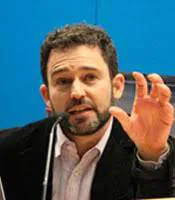
Jorge Daniel Taillant
CEC Executive Director
Jorge Daniel Taillant
CEC Executive Director
9:30–11:00
Session 1: Restoring Access to Water–The Long Road
This session will provide an overview of the challenges and opportunities for equitable water management, including different approaches to water rights/tenure/title and efforts to restore historical access and legal title to waters.
Kathy L. Hodgson-Smith is a Saskatoon lawyer who practices criminal and Aboriginal law, as well as on behalf of the Métis Legal Research Education Foundation. She has litigated in all levels of court including the Provincial Court and Court of Queen’s Bench in Saskatchewan, the Courts of Appeal in Saskatchewan and Alberta, the Federal Court of Appeal, and as co-counsel at the Supreme Court of Canada.
She has worked on various national policy initiatives for the Métis National Council (MNC), including the Aboriginal Human Resources Development Agreement Strategy, Canada-Aboriginal Peoples Roundtables, the Kelowna Accord, and Post-Powley. She has also given evidence at the Canadian Aboriginal Affairs Standing Committee on the effects of McIvor decision on the Métis. She has researched and presented on Métis Aboriginal rights law and traditional knowledge at local, provincial, national, and international forums and conducted research for the Royal Commission on Aboriginal Peoples, the Canadian Education Association and the Canada Council on Learning and conducts traditional land-use studies for the Métis.
Internationally, she also represents the MNC on the United Nations World Intellectual Property Organization (WIPO) Committee on the Protection of Indigenous Traditional Knowledge and Genetic Resources, and on the Canadian Delegation to the Convention on Biological Diversity.
She has chaired a number of committees, including the MNC National Research Strategy and Urban Aboriginal Strategy committee, National Environment Committee, in addition to the Canadian Standards Association Technical Committee, which established a national standard for the operation of Mètis Nation Registries.
Researcher and Coordinator of the Human Rights Area, UNAM (National Autonomous University of Mexico) Legal Research Institute Mexico
Holder of a BA in Political Science and Public Administration from the National Autonomous University of Mexico (UNAM) and an LLD from the Complutense University of Madrid, specializing in Political Science and Constitutional Law, Rodrigo Gutiérrez Rivas is a full-time researcher at UNAM’s Institute for Legal Research. He is also a lecturer at UNAM and other universities in Mexico, as well as a member of Mexico’s National System of Researchers (SNI). Gutiérrez Rivas has coordinated various collective research projects on economic, social and cultural rights, and on the rights of Indigenous peoples, including “The right to water: an analysis based on the enforceability and interdependence of fundamental rights” and “Indigenous peoples’ right to consultation when faced with mega investment projects.” In addition, to having written dozens of papers and book chapters, he is the author and editor of eight academic tomes on constitutional law and human rights, and has given lectures at over 400 conferences, as well as in courses at universities in Mexico and abroad. The Supreme Court of Mexico has designated him an expert witness in cases related to Indigenous peoples and human rights.
United States: James C. Hopkins
Associate Clinical Professor, Indigenous Peoples Law and Policy Program, and Affiliated Professor of American Indian Studies & Latin American Studies), University of Arizona Download Presentation
United States: James C. Hopkins
Associate Clinical Professor, Indigenous Peoples Law and Policy Program, and Affiliated Professor of American Indian Studies & Latin American Studies), University of Arizona
James Hopkins is Algonquin/Metis from Quebec. He is a former law clerk to the Ontario Superior Court of Justice and is a member of the Ontario Bar. Prior to joining the College of Law, University of Arizona, he was an Assistant Professor with the Faculty of Law at the University of Alberta. He graduated from Harvard Law School’s joint Masters of Laws and International Tax Program (LLM/ITP) in June 2000. Professor Hopkins’ area of interest is the intersection between trade, tax and aboriginal law. He is a recipient of the Harvard University International Tax Program’s Award for Excellence in Research and Writing for his graduate thesis, titled “Democratization by Taxation: Democratic Experimentalism in Aboriginal Canada.”
Sustainable water management practices are essential for maintaining the delicate balance between human water needs and environmental preservation. By implementing sustainable strategies and collaborating with different sectors, we can mitigate the adverse effects of water pollution, habitat degradation, and climate change. This session will explore the intricate relationship between forests and upper watershed management.
Professor, University of British Columbia and Director, UBC Program on Water Governance
Leila M Harris is a professor with the Institute for Resources, Environment, and Sustainability and also with the Institute for Gender, Race, Sexuality and Social Justice at the University of British Columbia. Her work analyzes a range of governance and political considerations, from equity and sustainability perspectives—with work that has focused on water politics, governance, and justice in a variety of contexts (from Turkey, to Ghana, South Africa, and Canada). Recent projects consider lived experiences of the human right to water, and ongoing water governance shifts in varied contexts, from participatory engagement to institutional and regulatory mechanisms, or broader cultural and political discussions on how we understand and value water.
Coordinator, Topia Comprehensive Forest Conservation and Development Unit (Unidad de Conservación y Desarrollo Forestal Integral Topia S.C.)
An active collaborator and consultant with multiple civil society organizations on issues related to the protection, conservation and restoration of forest resources, soil and water, María Luisa Soto Moreno has been with the Topia Cooperative’s Conservation and Comprehensive Forestry Development Unit since 1990. As coordinator, she provides comprehensive advisory services, training, accompaniment and liaison services to ejidos and communities in Durango, Mexico.
Throughout her career, she has promoted the certification, by national and international organizations, of good forestry management in related economic sectors such as beekeeping, living pharmacies and women’s community enterprises, etc., in communities throughout the state of Durango.
Currently, she is coordinating Climate Action Reserve (CAR) protocol-compliant carbon capture projects, as per Forest Stewardship Council (FSC) guidelines. These projects are a joint forests and water conservation initiative of the Topia ejido and business partner Del Fuerte.
Mexico: Ana Tejero Aranda
Environmental Unit Coordinator, Oaxaca State Coordinator of Coffee Producers (Coordinadora Estatal de Productores de Café de Oaxaca, CEPCO) Download Presentation
Mexico: Ana Tejero Aranda
Environmental Unit Coordinator, Oaxaca State Coordinator of Coffee Producers (Coordinadora Estatal de Productores de Café de Oaxaca, CEPCO)
Colorado River Program Director, National Audubon Society
Jennifer Pitt has worked on behalf of conservation nongovernmental organizations for 25 years to protect and restore the Colorado River for people and nature. She is currently the Colorado River Program Director for the National Audubon Society, where she collaborates with a team on a range of issues that address sustainability and resilience in the Colorado River Basin, including state-based groundwater and river management reforms and federal rulemaking. Pitt also serves as US co-chair of the Minute 323 Environmental Work Group to implement habitat restoration in Mexico in the Colorado River Delta.
12:45–12:55
Report from the National and Governmental Advisory Committee Representatives
Paolo Solano
Director, Submissions on Enforcement Matters and Legal Unit Download Presentation
Paolo Solano
Director, Submissions on Enforcement Matters and Legal Unit
14:30–16:00
Session 3: Water Restoration: Collaborations between Communities and Governments
This session will highlight successful community-driven initiatives for sustainable water resource management, emphasizing the importance of local involvement and ownership, the interconnectedness of water with biodiversity, shared environments, and sustainable practices. Speakers will showcase successful collaborations involving governments, industry and local communities.
Moderator: Robert Varney
JPAC member
Moderator: Robert Varney
JPAC member
Canada: Annie Firomski
Environmental Disaster Recovery Coordinator, Energy, Infrastructure and Resource Management, Manitoba Métis Federation—National Government of the Red River Métis Download Presentation
Canada: Annie Firomski
Environmental Disaster Recovery Coordinator, Energy, Infrastructure and Resource Management, Manitoba Métis Federation—National Government of the Red River Métis
Annie Firomski is the Environmental Disaster Recovery Coordinator for the Manitoba Métis Federation, the National Government of the Red River Métis, responsible for the planning and implementation of MMF’s Disaster Management Plan to assist Red River Métis citizens in the event of a disaster and taking a proactive approach against undeniable climate change.
Annie holds a Bachelor of Arts in Geography from the University of Manitoba as well as a Legal Assistant Certification from Red River College.
Annie is originally from a small town in Manitoba and is an avid hiker, actively looking for the next place to explore in Manitoba and around the world. When she is not out hiking, she is spending time with her partner and dog.
Coordinator, Center for Indigenous Rights Flor y Canto A.C. (Centro de Derechos Indígenas Flor y Canto A.C)
Nadir Hernández Quiroz has collaborated with the Flor y Canto (Flower and Song) Center for Indigenous Rights since 2019. For nearly two decades, this institution has provided advice to 16 Zapoteco communities, in Oaxaca’s Central Valleys region, with the aim of ensuring their access to water. Nadir is currently coordinator of the School of Water and Land, which endeavors to strengthen the land rights of Indigenous communities. For 20 years, he has worked in community processes as a member of both Mexican and international NGOs (including Save the Children), as well as such governmental institutions as the National Council for Education Development (Conafe) and the National Institute of Indigenous Peoples (INPI).
Co-Founder and Chief Operating Officer, Blue Forest Conservation
Nick Wobbrock is co-founder and chief operating officer of Blue Forest Conservation, a non-profit organization committed to accelerating ecological restoration through conservation finance and enabling climate resilience for ecosystems and communities. Blue Forest developed the Forest Resilience Bond, with support from the Rockefeller Foundation and in partnership with the World Resources Institute, the US Forest Service, and the National Forest Foundation. Before Blue Forest, Wobbrock worked as a consulting engineer, volunteered with the US Peace Corps, and worked with Doctors Without Borders.
16:00–16:10
Break
16:10–17:15
Open Dialogue on Opportunities for Environmental Trilateral Cooperation and other issues
This segment will provide an opportunity for invited experts, NGOs, government representatives and the public at large, to share other examples of successful collaborations/alliances and to raise other issues they wish to share with JPAC.