







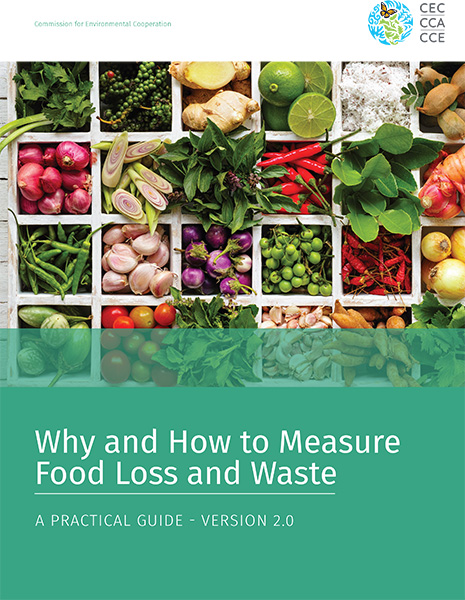
Why and How to Measure Food Loss and Waste
May 29, 2025
The private sector plays a critical role in driving economic prosperity, innovation and sustainable development.
By reducing their environmental footprints, embracing market-driven responsible practices, investing in sustainable technologies, driving innovation, and forming strategic partnerships and collaborations, the private sector is uniquely positioned to transform environmental challenges into opportunities—contributing to reduce gas emissions, mitigate pollution and protect biodiversity.
For over 30 years, the CEC has worked with the private sector to advance shared environmental priorities throughout North America. This collaboration reflects a long-standing recognition that meaningful environmental action requires engagement across all sectors, including business and industry.





The CEC engages with the private sector—including industry associations, chambers of commerce and related, not-for-profit organizations—in multiple ways, such as:

Considering the CEC’s proven track record in fostering collaboration between Canada, Mexico and the United States, benefits of engaging with us, for actors in the private sector, include opportunities to:
The CEC’s Private Sector Engagement Strategy is designed to support and promote increased private sector participation in addressing trilateral environmental priorities under the umbrella of the CEC. The Strategy focuses on achieving outcomes via four strategic goals:

Selected publications of our organization, with objectives and outcomes relevant to the private sector.
May 29, 2025

May 29, 2025
Selected projects with objectives and outcomes relevant to the private sector, from across our organization.
The CEC’s engagement with the private sector is embedded in its founding texts. Under the Canada–United States–Mexico Agreement (CUSMA) and the Environmental Cooperation Agreement (ECA), new opportunities emerged to strengthen private sector involvement in environmental action. Chapter 24 of CUSMA, particularly Article 24.13 on Corporate Social Responsibility and Responsible Business Conduct, affirms the Parties’ commitment to promoting responsible environmental practices and encourages enterprises to adopt voluntary best practices aligned with internationally recognized standards, helping bridge economic and environmental goals. Complementing this, Articles 9 and 11 of the ECA outline the modalities of cooperation and public participation, highlighting the role of the CEC Council in facilitating collaboration among a broad range of actors—including the private sector. These provisions support the exchange of expertise, the development of partnerships, and the creation of new channels for knowledge and technology transfer, all of which are essential for advancing regional sustainability efforts.
Samantha Gagnon
Advisor, JPAC and Private Sector Engagement
(514) 350-4329