Three countries working together to protect our shared environment

International collaboration between Canada, Mexico and the United States on environmental issues of common interest

In the Spotlight

Our Impact

Explore how the CEC’s work over the years has delivered tangible environmental and social outcomes across North America — from scientific studies that guided environmental standards, regulations and policies in Canada, Mexico and the United-States, to trinational conservation strategies, community grants and geospatial mapping projects. Whether you’re a policymaker, conservation expert, researcher or simply interested in North American environmental cooperation, this page offers a comprehensive overview of not only what the CEC has achieved — but how and why those efforts have unfolded.

Our Impact

Topics

Featured Project

Transitioning Remote Communities to Renewable Energy

2022 Active Climate Change

Providing access to affordable, reliable and clean energy for all is a global challenge. Advancements in renewable energy sources and enabling technologies (e.g., storage), as well as their decentralized nature, represent available and realistic options for supplying access to low-cost and sustainable electricity in remote communities. Under this initiative, the...

Learn More All Projects

Energy sources

Featured Publication

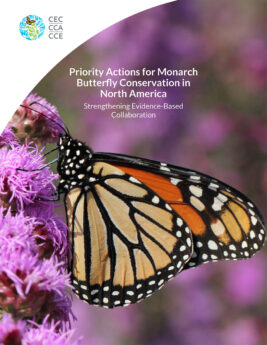
Long-term Impact Assessment of the CEC Monarch Butterfly Conservation Work (1996–2016)

June 20, 2023 2 pages Ecosystems

Since 1996, the Commission for Environmental Cooperation has been actively involved in the conservation of the monarch butterfly (Danaus plexippus), a symbol of trinational environmental cooperation between Canada, Mexico, and the United States. Although interrupted for a few years, CEC efforts to conserve the species intensified after population declines were recorded at overwintering sites in Mexico in 2005 (Rendon-Salinas and Galindo-Leal 2005).

Read More View Top 50 Publications

CEC Publication Cover

What We Do

We conduct research, provide tools and training, and provide a unique space for decision-makers and the public to engage on environmental policy issues affecting the North American region.