CEC projects bring together experts, governments and communities to share knowledge, build capacity, pilot scalable solutions and strengthen cooperation.
Explore in-depth reports, scientific and technical analyses, case studies and practical resources addressing North America’s most pressing environmental challenges.
Home » Events » XXth Regular Session of the CEC Council and Meetings of the Joint Public Advisory Committee (JPAC)
XXth Regular Session of the CEC Council and Meetings of the Joint Public Advisory Committee (JPAC)
On July 11, Canadian, Mexican and US high-level government environment officials came together and engaged the public in a town hall meeting focused on the relationship between transportation and the environment. The officials previewed plans for CEC work over the next two years, launching trinational efforts to green transportation in North America, tackle climate change and improve air quality, and address waste in trade in North America.
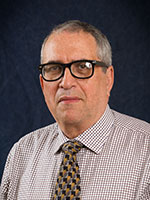
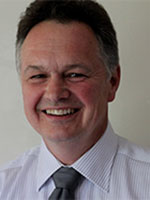
After almost 20 years working in the private sector, Dave Angus became president and chief executive officer of the Winnipeg Chamber of Commerce in 1999. Since then he has served as president of the Chamber of Commerce Executives of Canada and represented local chambers on the Canadian Chamber of Commerce’s Strategic Planning Committee. He currently sits on the board of directors of the American Chamber of Commerce Executives, representing Canadian chambers.
Under his leadership, the Winnipeg Chamber has increased its membership to the highest level in its history (more than 2,060 corporate members) and has not only been recognized by the Canadian Chamber of Commerce as an Accredited Chamber with Distinction but has also received recognition by the American Chamber of Commerce Executives for being in the top 10 Chambers for membership growth.
The Winnipeg Chamber has been instrumental in bringing a World Trade Centre to Winnipeg, establishing an international trade conference called ‘Centrallia’, establishing Leadership Winnipeg, and many other new initiatives. The current Manitoba BOLD campaign, a policy designed to mobilize the community behind bold ideas, has stimulated an interest in the area of sustainability and has led to the development of the Chamber’s Clean Energy Policy.
Program Manager, Greening the Economy in North America
Benjamin Teitelbaum is a program manager at the Commission for Environmental Cooperation (CEC). He has worked in various governmental capacities since 1981, starting his career at the office of the Secretary of State in Ottawa. Prior to joining the CEC, he had served in a variety of intergovernmental relations positions for both the Quebec and Canadian governments, including as Director of Governmental Relations for the Quebec Delegation, in New York City. He has also been involved in a variety of community-based and elected positions, which have provided him with vast experience in policy development and liaising with varied stakeholder groups.
At present, he provides support to the Commission on projects in the area of Greening the North American Economy, which includes initiatives on green building and trade and transportation in North America.
9:30–10:50
Greening Logistics and Supply Chains in North America—A way to reduce GHGs generated by the movement of goods and people
Felicia Marcus was appointed by Governor Jerry Brown as a board member of the State Water Resources Control Board (Board), and was sworn in on July 2, 2012. Before her appointment to the Water Board, she was the Western Director for the Natural Resources Defense Council (NRDC), a national environmental leader in bringing science, law, and policy expertise to solving our world’s pressing environmental and conservation challenges. Prior to joining NRDC, Ms. Marcus was the Executive VP/COO of the Trust for Public Land, a national non-profit devoted to conserving land for people.
During the Clinton Administration, she had been administrator of USEPA Region IX, where she was known for her work in bringing unlikely allies together for environmental progress and for making the agency more responsive to the communities it serves, particularly Indian Tribes, communities of color, local government, and business. While at EPA, Ms. Marcus worked extensively on the range of environmental issues under EPA’s jurisdiction, most heavily in air quality, Bay-Delta water, tribal, and US-Mexico border issues. Prior to that, Ms. Marcus headed Los Angeles’ Department of Public Works at a time when the City went from garnering lawsuits to garnering national awards for environmental excellence. Ms. Marcus came to Public Works after extensive experience as a public interest lawyer and community organizer in Los Angeles.
She currently serves on many non-profit boards and advisory councils, including the Public Policy Institute of California, Urban Habitat, Kesten Institute for Public Finance and Infrastructure Policy, and the Center for Diversity and the Environment. She is also an Obama Administration appointee to the Commission on Environmental Cooperation—Joint Public Advisory Council (US, Mexico, Canada) and was a Schwarzennegar Administration appointee to the Delta Stewardship Council prior to her appointment to that board.
Director, Interuniversity Research Center on Enterprise Networks Logistics and Transportation (CIRRELT)
Bernard Gendron is a professor in the Department of Computer Science and Operations Research at the University of Montreal and director of CIRRELT (Centre interuniversitaire de recherche sur les réseaux d’entreprise, la logistique et le transport). He is an acknowledged expert in the area of optimization of logistic networks and transportation. In the course of his career, he has held positions as invited research professor at ILOG-Paris, at MIT, at EPFL, as well as at the universities of Pisa, Nice-Sophia-Antipolis, Blaise-Pascal, Versailles, and Valenciennes. Gendron has been president of the Canadian Operational Research Society (CORS) and of its Montreal section, as well as of the Transportation Science and Logistics Sections of INFORMS (the American Institute for Operations Research and the Management Sciences). In the course of his responsibilities at CORS, he has received numerous prizes, including the Prix de la pratique (2004), the Prix de services (2006) and the Prix du mérite (2010).
A chemical engineer out of Universidad Iberoamericana and with a master of science in environmental management and policy from Lund University in Sweden, Juan Carlos Camargo Fernández has more than 15 years of professional experience in pollution issues, hazardous waste management, environmental management systems and sustainability. In addition to his work in the academic and governmental sectors, he has worked in the private sector, including his own consulting firm, in the paint industry and for retail companies.
He is currently Environmental Division Manager for Walmart in Mexico and Central America, responsible for the performance and coordination of waste and water management projects, climate change and green supply chains. He has participated in various seminars as a speaker and has two publications, one on pollution prevention in the chemicals industry and another on the implementation of green strategies in the packaging industry.
Chief Sustainability Officer and Vice President, External Affairs YRC Worldwide
As Chief Sustainability Officer, Mike Kelley is responsible for the development, implementation and integration of sustainability strategies, goals, measurements and reporting across YRC Worldwide. He represents YRCW in sustainability discussions with customers, the community and a number of national, international and industry groups. Mike also serves as Vice President- External affairs, where he is responsible for the promotion and protection of YRCW interests before trade associations and with legislative and regulatory officials at the local, state and federal level.
His experience includes positions at the Kansas Motor Carriers Association and the U.S. House of Representatives and U.S. Senate as a Congressional aide. He is co-chair of the American Trucking Associations (ATA) Sustainability Task Force, past chair and member of the ATA Environmental Policy Committee, and immediate past chair of the ATA Image and Policy Committee. In 2011 he was named an EPA SmartWay Champion.
He holds a bachelor of arts degree in political science with an emphasis in state and local government from Avila College and a master’s degree in business administration from Rockhurst University.
10:50–11:00
Break
11:00–12:20
Clean, Green and Moving: Borders, Corridors and Gateways—A focus on transborder shipment of goods (freight) by both land and sea (borders, inland and seaports)
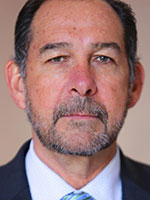
Gustavo Alanís Ortega received his law degree from the Universidad Iberoamericana in Mexico City, where since 1994 he has taught the environmental law course as a full professor at the law school. Alanís Ortega also holds a master’s degree in international law from the Washington College of Law, American University, Washington, DC. Since August 1993, he has been president of the Centro Mexicano de Derecho Ambiental (Mexican Environmental Law Center—CEMDA), a public interest environmental law firm based in Mexico City. He is also active as a columnist for El Universal, one of Mexico’s most widely read and influential newspapers; and columnist for the bimonthly journal Derecho ambiental y ecología published by the Centro de Estudios Jurídicos y Ambientales (CEJA). He is a member of the seventh cohort of the Leadership on Environment and Development Program (LEAD) of El Colegio de México.
Alanís Ortega serves on the boards of directors of the Inter-American Association for Environmental Defense (AIDA) and the World Commission on Environmental Law (CEL) of the IUCN Environmental Law Programme. He is also a member of the Environmental Law Alliance Worldwide (ELAW), the Climate Change Advisory Committee in Mexico, and the Environmental Law Advisory Group at the Department of Sustainable Development of the Organization of American States (OAS). Between April 2008 and January 2015, appointed by the Mexico City Legislative Assembly, he served on the Citizen Board of the Office of the Environmental and Zoning Prosecutor (Procuraduría Ambiental y del Ordenamiento Territorial—PAOT) and, from 2009 to 2016, he was part of the Public Participation Group of Petróleos Mexicanos (Pemex), which contributed to make the company more socially responsible.
In December 2012, Alanís-Ortega was named to the CEC’s Joint Public Advisory Committee (JPAC) for the third time, having previously served from 2001 to 2004 and 2008 to 2011.
Ms. Diane Gray is the founding President and CEO of CentrePort Canada, Inc. CentrePort is Canada’s first trimodal inland port and Foreign Trade Zone and encompasses 20,000 acres in the northwest quadrant of Winnipeg, Manitoba.
Ms. Gray previously worked for the Province of Manitoba from 1995 to 2009 and simultaneously served as Deputy Minister of Finance, Deputy Minister of Federal-Provincial and International Relations, and Deputy Minister of Trade. In December 2010, she was awarded the Lieutenant Governor’s Medal for Excellence in Public Administration for Manitoba and, in May 2013, received the Women of Distinction Award for Management and Leadership.
Ms. Gray currently serves on the boards of Biomedical Commercialization Canada, Manitoba Film and Music, MITACS, the Royal Winnipeg Ballet, the Canadian Manufacturers and Exporters (Manitoba Division), the Canada West Foundation, the Associates of the Asper School of Business, the World Trade Centre Winnipeg, and is a member of the host committee for the 2014 Junos.
Ms. Gray is a graduate of the University of Manitoba and University of Winnipeg joint master’s degree program in public administration and holds an undergraduate degree in political studies from the University of Manitoba.
Vice President, Energy and Environmental Council American Trucking Associations
Energy and Environmental Counsel
American Trucking Associations
Arlington, Virginia
Glen Kedzie has managed American Trucking Associations’ (ATA) highly respected energy, environmental, and sustainability practice for 13 years to ensure the interests of the industry and ATA members are represented. He led the industry through the transition into using the cleanest fuels and engines on the road today; developed and implemented an industry-wide sustainability plan; ushered in first-ever greenhouse gas/fuel consumption standards for trucks; coordinated the highly-acclaimed Natural Gas in Trucking Summit; served on the 17-member trinational Advisory Group charged with developing a North American freight sustainability plan under NAFTA; and served as one of 15 charter partners that helped design and grow EPA’s SmartWay Transport Partnership Program, the award-winning voluntary greenhouse reduction program for the freight sector.
Prior to his service at ATA, Kedzie served as lobbyist and legal counsel on environmental and energy matters to the American Coatings Association. From 1990 through 1998, he was a supervisory attorney at EPA, developing regulations, guidance documents, and managing enforcement and compliance cases and personnel. He holds bachelor of science degrees in urban and regional planning, geography, and cartography and geotechniques, and completed his post-graduate work in environmental planning at the University of Wisconsin. He received his Juris Doctor degree from the University of Tulsa College of Law and has practiced in the areas of energy, environmental, and administrative law for over 20 years.
Assistant General Director, Mexican Institute of Transportation
Bio will be available soon
12:20–13:20
Arrecifes Restaurant
Lunch [provided]
13:20–14:40
Urban Transportation Challenges—Focus on the impact of the “last mile” (final delivery of freight), on the movement of people (private and public transportation), alternative fuels and air quality challenges and impacts.
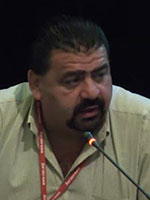
Sergio Sánchez has over 20 years of experience in designing and implementing air quality, climate and sustainable transport and energy policies, plans and projects at local, national and international levels.
Since 2006, he has been the executive director of the Clean Air Institute (CAI), which he had been instrumental in creating. Among other tasks, he has led the Sustainable Transport and Air Quality Program for Latin America and the Caribbean (the STAQ Program), funded by the Global Environment Facility through the World Bank. The STAQ Program has focused on transport programs in eleven cities in Argentina, Brazil and Mexico, as well as other region-wide activities. As well, Sánchez is a member of the UN Secretary General’s working group on Sustainable Transport, and serves as one of the four Civil Society Observers worldwide to the Clean Technology Fund.
From 2005 to 2006, Sánchez worked with the World Bank in Washington, DC, as head of the Executive Secretariat of the Clean Air Initiative for Latin American Cities (CAI-LAC). He was in charge of CAI-LAC spin-off and its transfer to the Clean Air Institute. He also assisted the preparation of sustainable transportation and air quality projects in the LAC region.
From 2002–2005, he was director general of air quality management within Mexico’s Secretariat of Environment and Natural Resources. He implemented nationwide air quality policies and strategies, as well as the mandatory pollutant release and transfer registry. He served as co-chair of the Mexico-US Air Policy Forum and represented Mexico at the Montreal Protocol.
From 1998 to 2002, he worked as a consultant to the World Bank, PAHO, the Commission for Environmental Cooperation, and GTZ, and he was Mexico City’s coordinator of MIT’s program on local, regional and global air pollution. From 1994 to 1998 he served as Mexico City’s director general of environmental projects and played a leading role for preparing and implementing Mexico City’s air quality management plans that resulted in substantial citywide air pollution reductions.
Sánchez graduated in environmental engineering from the Universidad Autónoma Metropolitana in Mexico City and is also a graduate of the LEAD Program for International Environment and Development in the Colegio de México (1995–1998), for which he was awarded a fellowship from the Rockefeller Foundation.
Program Director International Council on Clean Transportation
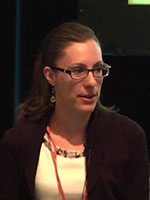
Katherine Blumberg is the Director of Climate and Health Programs and the Mexico Country Lead at the International Council for Clean Transportation (ICCT). Blumberg has worked for the ICCT since its inception, supporting improved fuel and vehicle regulatory efforts primarily in China, India and Mexico. She is currently focusing on Mexico, both supporting development of light- and heavy-duty fuel economy/GHG standards and assisting with the move to world-class conventional pollutant standards. In addition, her ongoing work supports better integration of climate and health science, policy efforts on non-CO2 climate forcers (such as black carbon and fluorinated gases) from the transportation sector, and development of a transportation roadmap to get to dramatically reduced conventional and climate pollutant emissions. Blumberg holds an M.S. in energy and resources and an M.S. in engineering, with a focus on air quality, both from the University of California, Berkeley.
Coordinator for the Administration of Integrated Systems of Transportation CTS EMBARQ México
An economist from Mexico’s Universidad Cristóbal Colón, Abel López holds a master’s degree in economics from Universidad de las Américas in Puebla and another in planning and international development from University of Sheffield (United Kingdom). He also completed a doctorate in planning at University of Waterloo, specializing in public transportation systems. His doctoral thesis analyzes carriers’ influence on the planning of transportation projects in Mexico.
His career includes consulting for the World Bank and the company Urbanismos y Sistemas de Transporte (USTRAN) on urban public transportation and freight in Mexico, Central and South America. He also has academic and work experience in Canada, Mexico and the United States and has given courses on public transportation and sustainable transport at several academic institutions.
At CTS-EMBARQ-México, a nongovernmental organization under the World Resources Institute, Abel López is engaged in improving public transportation in Mexico City and in areas related to a national urban transportation policy.
14:40–14:50
Break
14:50–16:10
Innovation and Technology—Focus on intelligent transportation system (ITS) innovations being developed and implemented; solutions such as Connected Vehicle technology, adaptive traffic signals, advanced traffic and incident management systems, electronic tolling, etc.; and how these can contribute to reduction of GHG associated with transportation challenges/environment.
Juan Carlos Villa has more than 30 years of professional experience in transportation, logistics and trade facilitation projects. He has experience in consulting, research and engineering projects in the US, Europe, Mexico and other Latin American counties. For the last 11 years, he has performed research activities at the Texas A&M Transportation Institute (TTI) and currently is managing TTI’s office in Mexico City, where he is currently working on several projects related to the development of a Nationally Appropriate Mitigation Action (NAMA) for freight transportation in Mexico. He managed a project to analyze greenhouse gas emissions from freight transportation in North America for the Commission for Environmental Cooperation (CEC).
Villa has led several international trade flow analyses of North America. These include biannual updates of the International Trade Corridor Plan for the Texas Department of Transportation, the development of the Mexico Multimodal Corridor Master Plan for the Mexican Ministry of Transportation, and for Transport Canada, a project aimed at establishing freight performance measurements for goods using Canada’s Gateways and traveling along its main transportation and trade corridors.
For the US Federal Highway Administration (FHWA) and the Texas and Arizona Departments of Transportation, he is managing projects to implement technologies and systems that will measure border crossing time and delay at commercial land border crossings. Villa is also involved in the development of an information system to disseminate border crossing information, seeking input from key stakeholders—carriers, shippers, and US and Mexican federal and state agencies.
He holds a B.S. in electronic and communications engineering from Monterrey Institute of Technology and an M.S. in transport studies from Cranfield University in England.
Manager, Mexico City Office of Texas Transportation Institute
Juan Carlos Villa has more than 30 years of professional experience in transportation, logistics and trade facilitation projects. He has experience in consulting, research and engineering projects in the US, Europe, Mexico and other Latin American counties. For the last 11 years, he has performed research activities at the Texas A&M Transportation Institute (TTI) and currently is managing TTI’s office in Mexico City, where he is currently working on several projects related to the development of a Nationally Appropriate Mitigation Action (NAMA) for freight transportation in Mexico. He managed a project to analyze greenhouse gas emissions from freight transportation in North America for the Commission for Environmental Cooperation (CEC).
Villa has led several international trade flow analyses of North America. These include biannual updates of the International Trade Corridor Plan for the Texas Department of Transportation, the development of the Mexico Multimodal Corridor Master Plan for the Mexican Ministry of Transportation, and for Transport Canada, a project aimed at establishing freight performance measurements for goods using Canada’s Gateways and traveling along its main transportation and trade corridors.
For the US Federal Highway Administration (FHWA) and the Texas and Arizona Departments of Transportation, he is managing projects to implement technologies and systems that will measure border crossing time and delay at commercial land border crossings. Villa is also involved in the development of an information system to disseminate border crossing information, seeking input from key stakeholders—carriers, shippers, and US and Mexican federal and state agencies.
He holds a B.S. in electronic and communications engineering from Monterrey Institute of Technology and an M.S. in transport studies from Cranfield University in England.
Director of Fuel Market Development Domestic Operations Pioneer Natural Resources
Lynn Lyon has led the development of the Texas Clean Transportation Triangle (TCTT) since 2010. This $200M initiative is building a natural gas fueling infrastructure connecting Dallas/Fort Worth, San Antonio, Austin, and Houston to support fleets and other drivers with strategically planned, high-volume public access stations. The project is spearheaded by America’s Natural Gas Alliance (ANGA), in collaboration with over 300 companies, non-profit corporations, and academic institutions in Texas.
Lyon is the director of Fuel Marketing at Pioneer Natural Resources, based in Irving, Texas. Pioneer has operations in the Barnett Shale, South Texas, Eagle Ford, Permian, Mid-Continent, Rockies and Alaska. She is responsible for overseeing the conversion of 2,000 corporate fleet trucks to natural gas, with 300 trucks already converted. She is also initiating the use of natural gas-powered drilling and natural gas-powered pressure-pumping services in field operations.
Lyon is on the board of directors at NGVAmerica, a founding member of the Drive Natural Gas Initiative, and is an active member of the Metroplex NGV Consortium at Texas Christian University and the Maguire Energy Institute at Southern Methodist University. She is a frequent speaker at industry events, including the A&M Texas Energy Summit, Alternative Clean Transportation Expo, NGVAmerica Summit, and Border Energy Forum. She has an MBA from Southern Methodist University.
Founder and Chief Technical Officer, Buoyant Aircraft Systems International
Dale George is chief technology officer at BASI (Buoyant Aircraft Systems International), which he joined last year when he merged his company, Canadian Airship Manufacturing Inc. (CAMI), with BASI of Winnipeg, Manitoba. Together they have established Canada’s first airship manufacturing, flight testing and pilot training center at St. Andrews Municipal Airport, outside Winnipeg, Manitoba.
He has extensive experience in building and developing organizations to improve value, profit and customer experience. He is also one of only a handful of people in Canada capable of building and piloting buoyant aircraft.
George had founded CAMI to begin airship manufacturing and pilot training and provided technical support to LTA (lighter-than-air) manufacturers, including the Ecuadorian Government. Previously, he also worked with Magenn Power, Inc., to develop the world’s first high altitude wind turbine, known as the Magenn Air Rotor System.
He had also co-founded Mobile Airships Inc., manufacturing unmanned airships and blimps. There he worked closely with the Jet Propulsion Laboratory and NASA for their study of LTA flight consideration for the exploration of Titan, Io and Mars.
George is a member of the Airship Association, EAA, COPA, UPAC, and MAAC. He holds a private pilot’s license and has personally restored and flown many different aircraft, including airships. He is also an honors graduate in industrial design from Georgian College, Ontario, Canada, and the winner of the prestigious Premier’s Award of Excellence for 2012.
Eduardo J. Solís
President, Mexican Association for the Automotive Industry Download Presentation
Eduardo J. Solís
President, Mexican Association for the Automotive Industry
16:10–16:30
Final Presentation of all the items/recommendations to be included in the Moving Forward Summary
16:30–16:45
JPAC Report on the 20th Anniversary of the North American Agreement on Environmental Cooperation (NAAEC)
16:45–17:00
Report from the National and Governmental Advisory Committee Representatives
17:00–17:10
Closing Remarks by the JPAC Chair, David Angus
17:10–18:10
Baja Ballroom
Networking Session for the Public
Based on the discussions held throughout the day, participants are invited to meet and exchange views on North American transportation issues, to be raised with the Ministers during the Council Public Meeting on 11 July. Participants will be asked to identify four key issues for our region and appoint an equal number of representatives, who will present on behalf of the group. JPAC members will attend as observers.
19:00–21:30
Terraza Bugambilias
Welcoming Reception and Official Opening of the 20th Regular Session of the CEC Council
Welcoming remarks by Marcos Covarrubias Villaseñor, Gobernador del Estado de Baja California Sur
Remarks by Irasema Coronado, CEC Executive Director
Remarks by David Angus, Chair of the CEC Joint Public Advisory Committee
Remarks by Bob Perciasepe, Acting Administrator, US Environmental Protection Agency
Remarks by Dan McDougall, Assistant Deputy Minister for InternationalAffairs and Chief Negotiator and Ambassador for Climate Change, Environment Canada
Welcoming remarks and Official opening of the 20th Regular Session of the Council by Juan José Guerra, Mexican Secretary for Environment and Natural Resources
Thursday, 11 July 2013
8:30–9:30
Hotel Main Lobby
Registration of Participants
9:30–9:45
Connecting North America’s communities through NAPECA
Irasema Coronado was appointed Executive Director of the Commission for Environmental Cooperation (CEC), effective 1 December 2012.
Irasema Coronado, PhD, was a professor in the Department of Political Science at the University of Texas at El Paso, and was also an affiliated faculty member in the Environmental Science and Engineering PhD program. At the university, she served as an associate provost (2008-2012), associate dean of the College of Liberal Arts (2006-2008), chair of the Political Science Department (2005-2006), and assistant professor of the Center for Inter-American and Border Studies (1999-2003). Dr. Coronado was also a Fulbright Scholar at the Universidad Autónoma de Ciudad Juárez in Mexico (2004-2005), and a faculty member at the University of the Incarnate Word in San Antonio, Texas (1995-1999).
Dr. Coronado has held other academic and visiting scholar positions at the University of Texas at San Antonio (1998-1999), the University of Arizona (1997 and 2001), El Colegio de la Frontera Norte in Sonora, Mexico (1992-1995), and Cochise College (1991). Dr. Coronado is currently a member of the boards of Frontera Women’s Foundation, the Coalition Against Violence Toward Women and Children on the Border, FEMAP (Mexican Federation of Private Associations), and the Paso Del Norte Health Foundation. Dr. Coronado holds a BA from the University of South Florida and an MA and PhD from the University of Arizona. Hispanic Business Magazine named her one of top 100 influential hispanics in the United States in October of 2010.
9:45–10:05
Isla Magdalena: Building a sustainable coastal community with the North American Partnership for Environmental Community Action
Amanda Lejbowicz
Coordinator, Program of Science and Baja California, Comunidad y Biodiversidad, A.C. Download Presentation
Amanda Lejbowicz
Coordinator, Program of Science and Baja California, Comunidad y Biodiversidad, A.C.
10:05–10:25
Depave Paradise: Restoring natural diversity by ripping up concrete and asphalt and replacing it with soil and vegetation
Irasema Coronado
Launching Call for proposals for NAPECA 2013–2014 Download Presentation
Irasema Coronado
Launching Call for proposals for NAPECA 2013–2014
12:50–14:30
Restaurant La Cascada
Lunch [provided]
14:30–16:10
Baja Ballroom
Council Public Meeting (continued) – Council town hall
Introduction on the conduct/format of the session by David Angus, JPAC Chair and moderator
Presentations from community and academic stakeholders on a topic related to “Transportation and the environment”, including web and on-site presentations
16:10–16:30
Council Session Closing
Signing of Council resolution and ministerial statement
Closing Remarks, by Acting EPA Administrator Bob Perciasepe
Concluding remarks and Passing the Torch by Secretary Guerra
New Council Chair and Announcement of 2014 Council Session by Assistant Deputy Minister Dan McDougall