Intercultural Education as Climate Change Resilience Strategy in Ralámuli Communities in Mexico
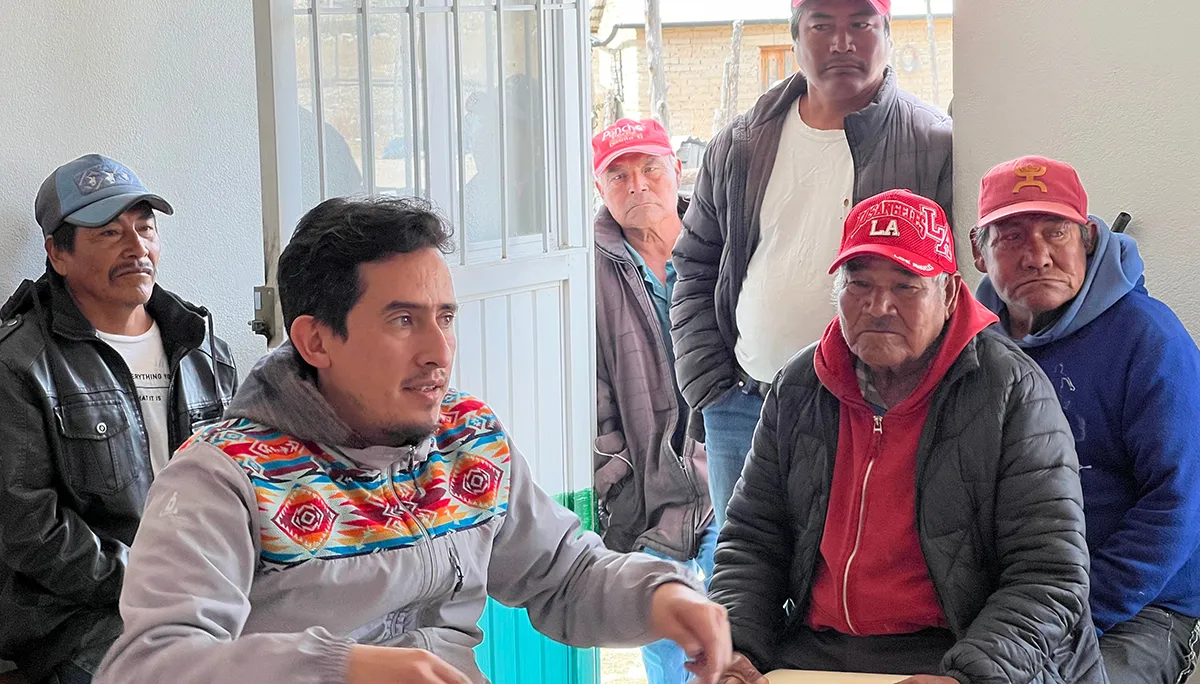
@ José Valenzuela
Background
The Western system of education is displacing Indigenous knowledge and, thereby, losing an entire store of knowledge on water, plants, animals and environmental stewardship. To achieve a balance between Indigenous and Western knowledge, it is necessary to listen to Indigenous communities and provide them with full access to the modern world’s knowledge, and recognize the value of Indigenous scientific knowledge in the formal education system in order to preserve this important knowledge.
This project seeks to leverage Indigenous knowledge with the support of Western science and new technologies by bringing together different types of knowledge through the collaboration of experts in linguistics and anthropology who are knowledgeable about the Ralámuli language and culture, as well as activists and specialists in the care and conservation of pastures, water and the environment. The project also proposes to foster resilience to climate change through the incorporation of Ralámuli traditional knowledge about the environment.
Goals
- Construction of a space where children, youth and seniors can engage in activities related to traditional Ralámuli ways of life.
- Construction of a community greenhouse that will also serve as a training center, operated by community members for the benefit of children and youth.
- Holding of five workshops to share traditional knowledge.
- Providing audio documentation of knowledge about medicinal plants and animals, and the preparation of educational materials.
- Providing training courses on care of water and environmental stewardship.
- Training environmental advocates.
Main activities
- Construct a cultural center.
- Create biointensive garden beds.
- Adapt installations for the purpose of water storage.
- Provide five workshops on Indigenous scientific knowledge to Ralámuli girls, boys and adolescents.
- Record on audio media forty stories of Indigenous scientific knowledge, as recounted by community Elders.
- Deposit these audios in a free access public repository to ensure their availability to any person wishing to consult them.
- Create animated videos for YouTube based on the documented stories.
- Increase knowledge, skills and competency levels in relation to options and strategies for enhancing the quality of life and resilience to climate change.
- Award scholarships to three youths qualified for training as environmental advocates.
Expected outcomes
- An adobe construction that will function as a space for sharing knowledge and activities related to traditional Ralámuli ways of life.
- A greenhouse ready for operation.
- Three biointensive garden beds ready for sowing.
- A water storage system.
- Five workshops given in three different communities.
- The audio documentation of forty stories.
- Development of multimedia materials.
- Five training courses are provided to the community.
- Three youths awarded scholarships with a view to ensuring the project’s future sustainability.
- 75 children and youth are given rewards for their workshop attendance.
- A printed book on the stories documented by the project.