Event

Roundtable: Strengthening Indigenous Trade in North America: Pathways to Inclusion, Revitalization and Recognition
Mexico City
Mexico

July 23, 2025

Private

The roundtable Strengthening Indigenous Trade in North America: Pathways to Inclusion, Revitalization and Recognition, co-hosted by the Joint Public Advisory Committee (JPAC) and Traditional Ecological Knowledge Expert Group (TEKEG) of the Commission for Environmental Cooperation (CEC), convened Indigenous experts, researchers and conservation practitioners from the private and public sectors. Participants explored practical and actionable strategies to support sustainable Indigenous trade and economic leadership across North America. The discussion focused on three key pathways:

  1. Promoting the inclusion of Indigenous Peoples to fully integrate within contemporary North American trade systems;
  2. Revitalizing traditional, pre-colonial, Indigenous trade networks and modes of exchange among Indigenous Peoples across the region; and
  3. Enhancing recognition and market opportunities for Indigenous-made goods and services.

This latest gathering built on the discussions from a previous roundtable, Sustainable Trade in North America: Indigenous Perspectives, co-hosted by the CEC and the McGill Bieler School of Environment (BSE) on 23–24 March 2025 in Montreal, Canada. The previous discussion highlighted how Indigenous trade systems, grounded in relational worldviews and Traditional Ecological Knowledge (TEK), offer vital insights and innovative solutions to address today’s social, economic and environmental challenges. Case studies of successful Indigenous-owned businesses revealed both opportunities and barriers, underscoring the need for supportive policies and stronger trade networks based on Indigenous values. The roundtable emphasized revitalizing traditional trade practices and integrating Indigenous perspectives into contemporary trade frameworks.
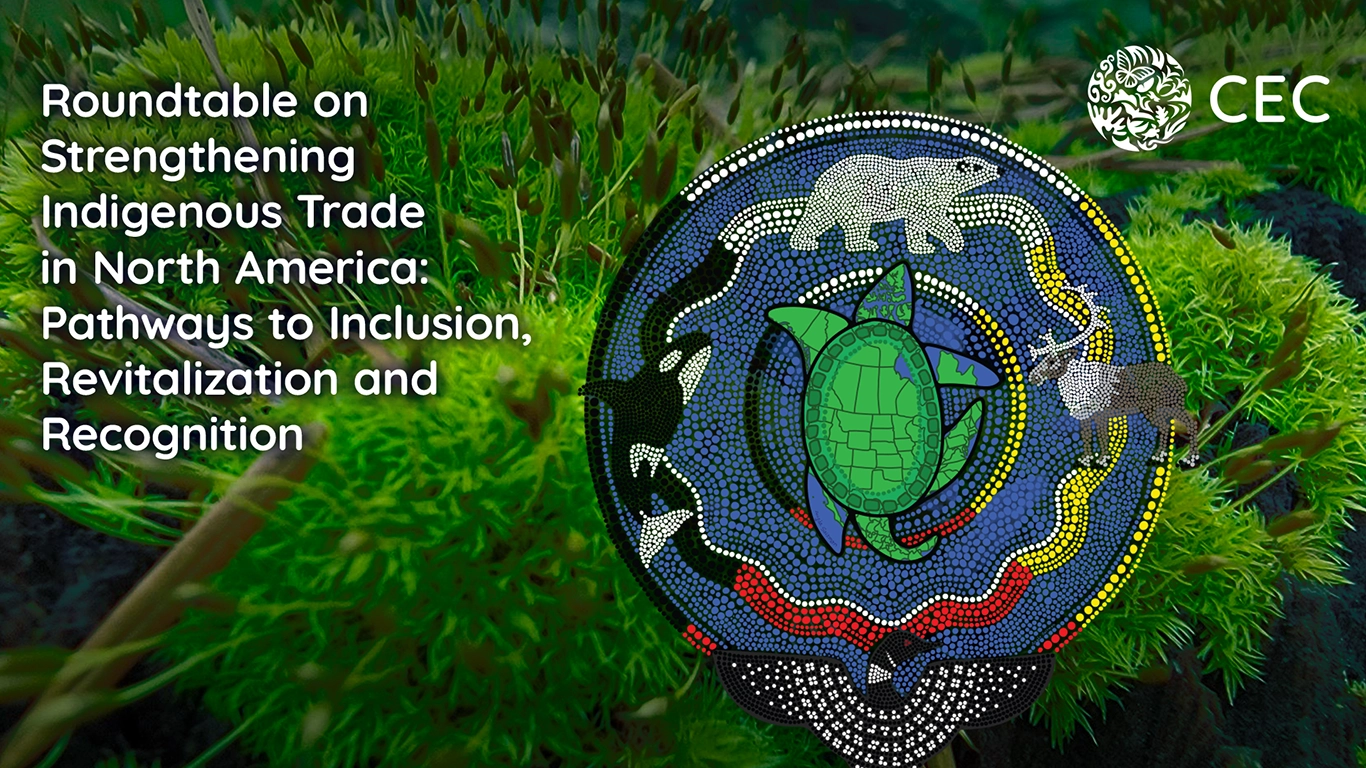
Strengthening Indigenous Trade in North America

Image by Angie Saltman (Red River Métis) representing the essence of the Indigenous trade on Turtle Island (North America).

Agenda

Time Zone: Central Standard Time (CST)

1:00 pm-1:10 pm

Welcoming Ceremony

1:10 pm-1:25 pm

Opening Remarks

JPAC Member - Chair for 2023

Octaviana V. Trujillo
JPAC Member

TEM Member - Kathy Hodgson-Smith

Kathy Hodgson-Smith
TEKEG Facilitator

1:25 pm-1:35 pm

Welcoming Remarks

CEC Staff

Kakwiranó:ron Cook
Officer, Indigenous Affairs

1:35 pm-1:50 pm

Conclusions from the Previous Roundtable on Sustainable Trade in North America: Indigenous Perspectives

Mindahi Bastida
Founder and Convenor, The Earth Elders

1:50 pm-2:50 pm

Session 1. Fostering Indigenous Inclusion in the North American Trade System

Indigenous Peoples have sustained rich, interconnected trade systems across North America for millennia. Today, however, they face structural barriers to meaningful participation in contemporary trade systems. This session will explore how to foster inclusive trade that upholds Indigenous rights, supports Indigenous economic self-determination, and aligns with Traditional Ecological Knowledge (TEK). Participants will examine how existing frameworks—such as the Canada–United States–Mexico Agreement (CUSMA)—can be leveraged to promote and further integrate Indigenous trade. The discussion will focus on developing model trade agreements, legal and policy advocacy tools, and other enabling mechanisms, including emerging principles such as the Indigenous General Exception, to expand access to domestic and global markets.

3:00 pm-4:00 pm

Session 2. Revitalizing Traditional Indigenous Trade Networks for Sustainable Futures

Long before modern borders, Indigenous Nations across North America sustained vibrant trade routes that supported cultural exchange, economic resilience, and ecological balance. These networks were not only about goods—they embodied knowledge-sharing, diplomacy, and interdependence with the land. Circular economies for Indigenous Peoples, as well as sustainable Indigenous economies, require deeper guidance and footing within the trade system.  This session will explore how restoring and adapting these traditional trade systems can offer alternative models that prioritize cultural integrity, environmental care, and community well-being for more just, sustainable economies. Participants will discuss how to reconnect and re-establish trade routes across the region and explore collaborative approaches.

4:00 pm-5:00 pm

Session 3. Building Trust and Recognition for Indigenous-Made Goods and Services

Building recognition and market trust in Indigenous-made and Indigenous-owned products is essential to expanding Indigenous trade. This session will explore ways to clearly and respectfully convey the origin, cultural significance, and sustainable values embedded in these goods and services. Participants will discuss inclusive and culturally grounded approaches—such as certification, labeling, and storytelling—that can promote greater recognition, raise consumer awareness, strengthen trade networks, and foster deeper respect for Indigenous economies and worldviews.

5:00 pm-5:20 pm

Next Steps

CEC Executive Director

Jorge Daniel Taillant
CEC Executive Director

5:20 pm-5:30 pm

Closing Traditional Ceremony

5:30 pm

Adjournment

9:00 am-5:00 pm

In-Person Participants

Florencia Emilia Arroyo Pelico
Representative, Cooperative Maseual Siuamej

Mindahi Bastida
Founder and Convenor, The Earth Elders

Gwen Bridge
CEO and Founder, Gwen Bridge Consulting

CEC Staff member or Speaker

Antonia Campoy
Councilwoman, Pascua Yaqui Tribe, Arizona

Clément (Clem) Chartier
Ambassador for Inter-Nation and International Relations, National Government of the Red River Métis

CEC Staff member or Speaker

Solomon Henry Cyr
Spokesperson, Standing Buffalo Dakota Nation, Saskatchewan

Steve De Roy
Chief Executive Officer, The Firelight Group

Jesús Granada Bautista
Indigenous community defender, Hñähñu (Otomí) Indigenous People

James C. Hopkins
Associate Clinical Professor, Indigenous Peoples Law and Policy Program, and Affiliated Professor of American Indian Studies & Latin American Studies), University of Arizona

Lyla June Johnston
Indigenous musician, author, and community organizer of Diné (Navajo), Tsétsêhéstâhese (Cheyenne), and European lineages

Nicolas Kosoy
Associate Professor, Faculty of Agricultural and Environmental Sciences, McGill Bieler School of Environment

Luis Martínez Villanueva
General Director, Mexican Network of Small Fair Trade Producers

CEC Staff member or Speaker

Dakota Mcleod
Métis artist and entrepreneur, His Bead Store, Saskatchewan

CEC Staff member or Speaker

Annalisa Ortega
Citizen, Pascua Yaqui Tribe, Arizona

CEC Staff member or Speaker

Rodger Redman
Chief, Standing Buffalo Dakota Nation, Saskatchewan

CEC Staff member or Speaker

Dwayne Louis Redman
Band Councillor, Standing Buffalo Dakota Nation, Saskatchewan

Alina Liviet Santiago Jiménez
Chair and Representative for Central America and the Caribbean, FSC Permanent Indigenous Peoples Committee

9:00 am-5:00 pm

Online Participants

Guadalupe Yesenia Hernández Márquez
President, Alliance for Community-Based Biodiversity Conservation and Restoration Funding