CEC projects bring together experts, governments and communities to share knowledge, build capacity, pilot scalable solutions and strengthen cooperation.
Explore in-depth reports, scientific and technical analyses, case studies and practical resources addressing North America’s most pressing environmental challenges.
Home » Events » JPAC Regular Session 14-01: Building Healthy and Sustainable Homes in Remote Communities: A Focus on Indigenous Communities in North America
JPAC Regular Session 14-01: Building Healthy and Sustainable Homes in Remote Communities: A Focus on Indigenous Communities in North America
Barriers to building healthy, sustainable homes remains a major concern for a number of remote communities in North America, as well as many indigenous communities. To discuss the opportunities and challenges faced by Canada, Mexico and the United States, the CEC invites you to join a public forum featuring researchers, community leaders, government officials, and all others impacted by this issue.
With the overall goal of providing recommendations on this important environmental justice issue to the CEC Council – North America’s highest-level environmental authorities – the JPAC, invited experts, and stakeholders will explore the following issues:
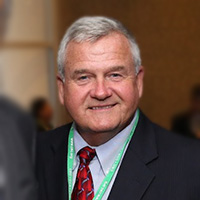
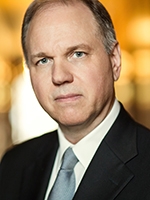
Considered one of the nation’s most experienced and respected environmental leaders, Robert Varney is a former Environmental Protection Agency (EPA) New England Regional Administrator, who currently is President of Normandeau Associates, a science-based environmental firm with eighteen offices in 12 states. He was the longest-serving regional administrator and top environmental official in New England and is credited with instituting many innovative approaches and policy initiatives that have served as national models. Prior to EPA, Mr. Varney was one of the nation’s longest-serving state environmental commissioners, appointed by three Governors of both political parties.
Bob is nationally recognized for his efforts on global climate change; energy efficiency and renewables; homeland security and preparedness; clean air, clean water and safe drinking water; superfund and brownfields cleanup and redevelopment; environmental justice and healthy communities; restoration of rivers, lakes and coastal areas; strong and consistent enforcement and compliance assistance; strengthening partnerships; and improved agency management and performance.
Mr. Varney has chaired the Environmental Council of the States (ECOS), State/EPA Superfund Policy Forum, Federal Ozone Transport Commission (OTC), Governmental Advisory Committee to the US Representative to the Commission for Environmental Cooperation (CEC), Gulf of Maine Council on the Marine Environment, New England Interstate Water Pollution Control Commission and New England Governors Conference Environment Committee. He also was a member of EPA’s Environmental Justice Advisory Council and currently serves on the NH Board of Trustees for The Nature Conservancy (TNC) and the CEC Joint Public Advisory Committee (US, Mexico, Canada). Bob is the recipient of numerous environmental awards such as the EPA Lifetime Achievement Award, NE Water Works Association’s John H. Chafee Award, Environmental Business Council of NE’s Paul Keough Award and the ECOS Founder’s Award.
8:35–9:10
Mitla Room
Opening and introductory remarks
Irasema Coronado
Executive Director, Commission for Environmental Cooperation (CEC)
Irasema Coronado
Executive Director, Commission for Environmental Cooperation (CEC)
Irasema Coronado was appointed Executive Director of the Commission for Environmental Cooperation (CEC), effective 1 December 2012.
Irasema Coronado, PhD, was a professor in the Department of Political Science at the University of Texas at El Paso, and was also an affiliated faculty member in the Environmental Science and Engineering PhD program. At the university, she served as an associate provost (2008-2012), associate dean of the College of Liberal Arts (2006-2008), chair of the Political Science Department (2005-2006), and assistant professor of the Center for Inter-American and Border Studies (1999-2003). Dr. Coronado was also a Fulbright Scholar at the Universidad Autónoma de Ciudad Juárez in Mexico (2004-2005), and a faculty member at the University of the Incarnate Word in San Antonio, Texas (1995-1999).
Dr. Coronado has held other academic and visiting scholar positions at the University of Texas at San Antonio (1998-1999), the University of Arizona (1997 and 2001), El Colegio de la Frontera Norte in Sonora, Mexico (1992-1995), and Cochise College (1991). Dr. Coronado is currently a member of the boards of Frontera Women’s Foundation, the Coalition Against Violence Toward Women and Children on the Border, FEMAP (Mexican Federation of Private Associations), and the Paso Del Norte Health Foundation. Dr. Coronado holds a BA from the University of South Florida and an MA and PhD from the University of Arizona. Hispanic Business Magazine named her one of top 100 influential hispanics in the United States in October of 2010.
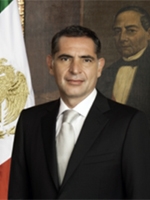
Currently Governor of the State of Oaxaca, Gabino Cué Monteagudo has a solid, 20-year career in public service in his home state. He is the first Oaxacan politician to have toured the state’s 570 municipalities, providing him with first-hand knowledge of Oaxaca’s vast and varied population and an awareness of its communities’ urgent needs.
His ability to reach agreements for the common good enabled him to forge an historical political coalition among the PAN, PRD, PT and CONVERGENCIA political parties in 2010, when he was elected governor. Born to a family of local businesspeople, Sr. Cué Monteagudo learned the values and principles of fellowship, responsibility, tolerance and, above all, hard and honest work.
Mexico’s Secretary for Environment and Natural Resources
Juan José Guerra was born on January 4, 1952, in the city of Toluca, State of Mexico. He is a Mechanical and Electrical Engineer, Anahuac University graduate with Honorable Mention (1970-1974), holds a Masters in Economics from the University of Southern California (USC) (1974-1976) and a Course in Fundraising Funds at the IDB, Washington, D.C. (1977).
9:10–9:20
Presentation of objectives, methodology and participants
Benjamin Teitelbaum is presently Special Assistant at the Commission for Environmental Cooperation (CEC), an international intergovernmental organization with a special mandate to support the coordination of policies and programs focused on trade and environment as part of the North American Free Trade Agreement (NAFTA). Mr. Teitelbaum provides support to the Commission on a number of transportation-related projects, including Greening the Trade and Transportation Corridors in North America. Previously, he assumed a number of responsibilities in policy and governmental relations both in the Quebec and Canadian governments. These included at the provincial level a posting as Director for Government Relations for the Délégation générale du Québec in New York City and at the federal level as Special Assistant to the Minister of Immigration of Canada.
Julian Portilla
Director, Masters in Mediation and Applied Conflict Studies, Woodbury Institute of Champlain College
Julian Portilla
Director, Masters in Mediation and Applied Conflict Studies, Woodbury Institute of Champlain College
Associate Professor, School of Architecture, Art and Design ITESM
As an associate professor in the Department of Architecture of the School of Architecture, Art and Design at Tecnológico de Monterrey, Monterrey Campus, Pedro Pacheco Vásquez has vast experience in the development and implementation of community projects. He currently fosters domestic and international exchanges to conduct research in sustainability and low environmental impact housing, communities and construction materials.
In 2001–2002 he was a member of the Green2 Committee, making recommendations to administrators at Ball State University to improve the management of their resources, educational programs and research.
His experience centers on community construction processes, applying citizen participation models. Most of his work has involved the planning, design and implementation of high–social-impact community projects and programs, with educational strategies intended to raise public awareness and foster community empowerment for informed decision-making for the common good—acting locally but thinking globally.
An active speaker, Mr Pacheco Vásquez has published numerous essays on housing, self-governance and sustainability education.
9:40–10:00
Session 1: Air, Energy and Water: Securing High Quality and Affordable Resources in Remote Communities
This session focuses on how to improve access to clean water, indoor air quality and affordable energy in remote communities, drawing from examples and successful practices in low-tech systems and designs, community renewable energy projects, and other initiatives across the continent.
After almost 20 years working in the private sector, Dave Angus became president and chief executive officer of the Winnipeg Chamber of Commerce in 1999. Since then he has served as president of the Chamber of Commerce Executives of Canada and represented local chambers on the Canadian Chamber of Commerce’s Strategic Planning Committee. He currently sits on the board of directors of the American Chamber of Commerce Executives, representing Canadian chambers.
Under his leadership, the Winnipeg Chamber has increased its membership to the highest level in its history (more than 2,060 corporate members) and has not only been recognized by the Canadian Chamber of Commerce as an Accredited Chamber with Distinction but has also received recognition by the American Chamber of Commerce Executives for being in the top 10 Chambers for membership growth.
The Winnipeg Chamber has been instrumental in bringing a World Trade Centre to Winnipeg, establishing an international trade conference called ‘Centrallia’, establishing Leadership Winnipeg, and many other new initiatives. The current Manitoba BOLD campaign, a policy designed to mobilize the community behind bold ideas, has stimulated an interest in the area of sustainability and has led to the development of the Chamber’s Clean Energy Policy.
Troy Ritter
Applied Sciences Manager at the Alaska Native Tribal Health Consortium, and Director of the Indian Health Service’s National Tribal Water Center Download Presentation
Troy Ritter
Applied Sciences Manager at the Alaska Native Tribal Health Consortium, and Director of the Indian Health Service’s National Tribal Water Center
Center of Applied Research on Environment and Health, CIACYT-Medicina-UASLP
A sociologist at Universidad Autónoma Metropolitana in Azcapotzalco, María Teresa Hernández Cruz received a research award for her bachelor’s thesis. She worked as an advisor on the Inter-American Development Bank-financed Day Laborers Program of the Secretariat of Social Development (Secretaría de Desarrollo Social—Sedesol), created to help prevent child labor among farmworkers’ children in the state of Baja California. She completed her postgraduate studies in the multidisciplinary Environmental Sciences program at Universidad Autónoma de San Luis Potosí, where her master’s research involved an analysis of the theoretical discussion of environmental sociology and how to put it to practice in an indigenous community, while her doctoral research focused on participative engagement aimed at improving the quality of life among families, primarily women, based on self-governance and empowerment. One of her achievements in this undertaking has been the organization of an indigenous women’s microenterprise.
Specializing in community development from a self-governance approach, Ms Hernández Cruz has worked on different projects, including municipal development plans and actions focusing on minimizing household exposure to smoke in indigenous communities.
President Lumos Energy and Author of “Aboriginal Energy”
Chris Henderson is president of Lumos Energy Clean Energy Value Advisors, helping off-grid Aboriginal communities across Canada secure and leverage partnership positions in clean energy projects—hydro, wind, biomass and solar—as well as electricity transmission. He works directly with chiefs and Councils, Tribal Councils, and Aboriginal economic development corporations. Mr. Henderson is particularly known as a strategist and for his ability to design and implement business, project and venture strategies. He possesses an extensive background in sustainability, green economy, strategic planning, consulting services, financial structuring and public policy, which allows him to advise utilities, financial firms, corporations and governments on engaging and partnering with Aboriginal communities on clean energy opportunities, notably through the Clean Energy 20/20 Catalysts Program, and the Canadian Aboriginal Fund for Energy (CAFÉ).
His book Aboriginal Power was published in June 2013.
He is an honorary member of several Aboriginal communities. In Inuktitut he is called “Tall Chris.” He has been given the names “Lightning” and “Point of the Spear” by Prairie Cree Nations. The most fitting of his Aboriginal names may be the one given him by the Boreal Ojibwe, which translates as “On Indian Time.”
Mariel Nanasi
Executive Director and President New Energy Economy Group
Mariel Nanasi
Executive Director and President New Energy Economy Group
Mariel Nanasi is the executive director of New Energy Economy—a Santa Fe, New Mexico-based nonprofit organization that works to end fossil-fuel dependence and create green economic opportunities in New Mexico through climate litigation, grassroots-organizing, and community-scale renewable energy projects. A civil rights lawyer and criminal defense attorney, Ms Nanasi shifted the focus of her work to climate change five years ago after being struck by the urgency of the climate crisis. Under her leadership, New Energy Economy played a critical role in negotiations between the electric monopoly, the State of New Mexico, and the Environmental Protection Agency that has resulted in an agreement to close half of one of the dirtiest coal-fired electric generating plants in the United States: the San Juan Generating Station. New Energy Economy is known for its ability to develop successful campaigns, mobilize diverse constituents, develop unlikely allies, and cultivate the power of the grassroots. It is also known for its solar energy projects that demonstrate the benefits of solar energy through installations at local nonprofits, community centers, fire stations, and local farms. Now, money previously allocated to paying utility bills to large electric companies can be repurposed to meet vital community needs.
A.J. Salkoski
Project Manager Alaska Native Tribal Health Consortium
A.J. Salkoski
Project Manager Alaska Native Tribal Health Consortium
A.J. Salkoski is the program manager for the ANTHC Healthy Homes Program. He earned bachelor’s degrees in history and political science and a master’s degree in international relations from the University of Indianapolis before serving two years as an AmeriCorps VISTA volunteer. He has had six years of environmental health experience in Alaska native communities, including three years of program leadership for an indoor air quality improvement project in six southwestern Alaska villages. Prior to that, Mr. Salkoski managed projects in rural Alaska that emphasized community planning, indoor air quality, solid waste collection and recycling, and energy efficiency.
10:00–10:55
Facilitated discussion with the panelists and participants
10:55–11:05
Session 1 wrap-up
11:05–11:15
Break
11:15–11:35
Session 2: Barriers that Limit the Access of Healthy and Affordable Homes and Resources in Remote Communities
Affordable, healthy, high-quality housing is the basic element for a sustainable community. Housing choice plays an important role in reducing disparities in health, economic, and quality of life and leads to building thriving regions. This session will identify measures to mitigate barriers to affordable transportation of building materials to remote communities and the availability of local expertise in sustainable systems/building.
Ann Edminster
Principal, Design AVEnues and Chair of the CEC’s Green Building Task Force
Ann Edminster
Principal, Design AVEnues and Chair of the CEC’s Green Building Task Force
Ann Edminster is a leading expert on green homes, focusing on assisting design and building professionals in developing their capacity to create better buildings. She authored Energy Free: Homes for a Small Planet, a comprehensive guide for those seeking to create zero net energy homes; she teaches widely on both ZNE homes and integrated design and project delivery. She currently chairs the Green Building Task Force for the US, Canada, and Mexico’s Commission for Environmental Cooperation, which, under her leadership, has created an online green building library, conducted research, and developed reports on “Models for Local Government Support,” “Enhancing Capabilities of the Green Workforce,” and “Financing Models and Opportunities” for green building. She also serves on the Board of the Net-Zero Energy Home Coalition and chaired the inaugural Net-Zero North American Leadership Summit last October. Ms Edminster was a principal developer of the LEED for Homes Rating System. In 2013 she was named Affordable Comfort, Inc’s first Woman of the Year.
Executive Director of the Red Feather Development Group and a longtime member and volunteer with the Red Feather family, Molly McCabe is of mixed Kickapoo heritage. Her passion for Red Feather’s mission is apparent in her commitment to working in partner communities to further address housing needs. In addition, she has over 15 years of public sector and non-profit program management experience with the State of Florida.
Dimos Polyzois
Professor of Structural Engineering University of Manitoba
Dimos Polyzois
Professor of Structural Engineering University of Manitoba
Professor and associate head of civil engineering at the University of Manitoba, Dr. Dimos Polyzois has had extensive research experience in structural engineering. His research work over the last 20 years has been directed toward developing wind energy systems for remote communities, exploring new materials for use in northern housing, and developing standards to improve the housing conditions that affect the health and the education performance of children in Aboriginal communities in Canada. His current research projects include the “Respiratory Health, Housing Conditions, and School Absenteeism Among Nine-Year-Old Children in Winnipeg,” funded by the Canadian Institutes of Health Research (CIHR), and the “Development of a Protocol for the Renewal of Housing to Improve the Health of First Nations Residents,” a Collaborative Health Research Project funded by the Natural Sciences and Engineering Research Council (NSERC) and CIHR.
Dr. Polyzois is also a co-principal investigator on an NSERC-Create program to “CREATE Sustainable Engineering in Remote Areas.” The $1.5 million program will provide five-year support to develop university-based engineering training and educational programs for aboriginal youth, who will become active partners and technical leaders in sustainable northern development, capable of transferring innovative research into sustainable energy and housing projects in remote areas, and equipped with the skills to address housing and energy issues unique to remote communities.
President and CEO of Cold Climate Housing Research Center
Jack Hébert is president, CEO, and founding chair of the Cold Climate Housing Research Center (CCHRC), an organization committed to promoting safe, affordable, durable, and energy efficient housing for cold climate regions. As owner of Hébert Homes, LLC, he has been designing and building homes in Alaska for more than 35 years. His homes are built to create high quality, well designed, environmentally appropriate, and energy efficient communities. Mr. Hébert has received numerous honors, including a 2010 Cascadia Fellowship, for his contributions to sustainable building design and science, the first State of Alaska Governor’s Award for Excellence in Energy Efficient Design, the Energy Rated Homes of Alaska President’s Award, and two Alaska State Builder of the Year awards. He has held numerous leadership roles in the home building industry in Alaska and nationally. He has been a speaker and host at many conferences, addressed the US Senate Subcommittee on Energy, and moderated the Circumpolar Forum on Sustainable Shelter. His most recent international presentations have been in Greenland, Canada, Norway, Sweden and Russia.
A long-serving member of the national LEED faculty, Nadav Malin is an experienced trainer and facilitator, convening the network of architecture firm Sustainable Design Leaders and teaching diverse groups about LEED and green building. He is a sought-after speaker for USGBC, the American Institute of Architects, and international events, and serves as a consultant to architecture firms and government agencies on topics concerning materials and design solutions for sustainable building practice.
As president of BuildingGreen, he oversees the company’s information and community-building resources, including Environmental Building News, its sister publication GreenSpec, and the project certification help tool LEEDuser. He also served as executive editor of GreenSource magazine throughout its run.
Malin chaired the LEED Materials and Resources Technical Advisory Group throughout its formative years. He also led the team that created the US Department of Energy’s High Performance Buildings Database and continues to oversee BuildingGreen’s responsibility for ensuring the quality of case studies and collection of meaningful data on actual building performance.
11:35–12:30
Facilitated discussion with the panelists and participants
Global Director of Water Stewardship The Coca-Cola Company
Greg Koch joined the Coca-Cola Company in 1996. He has over 25 years of experience in the water resource management, environmental and engineering fields. Currently, he is the director of the company’s global water stewardship strategy, focusing on water use efficiency and wastewater management, watershed protection, community water initiatives, global awareness and action, and water policy engagement. He collaborates with bottling partners, governments, NGOs, aid/development agencies and communities throughout the Coca-Cola system.
13:00–13:50
Yagul Room
Lunch
13:50–14:10
Session 3: Protecting Communities Most Vulnerable to the Impacts of Climate Change
Vulnerability to climate change and its impact on social, political, economic and environmental conditions is being experienced in communities throughout North America. This session will identify successful and promising mitigation measures that can be implemented in remote communities.
Francisco Garza Egloff has been the chief executive officer of Arca Continental (the second-largest Coca Cola bottler in Latin America and one of the largest in the world, and also the main shareholder of PetStar, the world’s largest food-grade PET recycling plant) since 2003. Previously, he served as CEO of Sigma Alimentos, Akra, Petrocel-Temex and Polioles (part of Alfa’s petrochemical division, where he worked for 26 years).
Mr. Garza Egloff holds a bachelor’s degree in chemical engineering and management from Monterrey Tech and has taken several post-graduate courses in management at the Pan-American Institute of Business Administration (IPADE). He is a member of the boards of directors of Grupo Industrial Saltillo, Banco Banregio, Banco Holandés Rabobank, and the Monterrey Tech School of Engineering and Architecture.
Holder of master’s and PhD degrees in renewable energy and architecture and the built environment from the University of Nottingham (UK), Salvador Rodríguez is Mexico’s coordinator for the “Sustainable Energy in the Building Sector” component of the Sustainable Energy Programme in Mexico, offered by the Deutsche Gesellschaft für Internationale Zusammenarbeit. He provides technical assistance on the federal and local levels on the regulatory framework, promotional programs and capacity building on energy efficiency and renewable energy strategies for the building sector.
Rodríguez has contributed technical assistance to developing the simulation tools (SiSeViVe) for the Eco Casa program; developing the Mexican tool for energy balance calculation on houses (adapted from PHPP tool from the Passive house Institute); implementing Germany’s NAMA Facility for Sustainable Housing; adapting the Energy Star benchmarking system for commercial buildings to the Mexican context; developing Sustainable Energy content for incorporation into the dual-education curricula; Adaptation of local building codes.
Rodríguez also serves as coordinator for the Triangular Cooperation (Mexico-Germany-Colombia) for the transfer of the Mexican Green Mortgage to Colombia, and the Latin American and Caribbean Network on Sustainable Housing (RedLAC).
Doctor in Rural Development, Universidad Autónoma Metropolitana -Lerma
Mindahi Crescencio Bastida Muñoz received a bachelor’s degree in tourism from Universidad Autónoma del Estado de México (1991), a master’s in political science, focusing on the North American Free Trade Agreement and sustainability initiatives, at Carleton University in Canada, and a doctorate in sustainable development with honors from Universidad Autónoma Metropolitana (UAM-Xochimilco). He also studied at the Robarts Centre for Canadian Studies, York University, in the Americas After the Quebec Summit Program, Hemispheric Integration and Social Cohesion Summer Institute.
Bastida Muñoz is general coordinator of the Alto Lerma Otomí Regional Council. Founder of the bachelor’s program in sustainable development at Universidad Intercultural del Estado de México, he was also the university’s first director of the Sustainable Development Division from 2004 to 2011) and headed the Research Department through December 2012. He was also advisor to the Rector at UAM-Lerma (2011-2013).
In 2002, Mexico appointed him as a member of the Joint Public Advisory Committee (JPAC) of the Commission for Environmental Cooperation (CEC) of North America, where he served for three years. Since 2005, he has been a member of the local advisory group for the Working Group on Article 8(j) under the U.N. Convention on Biological Diversity. He also sits on the Academic Technical Committee of the Ethnoecology and Biocultural Heritage Network of Mexico’s National Science and Technology Council (Consejo Nacional de Ciencia y Tecnología—Conacyt).
Julie Koppel Maldonado
Department of Anthropology, American University in Washington, DC, and co-author of The Impact Of Climate Change on Tribal Communities in the Us: Displacement, Relocation, and Human Rights Download Presentation
Julie Koppel Maldonado
Department of Anthropology, American University in Washington, DC, and co-author of The Impact Of Climate Change on Tribal Communities in the Us: Displacement, Relocation, and Human Rights
Julie Koppel Maldonado is a PhD candidate in anthropology at American University in Washington, DC. Her doctoral research focuses on three tribal communities in coastal Louisiana, who are experiencing the impacts of rapid environmental change and the risk of displacement. She has also worked with a displaced Ogoni community in southwestern Africa. Ms Maldonado is involved with the US National Climate Assessment, and has worked as a consultant for the World Bank, the United Nations Development Programme, and the Global Gender and Climate Alliance. Her research interests include collaborative, community-based research and applied anthropology.
Board of Directors, Treasurer, Indigenous Rights Centre Coordinator
Charles Sark works in Indigenous Peoples (First Nations) economic development and community planning. He holds a masters of science degree from the University of Guelph (Ontario, Canada) and is considering entering into a doctoral program to study climate change. A member of the Lennox Island First Nation (Epkwetk District on Prince Edward Island), Mr. Sark’s Indigenous and Settler Nation roots inform his day-to-day approach to inclusion. He has worked with the business community, Aboriginal organizations and First Nations on local, national and international tourism and economic development projects and his interests in climate change dynamics are founded in the very real and immediate threats to the cultural and economic integrity of his nation, Mi’kmak’ik. Of specific interest to him is the colonial intersection between the rights of Indigenous Peoples and the federal role in creating and maintaining Indigenous Peoples’ vulnerability to climate change impacts.
Mr. Sark has served on numerous boards, including the Aboriginal Peoples’ Television Network and the Tourism Marketing Authority Board of PEI, and he was the Chief (founder) of the First Nations’ Youth Society at Mount Allison University. He is currently the Treasurer of the Indigenous Rights Centre, a non-profit organization focused on the full and proper implementation of the rights of Indigenous Peoples. He is also an active member of the Aboriginal Tourism Marketing Circle, a national voice for Indigenous Peoples’ tourism in Canada.
14:10–15:05
Facilitated discussion with the panelists and participants
15:05–15:20
Session 3 wrap-up
15:20–15:30
Break
15:30–15:50
Session 4: Financing for Residential Green Building Projects (New Construction and Retrofits) in Remote Communities
This session will examine opportunities to leverage new sources of capital—private or other—to scale up projects that increase sustainability of the built environment (e.g., collective, residential, new construction and retrofits) in Mexico’s low- and middle-income areas, taking into account community-specific needs.
Jerilyn Mendoza is the senior environmental affairs program manager for Southern California Gas Company. In positions prior to this, she served as a commissioner of the Los Angeles Board of Public Works, California manager for ICLEI -Local Governments for Sustainability, and vice president of the Los Angeles Board of Harbor Commissioners for five years. Ms. Mendoza also served as a policy director and staff attorney at the Environmental Defense Fund of Los Angeles from 2000 to 2009 after her education in the law (B.A. from Stanford University and a J.D. from the UCLA School of Law) and several years experience as a litigator.
An architect who graduated from Universidad Nacional Autónoma de México (UNAM), with honors for his thesis on net zero energy housing, Francisco Javier Ceballos Ochoa was also awarded a master’s degree in architecture from UNAM, specializing in bioclimatic design and energy efficiency (2010–2012).
He has worked as project coordinator at V+R, where he focused on residential development and commercial architecture. He has also been an independent consultant, and at MGM Innova he handled energy efficiency projects in commercial developments. He currently works at the Department of Sustainability and Technical Affairs at the Institute of the National Workers’ Housing Fund (Infonavit) as manager of green mortgages and the green housing assessment system (Sisevive Ecocasa) programs.
He has given academic presentations at different congresses, such as the Seventh Energy Forum at Bressanone, Italy (2012). He was a featured speaker at the international seminar on “Innovation for Energy Sustainability in Communities and Buildings,” held at the UNAM Institute of Engineering (2012), and at the National Solar Energy Week for 2010 and 2011, organized by the National Solar Energy Association (ANES). He also worked on the joint National Council of Science and Technology-Ministry of Energy (Conacyt-Sener) research project on “Constructive Housing Systems in Mexico: Energy Saving Diagnosis and Opportunities Using Passive Systems.”
Bill Semple is an architect, builder, researcher, and consultant with a background in design, community facilitation, building science, construction, and planning. He has a bachelor’s degree in environmental studies from the University of Waterloo, a master’s degree in environmental design (architecture) from the University of Calgary, and has had extensive experience in the green building industry and as a consultant on international development projects in India and Tibet.
Mr. Semple worked for more than ten years as the senior researcher for northern housing at the Canada Mortgage and Housing Corporation (CMHC), focusing on the development of culturally appropriate, super energy-efficient northern housing prototypes. Working with northern housing agencies and indigenous communities, his projects addressed issues of energy efficiency, alternative energy technologies, capacity building, and the high cost of construction. He now operates a consulting business to develop housing prototypes, evaluate building technologies and energy systems, and explore innovative financing opportunities for energy retrofits in remote communities.
Mr. Semple sits on the board of directors of the Cold Climate Housing Research Centre (CCHRC) in Fairbanks, Alaska, the Steering Committee for the Incubator for Northern Design and Innovation (INDI) at the University of Alberta, and is a research associate with the Arctic Institute of North America (AINA).
Dave Ron
Energy and Sustainability Expert, Sustainability Solutions Group
Dave Ron
Energy and Sustainability Expert, Sustainability Solutions Group
Dave Ron draws on expertise from over seven years of project and research experience in sustainability consulting and energy engineering. He has worked with municipalities, universities, community organizations, commercial enterprises and private industry in renewable energy system deployment, constraints mapping, climate change adaptation, green buildings and LEED, district energy planning, energy modelling and analytics, green procurement, and energy poverty. He has conducted environmental and energy accounting, most recently completing comprehensive greenhouse gas inventories, waste audits, and energy use bench-mark assessments for university campus operations and two major energy companies. He has authored reports and presentations with the CCPA and IEEE on community energy planning and design, having developed methodologies and programs such as a GIS-based network optimization tool for district energy systems.
15:50–16:45
Facilitated discussion with the panelists and participants
16:45–17:00
Session 4 wrap-up
17:00–17:15
Sessions 1-4 wrap-up
17:15–17:30
Closing Remarks by Robert Varney, JPAC Chair
18:00–20:00
Jardín El Tule
Welcome Reception
Tuesday, 13 May 2014
8:30–11:30
Session 5: Recap of Sessions 1-4 and drafting of recommendations for each topic addressed in Sessions 1-4.
Facilitated discussion with all participants
11:30–11:45
Break
11:45–12:05
Report from the National and Governmental Advisory Committee representatives
12:05–12:20
Report on Recommendations from the Good Neighbor Environmental Board
Associate Director US Environmental Protection Agency
Mark Joyce is an Associate Director in the Office of Diversity, Advisory Committee Management and Outreach at the US Environmental Protection Agency. His staff supports four Federal Advisory Committees which advise the President, the Congress, and the Administrator of EPA on a broad range of environmental issues, including implementation of the environmental side accords to the North American Free Trade Agreement, environmental and infrastructure issues along the US-Mexico border, and environmental policy and technology.
Before moving to his current position, Mr. Joyce was a Special Assistant to the Administrator and Deputy Administrator of EPA, where his responsibilities included the development of air quality policies, technology innovation and technology transfer, and international programs. He also served as a Special Assistant in EPA’s Office of Air and Radiation, where he dealt with research and development issues and pollution prevention programs.
Mr. Joyce has an EXMBA from New York University, an MPA from the University of West Florida, and a BS from the University of Florida. He worked briefly in the Florida House of Representatives and the Office of the Governor of the State of Florida before he came to Washington through the Presidential Management Internship Program.