
Schools for Agroecological Life: Resilience of Rural Ecosystems in the Yaqui Valley
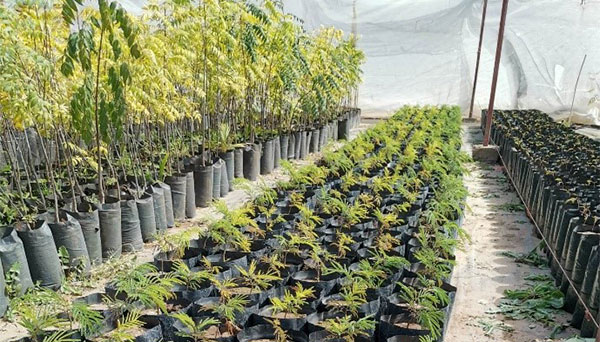
@ Fundación Ambiental del Valle del Yaqui
Background
Around the world, most food is produced by intensive agriculture. However, these practices cause multiple adverse environmental effects: greenhouse gas emissions, pollution, loss of biodiversity, landscape homogenization, erosion, etc., with direct effects on health, especially among the rural population.
With the project Schools for Agroecological Life: Resilience of Rural Ecosystems in the Yaqui Valley, the Fundación Ambiental del Valle del Yaqui (FAVY) proposes to foster the biodiversity of native species and a variety of plants by designing and implementing comprehensive gardens and groves (live barriers + planted fruits/vegetables + structures) and environmental education activities, as alternatives to restore the rural ecosystems.
The project is supported by the United Nations Decade on Ecosystem Restoration 2021–2030, which recommends investing in nature, trusting in diversity and bringing back indigenous species, the project seeks a “nature-based solutions” approach to address climate change as well as environmental and socioeconomic inequality.
Goals
To instill high school and college students with environmental awareness and knowledge for planting their own food, while fostering agroecosystem biodiversity, improved ecosystem services and species conservation.
Main activities
Working at four high schools and one university in four municipalities in the Yaqui Valley, with teachers and students as the principal workers.
Workshops to train the basic concepts of regenerative agriculture; healthy eating, based on fruits and vegetables produced without agrochemicals; and agroecosystems and their ecosystem services.
Outcomes
- Basic concepts of sustainable agroecosystems and their biodiversity learned by high school and college students in the rural zone of the Yaqui Valley.
- Comprehensive gardens for human and environmental health learned at each selected school.
- Techniques trained for the biological monitoring of insects, birds and bats as key fauna for agroecosystems.
- Students entering observations on biological monitoring on the NaturaLista and eBird platforms.
- Reforestation with native shrubs and trees.
- Gardens for nutritional and environmental health established in local communities.
- Pollinator gardens, insect “hotels”, nesting boxes for birds and prey and bat boxes designed and constructed.
- The first agroecosystem diversity festival held by and for students and the general public.
- Project outreach materials, including a video, a poster with a QR code and promotional and awareness campaigns on FAVY social networks developed.