CEC projects bring together experts, governments and communities to share knowledge, build capacity, pilot scalable solutions and strengthen cooperation.
Explore in-depth reports, scientific and technical analyses, case studies and practical resources addressing North America’s most pressing environmental challenges.
Home » Events » 26th Regular Session of the CEC Council and Meeting of the Joint Public Advisory Committee (JPAC)
26th Regular Session of the CEC Council and Meeting of the Joint Public Advisory Committee (JPAC)
Celebrating 25 years of North American cooperation on environmental protection, on 24–25 June 2019, Mexico’s Secretary of Environment and Natural Resources’ Víctor Manuel Toledo will host the annual Regular Session of the Council of the Commission for Environmental Cooperation (CEC) in Mexico City.
The Council meets each year in regular session to assess progress on cooperation and establish shared priorities and actions for environmental cooperation in North America.
The Council Session, with a theme of Circular Economy and Resource Efficiency, will include a public session led by the environment ministers, the third Youth Innovation Challenge, and other deliverables. The meeting will also feature a public forum hosted by the CEC’s Joint Public Advisory Committee, focused on advancing Council 2018 initiatives on extreme events and building disaster-resilient communities in North America.
Agenda
Monday, 24 June 2019
Building Disaster-Resilient Communities in North America
Floods, drought, hurricanes, wildfires and other extreme weather events are on the rise across the continent, presenting unprecedented risks to human and natural ecosystems in Canada, Mexico, and the United States. As North American communities face the reality of increasing climate variability, building local resilience has become a shared priority for all three countries. A significant public health concern in this regard is food security and the challenge of enhancing resilience of the food production system in the era of extreme weather events.
This JPAC forum will focus on how strategic partnerships, collaborative networks, and socio-technological innovation for early preparedness and effective response are being utilized by diverse communities confronted with, or at risk of, extreme weather events. Food security will be addressed in a discussion segment dedicated to emergent agricultural practices and technologies that aim to strengthen the resilience and sustainability of the agri-food system.
The forum will highlight examples of community resilience from throughout North America and explore the significant efforts currently underway in all three countries to foster a culture of disaster prevention, through early preparedness, and effective response. In addition to providing a platform for exchanging diverse public perspectives on extreme weather events, the forum will also consider emergent needs and new possibilities for trilateral cooperation on disaster resilience under the Commission for Environmental Cooperation.
8:00–9:30
(Lobby, Main Floor, Semarnat)
Registration of Participants
9:30–9:40
(Rooms 7 to 10, 3rd Floor)
Opening and Introductory Remarks by Sabaa Khan, JPAC Chair
Introduction of JPAC members, special guests, etc.
Keynote Presentation: Disaster Risk Reduction and Resilience
Robin Cox
Director, ResiliencebyDesign Lab,
Royal Roads University Download Presentation
Robin Cox
Director, ResiliencebyDesign Lab,
Royal Roads University
10:30–10:45
Break
10:45–11:45
Resilience Building Perspectives Part I: Community Viewpoints
Extreme weather events are impacting an increasing number of communities across North America, presenting distinct disaster risk-resilience challenges for populations living in different environmental conditions. This roundtable discussion will address the role of sustainability innovations in reducing the vulnerability of diverse communities and enhancing their resilience.
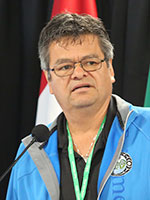
Chief Gordon Planes’ traditional name is HYA-QUATCHA, named after his great-grandfather from Scia-new, (CHEE-A-NEW), THE SALMON PEOPLE. He has been the elected Chief of the T’Sou-ke (SAA-UKE) nation for the last 11 years and sits on many boards encompassing the Salish Sea.
Previously, he has been a logger, a commercial fisherman, a pipe fitter by trade, and a Back Country Operations Manager for the Pacific Rim National Parks Reserve. He is a Coast Salish artist and carver, a traditional singer, and captain of T’Sou-ke Nation’s traditional dug-out canoes.
He and his wife, Marcella, live in the village of SIA-O-SUN. They have 6 children and 7 grandchildren. The Chief works closely with the community on renewable energy, food and water security, Coast Salish language revitalization, and economic development.
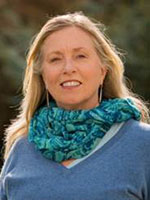
Lisa Cavicchia is an urban planner with more than 20 years of experience managing environmental and community economic development projects and city-building initiatives for the Canadian Urban Institute (CUI). She is responsible for developing and implementing partnerships with cities and communities around the world. This work includes planning, strategy development, community engagement, applied research, local economic development, local governance strengthening, sustainability planning and policy development across Canada, in Africa, Latin America, Eastern Europe, and the Caribbean. Under her management, CUI has gained a reputation for establishing strong partnerships that help cities and their communities tackle complex local development challenges and get on a trajectory for transformational change.
Gian Carlo Delgado Ramos
Research professor of the “City, Management, Land and Environment” research program at the Centro de Investigaciones Interdisciplinarias en Ciencias y Humanidades (Interdisciplinary Research Center on Sciences and Humanities), Universidad Nacional Autónoma de México (National Autonomous University of Mexico) Download Presentation
Gian Carlo Delgado Ramos
Research professor of the “City, Management, Land and Environment” research program at the Centro de Investigaciones Interdisciplinarias en Ciencias y Humanidades (Interdisciplinary Research Center on Sciences and Humanities), Universidad Nacional Autónoma de México (National Autonomous University of Mexico)
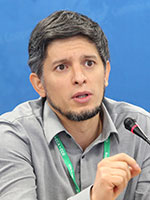
Gian Carlo Delgado Ramos is an economist from the National Autonomous University of Mexico (UNAM) who holds a master’s in Ecological Economics and Environmental Management and a PhD in Environmental Sciences, both from the Autonomous University of Barcelona. A tenured researcher at UNAM’s Interdisciplinary Research Center on Sciences and Humanities, in 2011, he received UNAM’s prize for young academics in recognition of his social sciences research work. In 2014, the Mexican Academy of Sciences awarded him its research prize. Delgado Ramos has been a member in good standing of the Academy since 2017. He was a lead author of Chapter 12 of the Intergovernmental Panel on Climate Change’s Fifth Assessment Report (AR5) and a member of the advisory council to the Cities and Climate Change Science Conference (“Cities IPCC”). He is currently a reviewer of Chapter 8 of the IPCC’s Sixth Assessment Report (AR6). In 2019, he became a research associate of the International Network of Government Science Advice (INGSA).
Delgado Ramos has received funding for research or consultancy from the Latin American Council of Social Sciences (Clacso), Mexico’s National Science and Technology Council (Conacyt), Texas A&M University, Oxfam, Local Governments for Sustainability (ICLEI) and the German Agency for International Cooperation (GIZ), among others. A prolific author, he has authored, co-authored or edited over three dozen books, as well as published some fifty book chapters and nearly two hundred scientific papers and popular science articles.
Project Director,
Center for Sustainable Cities,
University of Southern California
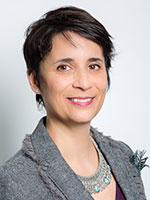
Hilda Blanco is currently the project director of the Center for Sustainable Cities at the University of Southern California where, from 2010–2016 she was a research professor. She is currently a lead author for the urban chapter (chapter 8) for the Sixth Assessment Report of the Intergovernmental Panel on Climate Change (IPCC), Working Group III-Mitigation, and also served as a lead author for the urban chapter (chapter 12) in the IPCC’s Fifth Assessment Report (2011–2014). She holds master and Ph.D. degrees in City and Regional Planning from the University of California. She held tenured appointments at Hunter College Dept. of Urban Affairs (1988–1996); and the University of Washington (1996–2009), where she chaired the Department of Urban Design and Planning (2000–2007), and is currently an Emeritus Professor. She is the North American editor of the Journal of Environmental Planning and Management, and a member of the editorial boards of Progress in Planning and the Journal of Emergency Management.
11:45–13:00
Moderated Question and Answer Period with experts, JPAC members and audience
13:00–14:15
(Rooms 1 and 2, 8th floor)
Lunch [provided]
4:15–15:15
(Rooms 7 to 10, 3rd Floor)
Resilience-Building Perspectives Part II: Enhancing Agricultural and Food Security
Climate-related disasters can endanger food security and cause major disruptions to agri-food supply chains. This roundtable discussion will focus on emerging agricultural practices and technologies that are being used to strengthen the resilience of our food systems.
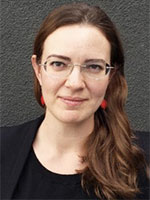
Project Manager, SDG Knowledge,
International Institute for Sustainable Development
Jennifer Temmer is a project manager with the International Institute for Sustainable Development’s SDG Knowledge group. She brings a background in agriculture, rural planning, and international development to the team. Much of Temmer’s time is spent running Peg, Winnipeg’s local Community Indicator System, and helping other communities to develop indicator frameworks to measure health and wellbeing in their own communities. Having spent time in Honduras researching technology transfer for sustainable agricultural techniques, she is keenly interested in community resilience, and specifically in resilient food systems.
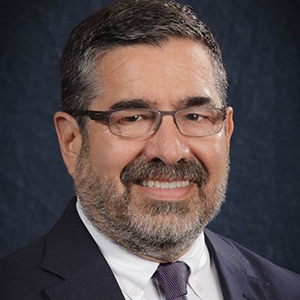
Executive Director,
Pacific Water Research Centre,
Simon Fraser University
Zafar Adeel serves as the executive director of the Pacific Water Research Centre and is a professor at the School of Resources and Environmental Management at Simon Fraser University. He has over 25 years experience in a broad range of environmental science and policy issues and has been active in the international water community, chairing several task forces and research and development committees. His current research interests lie at the intersection of water security with the international development agenda, particularly the UN’s Sustainable Development Goals.
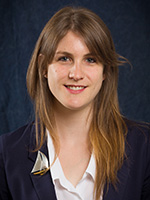
Founder,
President and Director of Huerto Tlatelolco,
CultiCiudad A.C.
A trained, lifelong photographer, with experience in movie and television production and art direction, Gabriela Vargas Romero began to get involved in environmental training and education in 1993. Some years later, in 1999, she decided to plant a “garden” in her apartment window. This radically changed her life and career, and since then she has defined herself as an “urban planter” by profession.
Her vision and work style have made her a pioneer and leader in urban agriculture in Mexico; she has advised on and developed hundreds of urban garden projects in a wide range of spaces and communities, and she has trained thousands of people in Mexico City and several Mexican states.
In 2000, she began the “Schools in Touch with the Earth” project, a school garden program implemented in five schools and which is still ongoing in three. Collaborating with the schools, she started the “Garden at Home” project, which initially planted more than 30 family gardens. From 2006 to 2012, she founded and led the Sembradores Urbanos organization, noted for its fundamental contribution to Mexico’s urban agriculture movement and for establishing the first urban gardens (Huerto Romita and Vivero Urbano Reforma) in public spaces in the Mexican capital.
In 2012, she launched the company Cultiva Ciudad and the Culticiudad socio-environmental organization, both with a major component of education and engagement focusing on the promotion of comprehensive and interdisciplinary urban farming projects in residential developments, parks and parkways, universities and medical centers, among others. The countless initiatives she has fostered stand out for their collaborative work and partnering with local authorities, health and cultural institutions, private enterprise, chefs, restaurants, civil society organizations, and the general public.
For Gabriela Vargas Romero, urban agriculture is a tool for social transformation with the power to “heal” communities that get involved and commit to producing their own food.
A crop scientist and former farmworker, Sarah Taber works in on-farm food safety, food processing, and farm/food systems design. Her clients include small family farms, nonprofits, and multimillion-dollar food tech startups. While many food and farm writers focus on policy, Taber works with on-farm operations including logistics, race and gender relations, and marketing, and how these affect the health of individual farms and the agricultural industry as a whole.
15:15–16:15
Moderated Question and Answer Period with experts, JPAC members and audience
16:15–16:30
Break
16:30–17:00
Update on Submissions on Enforcement Matters
Robert E. Moyer
Director, Submissions on Enforcement Matters and Legal Unit Download Presentation
Robert E. Moyer
Director, Submissions on Enforcement Matters and Legal Unit
17:00–17:20
Report from the National and Governmental Advisory Committee Representatives
17:20–17:30
Closing Remarks by Sabaa Khan, JPAC Chair
17:30–18:00
Break
18:00–20:00
(Lobby, Main Floor, Semarnat )
Welcoming Reception and Official Opening of the 26th Regular Session of the Council
Tuesday, 25 June 2019
Twenty-sixth Regular Session of the CEC Council
11:00–11:45
(Rooms 7 to 10, 3rd Floor)
Opportunities and Challenges for Reducing Marine Litter in North America
The session will begin with a presentation on the CEC project, Building Community Solutions to Marine Litter. Invited experts will discuss land-based sources of marine litter, including existing initiatives to prevent it from entering the ocean, and the role of innovation and the circular economy in reducing marine litter in North America.
Catherine Hallmich
Project Lead, Commission for Environmental Cooperation Download Presentation
Catherine Hallmich
Project Lead, Commission for Environmental Cooperation
Orlando Anaya
Founder and Director, Fundación Kilómetro 1
Orlando Anaya
Founder and Director, Fundación Kilómetro 1
Passionate about sustainability and social innovation, Orlando Anaya is a strong believer in the capacity of youth to inspire and create change.
Anaya is the founder and director of Km1, a youth-led coastal and marine conservation team focused on addressing marine litter while also seeks to empower and involve the next generation of ocean leaders. Through its environmental education program, social innovation workshops, and citizen science projects, the team has actively impacted more than 2000 students every month.
Having served as consultants for the CEC’s Tijuana River Watershed Marine Litter Project and received special mention in Semarnat’s “Premio al Mérito Ecológico,” Km1 was selected by The Economist and Sustainable Ocean Alliance as one the 15 Ocean Youth Leaders worldwide. Their work has resulted in invitations to several International events, such as the World Ocean Summit, One Young World Summit, and Our Ocean Conference.
Km1 is currently building the Youth’s for the Ocean National Network, a structure that will gather coastal, marine and oceanic youth-led projects from across the country and will focus on advancing in research, innovation, capacity building, and public policy.
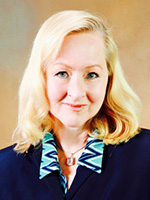
Director for Plastics Initiatives, Ocean Conservancy
Chever X. Voltmer joined Ocean Conservancy as the Director for Plastics Initiatives in September 2018. Previously, she worked at the Office of Ocean and Polar Affairs at the Department of State, where she was the lead for international marine debris issues, overseeing US engagement on this issue in the United Nations, G7, G20, APEC, ASEAN, and other fora. A retired career member of the Foreign Service, Voltmer served overseas in Poland, Guyana, Russia, Ecuador, Bosnia and Herzegovina, Ukraine, and Estonia. In Russia, she was the Embassy’s macroeconomist while detailed to the Department of Treasury. In Ukraine, she was the Assistance Coordinator in charge of a $120 million annual budget, in addition to being the Economic Counselor. Voltmer served as the Deputy Chief of Mission in Estonia and served as the Director for Central America and the Caribbean at the Office of the US Trade Representative. She holds undergraduate degrees in economics and Russian studies and a master’s degree from the National War College, where she graduated with distinction.
11:45–12:30
Moderated Question and Answer Period with experts and audience
12:30–13:45
(Rooms 1 and 2, 8th floor)
Networking Lunch [provided]
13:45–14:00
Break
14:00–17:10
Council Public Meeting: From Oklahoma to Mexico City and Beyond
CEC accomplishments over the last year (2017–2018 CEC Operational Plan)
Progress Report on Oklahoma Initiatives
Youth Engagement in the CEC: the 2019 CEC Youth Innovation Challenge
Daniel Gonzalez and Noor-ur-Rahman Shaikh, Canada
Adam Stager, Ray Zayas, and Vishnu Somasundaram, United States
Daniel Luna López, Omar Venancio Sánchez Animas, and Andrés Gutiérrez Castillo, Mexico
Dialogue on Circular Economy and Resource Efficiency in North America
An exchange between Council members and invited experts:
Chever Voltmer, Director for Plastics Initiatives, Ocean Conservancy
Gustavo Pérez Berlanga, Senior Vice President for Sustainability, Toks Restaurants