Los proyectos de la CCA reúnen a gobiernos, especialistas y comunidades para intercambiar conocimientos, fortalecer capacidades, poner a prueba soluciones escalables y fortalecer la cooperación.
Explore informes exhaustivos, análisis científicos y técnicos, estudios de caso y recursos prácticos sobre los desafíos ambientales más apremiantes de América del Norte.
Inicio » Eventos » #CCA31: trigesimoprimera sesión anual del Consejo de la CCA y foro público del CCPC
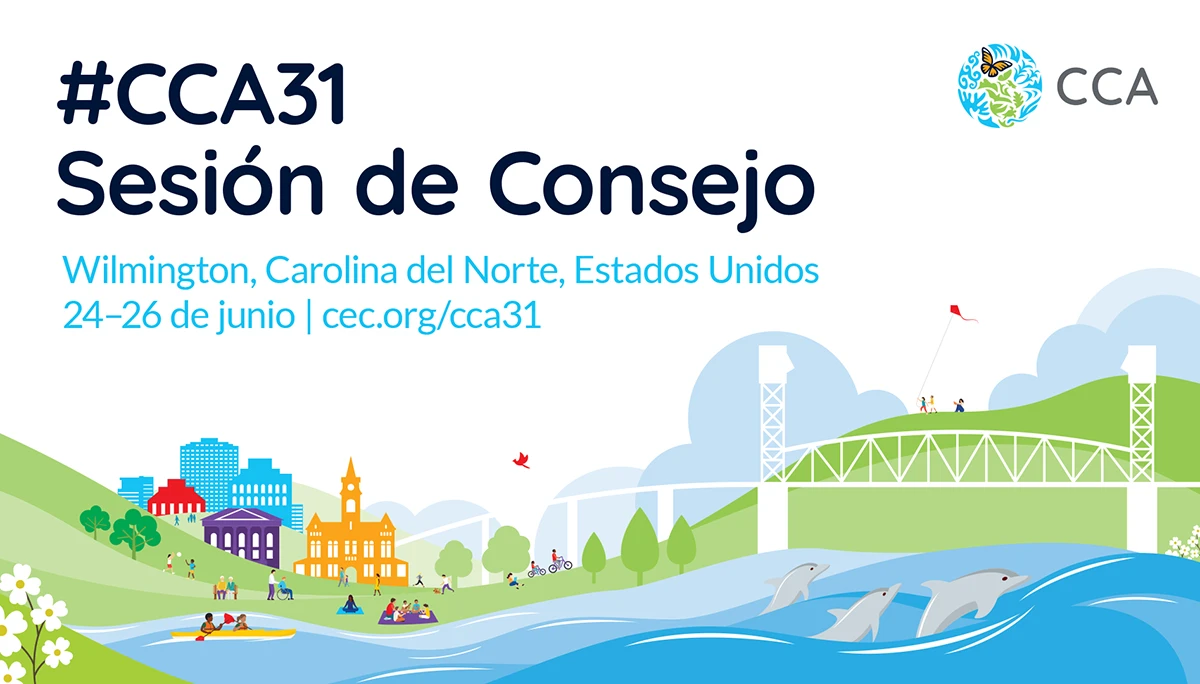
#CCA31: trigesimoprimera sesión anual del Consejo de la CCA y foro público del CCPC
Anote el evento en su agenda y participe en la trigesimoprimera sesión anual del Consejo de la Comisión para la Cooperación Ambiental (CCA) y el foro público del Comité Consultivo Público Conjunto (CCPC), a celebrarse del 24 al 26 de junio de 2024 en Wilmington, Carolina del Norte, y cuyo tema versará en torno al “Fortalecimiento de la justicia ambiental mediante el empoderamiento comunitario”.
La #CCA31 congregará a los funcionarios de medio ambiente de más alto rango de Canadá, Estados Unidos y México, y a integrantes del público en general, facilitando un espacio de diálogo, participación e intercambio de conocimientos con defensores de la justicia ambiental, líderes indígenas y comunitarios, especialistas, jóvenes, activistas y más. El año 2024 marca también el trigésimo aniversario de la CCA, ocasión propicia para que tanto la propia organización como la región de Norte América hagan un balance y pongan de relieve tres décadas de cooperación ambiental a escala regional.
Orden del día
A celebrarse durante tres días, la #CCA31 es un evento abierto al público que permite la asistencia sin costo alguno, tanto presencial como en formato virtual, y que se transmite en directo, con interpretación simultánea en español, francés e inglés.
Zona horaria: Tiempo del este, horario de verano (UTC-4)
El CCPC iniciará el evento de tres días el 24 de junio, con un foro público titulado “Impulsar la justicia ambiental en América del Norte”, que brindará a las personas participantes la oportunidad de entablar un diálogo abierto y compartir sus experiencias en relación con el impulso de la justicia ambiental y el empoderamiento de las comunidades en toda América del Norte. Este encuentro contribuirá a que la CCA identifique las cuestiones más apremiantes y emergentes en materia de equidad ambiental a escalas local y regional.
9:00 am-9:30 am
Lugar: Centro de Convenciones, salón ABC
Ceremonia de bienvenida al foro público del CCPC
9:30 am-10:00 am
Ponencia magistral
Durante la década por venir, América del Norte se enfrentará a una serie de apremiantes desafíos ambientales y sociales: desde el cambio climático y la pérdida de biodiversidad hasta las disparidades en el acceso a los recursos y las desigualdades sociales.
Desde la óptica de la justicia ambiental, esta ponencia magistral se propone profundizar en las complejas interconexiones que determinan el rumbo a seguir hacia 2030. En ella se examinará cómo la degradación del medio ambiente afecta de forma desproporcionada a las poblaciones en riesgo, empobrecidas, marginadas y excluidas, vulnerando su salud, medios de subsistencia y derechos humanos y colectivos.
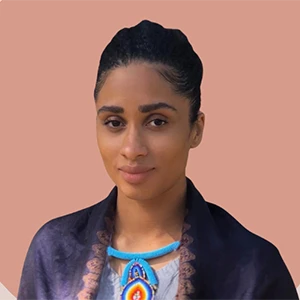
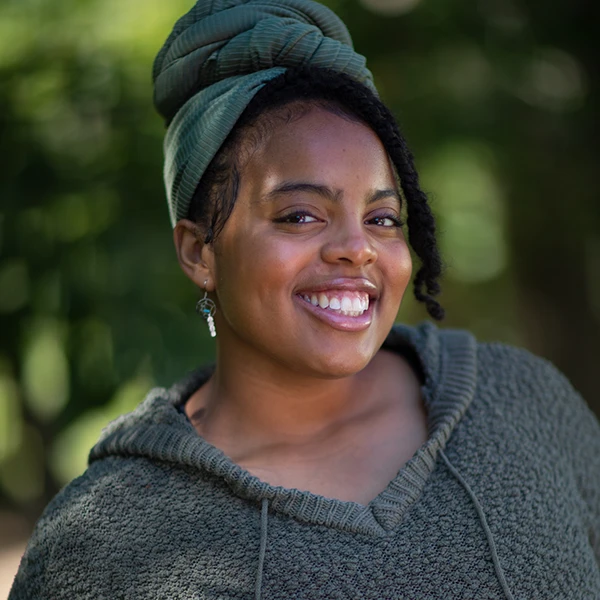
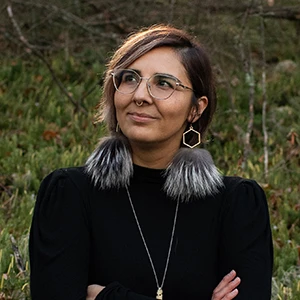
Diandra Marizet Esparza (She/Her) is an organizational development strategist, published writer, poet and co-founder of Intersectional Environmentalist, where she currently serves as the Executive Director. Diandra’s work seeks to help environmentalists everywhere recognize culture as an expression of relationship to land. Her work advocates for the accessibility of diverse stories for rising generations. Diandra is a contributing writer in the academically adopted book The Intersectional Environmentalist: How to Dismantle Systems of Oppression to Protect People + Planet
10:15 am-12:00 pm
Panel 1: “Instrumentos jurídicos y de política para tener acceso a la justicia ambiental y aplicarla en América del Norte”
Históricamente, las cargas ambientales derivadas del aprovechamiento —y también del mal uso— de la tierra y sus recursos se han distribuido de forma poco equitativa, al recaer gran parte de su peso en las comunidades empobrecidas, marginadas y minoritarias.
En esta mesa redonda se presentarán diversos ejemplos de mecanismos e instrumentos jurídicos y de política utilizados en Canadá, Estados Unidos y México para acceder a la justicia ambiental y ponerla en práctica.
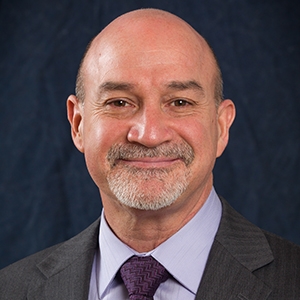
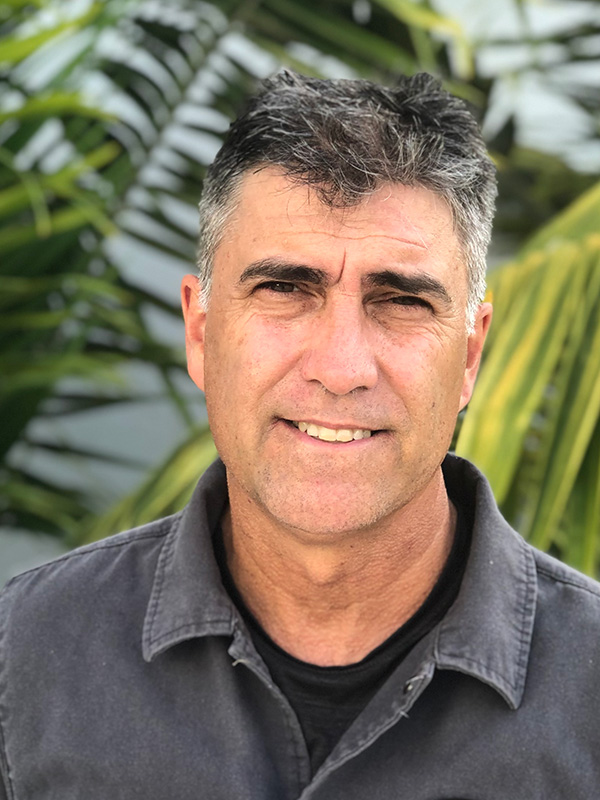
Considered one of the nation’s most experienced and respected environmental leaders, Robert Varney is a former Environmental Protection Agency (EPA) New England Regional Administrator, who currently is President of Normandeau Associates, a science-based environmental firm with eighteen offices in 12 states. He was the longest-serving regional administrator and top environmental official in New England and is credited with instituting many innovative approaches and policy initiatives that have served as national models. Prior to EPA, Mr. Varney was one of the nation’s longest-serving state environmental commissioners, appointed by three Governors of both political parties.
Bob is nationally recognized for his efforts on global climate change; energy efficiency and renewables; homeland security and preparedness; clean air, clean water and safe drinking water; superfund and brownfields cleanup and redevelopment; environmental justice and healthy communities; restoration of rivers, lakes and coastal areas; strong and consistent enforcement and compliance assistance; strengthening partnerships; and improved agency management and performance.
Mr. Varney has chaired the Environmental Council of the States (ECOS), State/EPA Superfund Policy Forum, Federal Ozone Transport Commission (OTC), Governmental Advisory Committee to the US Representative to the Commission for Environmental Cooperation (CEC), Gulf of Maine Council on the Marine Environment, New England Interstate Water Pollution Control Commission and New England Governors Conference Environment Committee. He also was a member of EPA’s Environmental Justice Advisory Council and currently serves on the NH Board of Trustees for The Nature Conservancy (TNC) and the CEC Joint Public Advisory Committee (US, Mexico, Canada). Bob is the recipient of numerous environmental awards such as the EPA Lifetime Achievement Award, NE Water Works Association’s John H. Chafee Award, Environmental Business Council of NE’s Paul Keough Award and the ECOS Founder’s Award.
Director de asuntos jurídicos y titular de la Unidad SEM
The Director of Legal Affairs and Submissions on Enforcement Matters (SEM) at the Commission for Environmental Cooperation, Paolo Solano is a lawyer trained in Mexico with over 15 years of experience in the field of international environmental law. His responsibilities at the CEC pertain to the implementation of the SEM process under NAFTA/USMCA-CUSMA and also include advising on operational and legal matters of the CEC more generally.
Paolo obtained his law degree from the Faculty of Law at the National University of Mexico (UNAM), a master’s degree on environmental governance from University of Essex (awarded with honors); a diploma on US law from the Georgetown Law Center, and graduate studies on Business Management and Canadian Law at the University of Montreal.
Paolo has also been a visiting law professor in the United States and Mexico and has published academic articles and a book chapter. Since 2008 he has published the annual report for the Yearbook of International Environmental Law and, as of 2015, also reports on the development of environmental law in Mexico.
Program Manager, Climate and Energy, Environmental Defence Canada
Aliénor (Allie) Rougeot is a Franco-Canadian climate justice activist based in Toronto. She currently serves as a Climate and Energy Program Manager at Environmental Defence Canada, where she advocates for an energy transition that is fair for workers and communities. She previously co-founded and led the group Fridays for Future Toronto during her time as an economics student at the University of Toronto.
Amanda M. Hauff
Senior Advisor on Environmental Justice, Office of International and Tribal Affairs, US Environmental Protection Agency Descargar la presentación
Amanda M. Hauff
Senior Advisor on Environmental Justice, Office of International and Tribal Affairs, US Environmental Protection Agency
Amanda M. Hauff is a Senior Advisor on Environmental Justice for EPA’s Office of International and Tribal Affairs. Throughout her career, she has managed Tribal, international, children’s health and environmental justice programs for EPA. She developed the first strategic plan for the Federal Interagency Working Group on Environmental Justice to establish a framework for accountability to improve the health, quality of life, and economic opportunities for overburdened communities. She also advanced EPA's progress on equity and environmental justice by developing federal policies, programs, scientific conceptual models, and indicators to implement environmental justice principles into EPA’s actions.
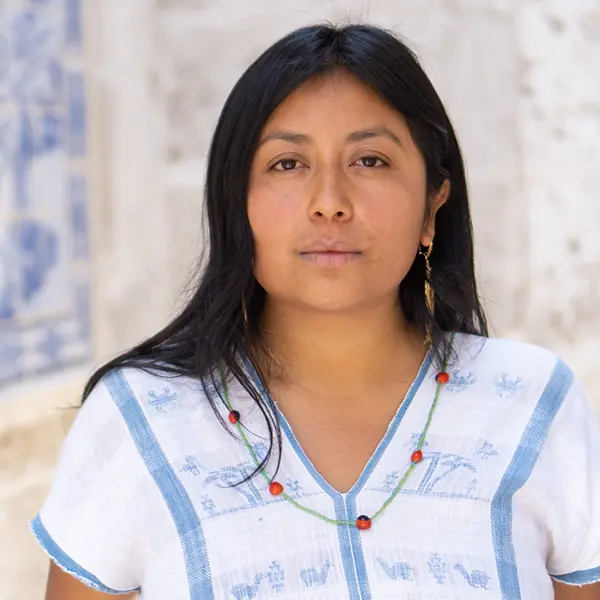
Erika Hernández Mariaca is a woman from the Nahua Indigenous people of Cuentepec, Morelos, Mexico, and an activist. She is part of the Indigenous Futures Network, working on the construction and communication of narratives around the climate crisis. She is a co-founder of Cuentepec Tosepan, a collective dedicated to the defense of territory, and is a member of the Unification of Peoples and Colonies against Mining in Morelos. Currently, she specializes in environmental education from a popular approach with an intercultural perspective and in strengthening the Nahuatl language. She holds a degree in Social Work from the Autonomous University of the State of Morelos.
1:15 pm-1:30 pm
Informe de representantes de los comités consultivos nacional y gubernamental de Estados Unidos
Panel 2: “Movilización comunitaria y desafíos en materia de justicia ambiental”
La equidad ambiental reconoce el carácter concurrente de las injusticias que afectan a las comunidades marginadas en todo el planeta, e identifica cómo estas inequidades se relacionan y guardan una interconexión.
En esta mesa redonda se presentarán los principios de la justicia ambiental, ejemplificados en varios casos de comunidades que los están aplicando. Asimismo, se facilitará una plataforma para analizar los actuales desafíos en materia de justicia ambiental que enfrentan los tres países de América del Norte e intercambiar reflexiones sobre la trayectoria futura al respecto en la arena subcontinental.
A social anthropologist out of Universidad Autónoma de Yucatán and a doctoral candidate in Mesoamerican Studies from Universidad Nacional Autónoma de México, Cessia Esther Chuc Uc is a professor and researcher at Universidad Autónoma de Campeche. Her current research work focuses on the use of honey and wax from the beeswax from the stingless bee (Melipona beechii), encompassing honey’s symbolic, ritual, medicinal and nutritional significance.
Originally from a Mayan family of artisans, she overcame her social disadvantages and began to work in fields of knowledge that have been validated by her tireless efforts to rescue and create awareness of her millennial roots. Her career and professional endeavors were recognized by Unesco in October 2010 as part of the “Indigenous Women: Life Stories” initiative. An author of numerous studies on aspects of Mayan culture, such as thought, language, current farming rituals and traditional crafts, Chuc Uc has also written books to teach the Mayan language. More recently, she is noted for her bilingual (Mayan-Spanish) stories in which she uses the Mayan narrative on the elements of nature as a strategy to teach children to respect and value their natural and cultural heritage.
Naolo Charles
Founder, Black Environmental Initiative, and Co-founder, Canadian Coalition for Environmental and Climate Justice
Naolo Charles
Founder, Black Environmental Initiative, and Co-founder, Canadian Coalition for Environmental and Climate Justice
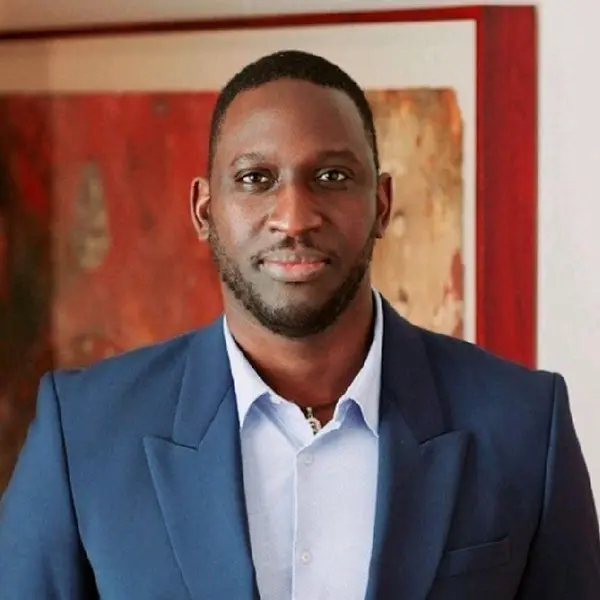
Naolo Charles is the founder of the Black Environmental Initiative (BE Initiative) and the co-founder of the Canadian Coalition for Environmental and Climate Justice (CCECJ), a coalition that played a key role in the campaign for the first law to address environmental racism in Canada.
Holder of a Master’s degree in Environment, Naolo is a bilingual environmental communications and education specialist. During his master’s degree, Naolo studied the question of how governments and businesses can use the results of lifecycle assessments (LCA) to communicate the environmental and social impacts of everyday products with environmental labeling. He was also one of the experts on the Thriving Natural Environment Advisory table, brought together by Environment and Climate Change Canada (ECCC) to develop Canada’s first national adaptation strategy. Naolo regularly offers training on environmental justice and anti-racism. He is a life-long student of Black History and his work on environmental justice reflects it.
A first-generation immigrant in Canada, Naolo has created employment opportunities for dozens of Black and BIPOC youth in the environmental and social sectors and is committed to mentoring youth and supporting equity-deserving communities. He speaks at conferences, events, and to the media about environmental justice. Before starting BE Initiative and CCECJ, Naolo worked for over 10 years for various organizations, including foundations, universities, governments, and start-ups.
Hails from the Zoque Indigenous community of Chimalapa, Oaxaca, and is a researcher at the University of Granada.
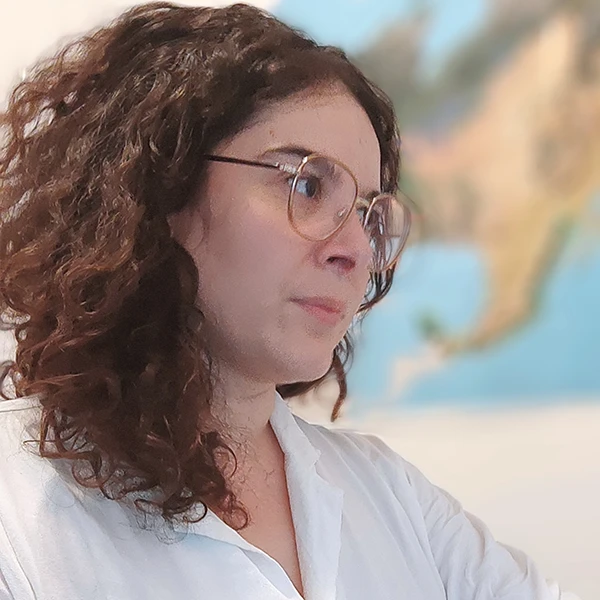
With a bachelor’s degree in sociology from Universidad Autónoma Metropolitana (UAM), a master’s in Latin American studies from Universidad Nacional Autónoma de México (UNAM), and on leave from a position as a contract researcher in the Sociology Department at Universidad de Granada, Josefa Sánchez Contreras is currently a visiting scholar at the Centre of Latin American Studies, University of Cambridge in the United Kingdom.
In her academic work, Sánchez Contreras collaborates on various energy transition projects. She coauthored the book, Energy Colonialism: Sacrifice Zones for Energy Transition in Spain, Mexico, Norway and Western Sahara (Colonialismo energético: territorios de sacrificio para la transición energética en España, México, Noruega y el Sahara Occidental) (Icaira, 2023) and is the coordinator for the book Ever More Mokayas, The Thoughts and Feelings of Contemporary Zoques (Cada vez más Mökayas, pensares y sentires de zoques contemporáneos) (Ce-Acatl, 2022). She is also part of the Matza Collective, a group of Zoque indigenous people who defend the rivers and territory in the Chimalapas jungle, Oaxaca, Mexico.
Don Hardy
Mayor of Kinston, North Carolina, Chairman of North Carolina Mayors Association Board of Directors, Vice Chairman, National League of Cities, and Member of the African American Mayors Association
Don Hardy
Mayor of Kinston, North Carolina, Chairman of North Carolina Mayors Association Board of Directors, Vice Chairman, National League of Cities, and Member of the African American Mayors Association
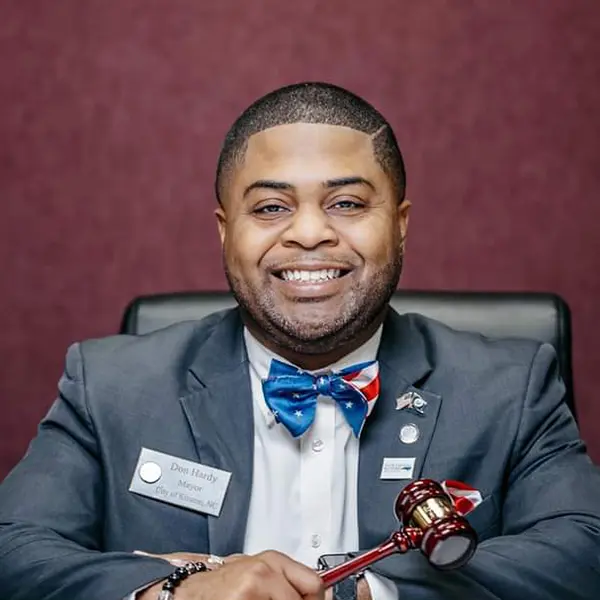
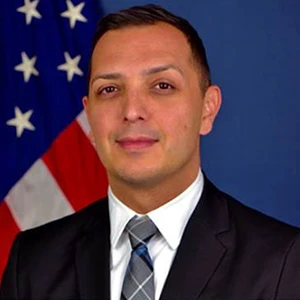
Mayor Dontario Hardy is currently the Mayor of the City of Kinston and has served since 2017. Mayor Hardy is a proud veteran of the United States Navy. He is also currently serving as a sworn law enforcement officer at the Lenoir County Sheriff’s Office and has worked at the local, county, and federal levels of law enforcement for over the past 17 years. Additionally, Mayor Hardy serves on the North Carolina Global Transpark Authority Board of Directors, North Carolina League of Municipalities Board of Directors, and National League of Cities Board of Directors. He is the Past Chairman of the NC Mayors Association, President of the North Carolina Black Elected Municipal Officials, and President of the Pitt-Greenville Lodge #69 Fraternal Order of Police. He is serving a second term as a Governor’s appointee to the North Carolina Governor’s Crime Commission, is a National Diversity Committee member at the National Fraternal Order of Police, and participates in numerous other boards and committees representing the City of Kinston as well as cities, towns, villages, and law enforcement officers across the state of North Carolina.
Co-Director of Research and Education, North Carolina Environmental Justice Network
Dr. Chris Hawn is with the North Carolina Environmental Justice Network and serves as their Co-Director for Research and Education. Dr. Hawn works with communities impacted by environmental racism and connects them to researchers, students, and teachers to create evidence-based advocacy and increase EJ competency in the classroom.
Prior to this role, Dr. Hawn was a professor of Geography and environmental systems at the University of Maryland, Baltimore County, during which they created and critiqued participatory research to improve actionable research for EJ communities.
Dr. Hawn continues NCEJN’s legacy for finding unlikely collaborators to shift power for social justice. They founded the Spidey Sens-r project, where communities monitor air quality issues by collecting spider webs. Last year, they were honored with the Black and Green 40 Under 40 Award by the Black Millennials for Flint.
3:15 pm-4:50 pm
Diálogo abierto sobre las oportunidades de cooperación trilateral por el medio ambiente: “¿Podemos pensar en la justicia ambiental desde una perspectiva regional de América del Norte?”
4:50 pm-5:00 pm
Palabras de cierre, por el presidente del CCPC, Esteban Escamilla
Zona horaria: Tiempo del este, horario de verano (UTC-4)
En el segundo día tendrán lugar una presentación del trabajo de la CCA en materia de justicia ambiental (parte 1); un panel de jóvenes que pondrá de relieve las perspectivas generacionales en América del Norte, y concluirá con una mesa redonda de especialistas con el director ejecutivo de la CCA, una discusión sobre los antecedentes y trayectorias de la justicia ambiental y su evolución en Canadá, Estados Unidos y México.
11:00 am-11:30 am
Lugar: Centro de Convenciones, salón ABC
Presentación del trabajo de la CCA en materia de justicia ambiental (parte 1): Mejoramiento de la calidad del aire en pro de la justicia ambiental
Esta sesión presentará un panorama general de la iniciativa de la CCA Mejoramiento de la Calidad del Aire en pro de la Justicia Ambiental que tiene el objetivo de crear asociaciones de colaboración con organizaciones comunitarias interesadas en gestionar sus propios proyectos de monitoreo de calidad de aire para comprender, medir y mitigar la exposición y emisiones de PM2.5 y carbono negro
Orlando Cabrera-Rivera is the Head of the Environmental Quality Unit at the CEC. He oversees the development and implementation of North America-wide environmental quality projects and capacity building efforts under the CEC’s cooperative work program relating to air quality, climate, chemicals management, pollutant release and transfer registers (PRTRs), and environmental health. Orlando has over thirty years of experience in the environmental management field and in the development and implementation of international, national, regional, and local environmental pollution management and policy initiatives. He has a Bachelor of Science degree in meteorology from the Department of Oceanic and Atmospheric Sciences at the University of Wisconsin-Madison, and a Master of Science degree in land resources management from the Gaylord Nelson Institute for Environmental Studies at UW-Madison.
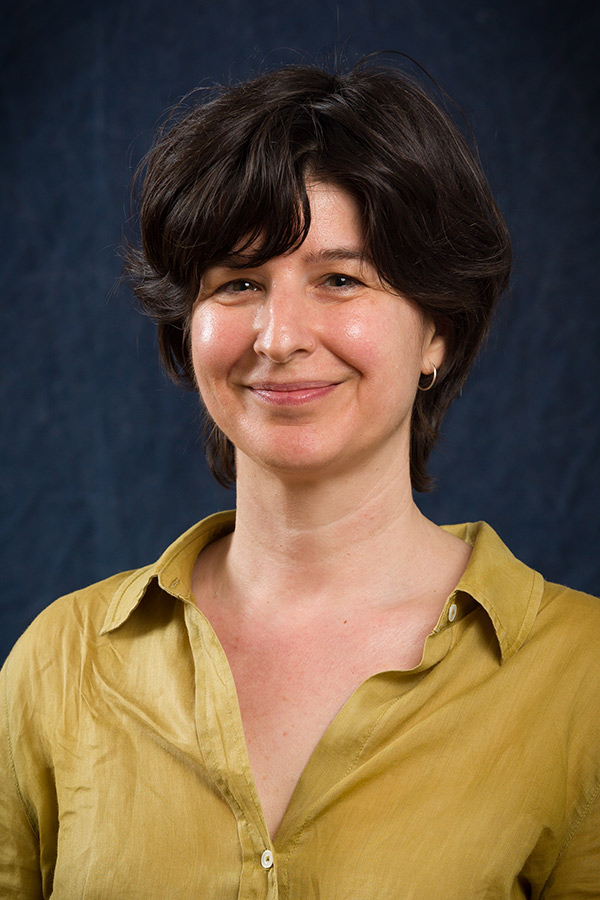
Elizabeth Campos Sánchez has been a Project Lead at the CEC since 2021. Among other projects, she coordinates the Air Quality Improvement for Environmental Justice initiative. She holds a Bachelor of Biology from the National University of Mexico (UNAM) and a Master of Science degree in natural resource management and rural development from El Colegio de la Frontera Sur. Her background includes working as an environmental consultant, providing technical review and editing, and facilitating environmental education workshops. Her experience incorporates working in transdisciplinary environments, community engagement and environmental research. She is interested in data visualization and democratization, as well as geospatial analysis.
11:30 am-12:00 pm
Presentación de la CCA sobre la Iniciativa RETC de América del Norte y demostración de la página web y base de datos En balance en línea
Esta sesión presentará la Iniciativa de Registro de Emisiones y Transferencia de Contaminantes (RETC) de América del Norte, una iniciativa de la CCA fundamentada en Derecho a Saber, que promueve el acceso público y la comprensión de las cantidades, fuentes y gestión de los contaminantes industriales para apoyar la prevención de la contaminación y la sostenibilidad. Se hará una demostración del sitio web En balance en línea y de la base de datos RETC de América del Norte
Orlando Cabrera-Rivera is the Head of the Environmental Quality Unit at the CEC. He oversees the development and implementation of North America-wide environmental quality projects and capacity building efforts under the CEC’s cooperative work program relating to air quality, climate, chemicals management, pollutant release and transfer registers (PRTRs), and environmental health. Orlando has over thirty years of experience in the environmental management field and in the development and implementation of international, national, regional, and local environmental pollution management and policy initiatives. He has a Bachelor of Science degree in meteorology from the Department of Oceanic and Atmospheric Sciences at the University of Wisconsin-Madison, and a Master of Science degree in land resources management from the Gaylord Nelson Institute for Environmental Studies at UW-Madison.
Danielle Vallee
Líder de proyecto, Iniciativa RETC de América del Norte, CCA
Danielle Vallee
Líder de proyecto, Iniciativa RETC de América del Norte, CCA
Danielle Vallée has worked with the CEC’s Environmental Quality unit since 2006. She leads the North American PRTR Initiative, a cornerstone effort of the CEC since 1994, and ensures the development and implementation of the Taking Stock Online website, Taking Stock report series, trinational data quality and comparability efforts, and various outreach activities. Danielle has over 25 years’ experience in managing international environmental projects that involve a strong public engagement component. She has a bachelor’s degree in geography and a master’s degree in public policy and administration (geography) from Concordia University in Montréal, Québec.
2:00 pm-3:30 pm
Panel de jóvenes:
“Cerrar la brecha: una conversación sobre la lucha generacional por la justicia ambiental”, encuentro que versará sobre la importancia de la participación de la juventud en el ámbito comunitario en toda América del Norte para abordar la justicia ambiental.
A Royal Descendant of the Kingdom of the Happy Land, a post-emancipation Afro-Indigenous settlement nestled deep within the Appalachian Mountains of North and South Carolina. La’Meshia Whittington, has maintained the traditions of her people and her grandmother, philanthropist Rebecca Staley, by serving the people. La’Meshia Whittington is the Eco-Architect.
La’Meshia is a disruptor of harmful systemic inequities that burden frontline and marginalized communities of color and low wealth populations. La’Meshia is also a visionary on the underground railroad of eco-liberation and systems change to remove the oppression of legacy pollutions in Black communities, to remove health inequities created in socioeconomically disadvantaged communities targeted for waste, and to champion the autonomy and sovereignty of powerful communities across the US South and the Global US South.
Prof. Whittington is a Millennial Co-Founder of Democracy Green, alongside her family: Co-Founder/Executive Director Sanja Whittington and GenZ Co-Founder Robert Whittington, Jr. Democracy Green is an environmental justice and pro-democracy reform non-profit birthed in Hurricane Florence's floodwaters and led by Afro-Indigenous and Black leaders.
Through Democracy Green, Prof. Whittington coordinated over 250 water and land rescues in eastern NC, co-fundraised over $2 million in mutual aid emergency relief, served as the first Chairwoman of the community fund that disbursed aid relief in multiple disasters and through COVID-19, and organized a 25,000lb trailer of life-saving emergency supplies delivered to residents in Florida in the wake of Hurricane Michael.
Since that time, Democracy Green has assisted communities in receiving federal funding for water infrastructure, including recently a $13.2 million grant to develop clean water infrastructure for the first time in the history of an unincorporated Black community.
Through the organization and as a fund advisor, Prof. Whittington has supported the direct movement of over $75 million to communities across the US South since the global pandemic.
North Carolina Governor Roy Cooper appointed Professor Whittington to serve on the N.C. Water Treatment Certification Board and she was again appointed to the N.C. Department of Environmental Quality's Environmental Justice and Equity Advisory Board by Secretary Elizabeth Biser. In 2024, Professor Whittington was appointed by the US Environmental Protection Agency to serve on the Local Government Advisory Committee (LGAC). Prof. Whittington was selected to serve as a Tribunal Judge on the Nation’s first Indigenous-led Rights of Nature Tribunal to address the impacts of the Mountain Valley Pipeline.
Professor Whittington created the nation's first research on racial gerrymandering and pollution hotspots in marginalized communities and then again on the intersection of PFAS and Environmental Justice. Professor Whittington published the impacts of wood pellets and environmental justice communities for state agencies and non-profits. Her work in emerging contaminants led Democracy Green to successfully file and win a petition to the US Environmental Protection Agency, challenging major contaminants in their home state of North Carolina.
Whittington's work was instrumental in designing the US EPA PFAS roadmap, the designation of PFAS chemicals as hazardous substances, and instrumental in the nation’s first drinking water standards on PFAS. Prof. Whittington’s research was included in the nation's first clinical guidelines to the CDC on PFAS testing.
Whittington is the Vice-Chief of the Eastern Band of the Apalwahči (an Afro-Indigenous collective) and serves as a Diversity and Environmental Justice Lecturer in the College of Natural Resources at N.C. State University. La’Meshia was the 2022 ABC11 ClimateChangeHero, highlighted as a ABC6 Our America: Green Guardians and chosen as a Clinton Global Initiative Grist50 Fixeranda2024WorldWaterForumYoungWater Sustainability Leader. Professor La’Meshia Whittington is the Eco- Architect.
Executive Director and Host, The Chavis Chronicles
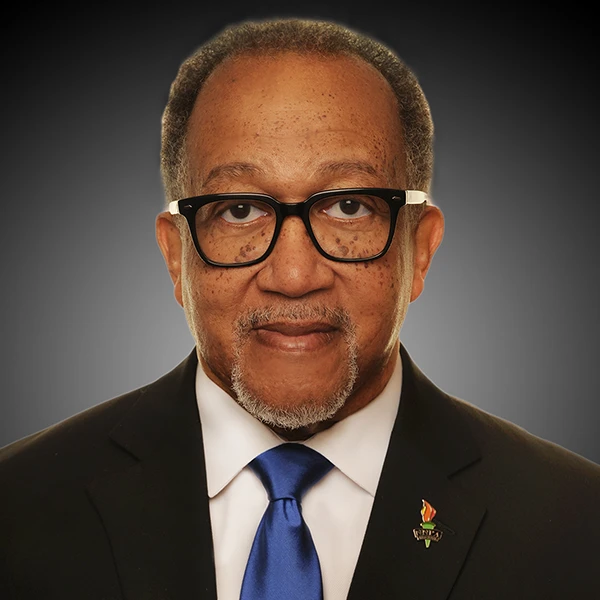
Dr. Benjamin Franklin Chavis Jr. (born January 22, 1948) in Oxford, North Carolina is an African American civil rights leader and icon, United Church of Christ (UCC) ordained minister, author, journalist, organic chemist, environmentalist, global entrepreneur, and currently President and CEO of the National Newspaper Publishers Association (NNPA) based in Washington, DC since 2014.
Dr. Chavis is the Executive Producer and Host of The Chavis Chronicles, www.TheChavisChronicles.com, broadcast weekly on PBS TV Network stations reaching over 90 million households throughout the United States. THE GOOD NEWS is a new nationally syndicated, daily radio commentary www.TheGoodNewsRadio.com hosted by Dr. Benjamin F. Chavis, Jr. powered by the Krantz Media Group.
The Chavis family has been deeply rooted in the “freedom movement” in Granville County, North Carolina for over 250 years as landowners, farmers, educators, theologians, physicians, and activists. Benjamin F. Chavis Jr is the great, great, great-grandson of the Reverend John Chavis (1763–1838), the first Black American to attend Princeton University and the first Black American to be ordained as a Presbyterian minister in the United States (in 1799).
In his youth in the early 1960s, Chavis was the North Carolina statewide youth coordinator and Southern Christian Leadership Conference (SCLC) assistant to Martin Luther King Jr., who inspired him to work and to become a Christian minister in the civil rights movement across the United States, and to later to champion African liberation in Angola, Namibia, South Africa and in the Democratic Republic of the Congo (DRC). Chavis became an active supporter and associate of the African National Congress (ANC) led by Oliver Tambo and Nelson Mandela.
Chavis first attended Saint Augustine University (HBCU) in Raleigh, NC in 1965 and 1966 majoring in chemistry. He transferred to the University of North Carolina at Charlotte in 1967 and graduated with a BA in Chemistry in 1970. While in Charlotte, Chavis continued to work as a college student for SCLC and as a labor organizer for the American Federation of State, County, and Municipal Employees (AFSCME).
At the age of 24, Reverend Benjamin F. Chavis Jr rose to international prominence in 1972 as the leader of the Wilmington Ten in NC, civil rights activists who were “political prisoners” as designated by Amnesty International, and who were unjustly convicted of committing arson and sentenced to a combined total of 282 years in prison. The Wilmington Ten convictions and sentences were appealed and eventually overturned in 1980 by the US 4th Circuit Court of Appeals due to unconstitutional systemic racism and "prosecutorial misconduct." During Chavis’ frontline foot-soldier civil rights career in the 1960s, 1970s, and in the1980s, he has been unjustly charged, arrested and jailed over 67 times, and in each case subsequently found not guilty or dismissed as unjustly charged.
Chavis returned to graduate schools in NC, DC and NY in the field of civil rights as a minister and a program director of the United Church of Christ Commission for Racial Justice under the leadership of another mentor, the Reverend Dr, Charles E. Cobb, Sr, Chavis received the Master of Divinity (magna cum laude) from Duke University (1980) and a Doctor of Ministry from Howard University (1981). Chavis was admitted in 1982 into the PhD program in Systematic Theology as a graduate student at Union Theological Seminary in New York City and completed all of the academic course requirements in 1984. Chavis was elected National Vice President of the National Council of Churches in 1988.
In 1993, the national board of directors of the National Association for the Advancement of Colored People (NAACP) elected Dr. Benjamin F. Chavis, Jr as the youngest Executive Director and CEO of America's oldest national civil rights organization. In July of 1993, Chavis was proud to introduce The Honorable Nelson Mandela to speak in person at the NAACP national convention in Indianapolis, Indiana.
Benjamin Chavis actually began his journalistic career at the age of 11 while in the sixth grade at Angier B. Duke Elementary School in Oxford, NC. Chavis wrote weekly news stories about Black youth activism for The Carolina Times, published by one of the leading members of the NNPA, Louis E. Austin, in Durham, NC. From 1985 to 1993, Chavis authored and produced a weekly national commentary “Civil Rights Journal” for the NNPA, Jet Magazine, National Black Radio Network, and for the American Urban Radio Network. Chavis has continued to write award-winning Op Eds, news features, and columns for the NNPA from 2003 to 2023.
In 1982, Dr. Chavis was the first person to coined the term environmental racism during environmental justice protests in Warren County, NC. Over the past four decades, Dr. Chavis has emerged as the "Godfather of the Environmental Justice Movement” that today has evolved into an effective worldwide movement for environmental and climate justice and equity.
Dr. Chavis defined environmental racism as “racial discrimination in the deliberated targeting of ethnic and minority communities for exposure to toxic and hazardous waste sites and facilities, coupled with the systematic exclusion of minorities in environmental policy making, enforcement, and remediation.”
In 1986 Dr. Chavis conducted, co-authored and published the landmark national study: Toxic Waste and Race in the United States of America, that statistically revealed and substantiated the national correlation and causation between race and the location of toxic waste throughout the United States. In 1991, as Executive Director of the United Church of Christ Commission for Racial Justice, Dr. Chavis Co-Chaired, funded and organized the First People of Color Environmental Leadership Summit in Washington, DC that codified the Principles of Environmental Justice
In 1992–1993, Dr. Chavis served as a member of the Clinton-Gore Transition Team and later became an active member of the President’s Council on Sustainable Development. Dr. Chavis was the National Director of the successful Million Man March on October 16, 1995, in Washington, DC., the largest African American event mobilization in the history of America.
In 2001, Dr. Chavis and Russell Simmons co-founded and organized the first National Hip-Hop Summit in New York City that led to establishment for the Hip-Hop Summit Action Network (HSAN),www.HSAN.org the world’s largest international coalition of recording artists, producers, and entertainment industry leaders. From 2001 to 2012, over 75 Hip-Hop Summits were held in NY, TX, CA, Il, MI, MD, PA, NJ, NC, GA, MO, IN, WI, VA, AL, Toronto, and Johannesburg.
Currently, Dr. Chavis also serves as the Co-Chair of No Labels; Chairman of the National Association for Equal Opportunity in Higher Education (NAFEO); Chairman of the Thurgood Marshall Center Trust; and Co-Founder Chair Emeritus of Diamonds Do Good.
Dr. Chavis has four sons: Benjamin III, Franklin, John Mandela and Reginald Louis. He has four daughters are Michele, Paula, Renita, and Ana Elisabeth. He is a grandfather and a great grandfather.
Iman A Berry
Co-Founder, Green Ummah and Migration and Climate Change Contact Point, Youth Constituency, UFCCC
Iman A Berry
Co-Founder, Green Ummah and Migration and Climate Change Contact Point, Youth Constituency, UFCCC
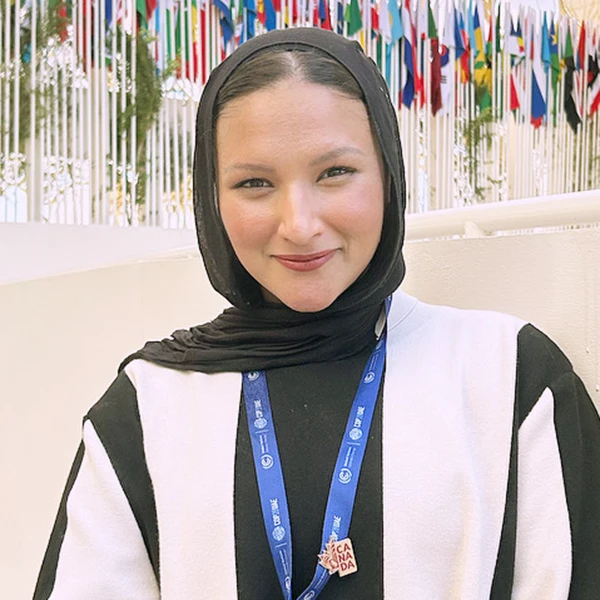
Iman Berry is the co-founder of Green Ummah (GU), a federally registered non-profit focused on providing education related to environmental justice to young people all over Canada and the US. GU works with educators, nature guides, Indigenous communities, and scientists to develop school curriculums about environmental justice. In each classroom, the curriculum is taught, and students are brought on field trips to local nature areas to build relationships with the land. To date, GU has provided 1000s of students with this experience. In addition to GU, Iman has also worked to provide education about the relationship between climate and politics through lobbying, organizing political debates and education campaigns. Iman currently serves as the Migration and Climate Change Contact Point and as a part of the Global Coordination team for the youth constituency of the UFCCC. Iman was also one of the Canadian Youths chosen for the 2023 CEC Youth Engagement Week, where youth from all over North America developed a youth strategy.
Katia Forgues
Co-Director, Sustainable Youth Canada and member, ECCC’s Youth Council
Katia Forgues
Co-Director, Sustainable Youth Canada and member, ECCC’s Youth Council
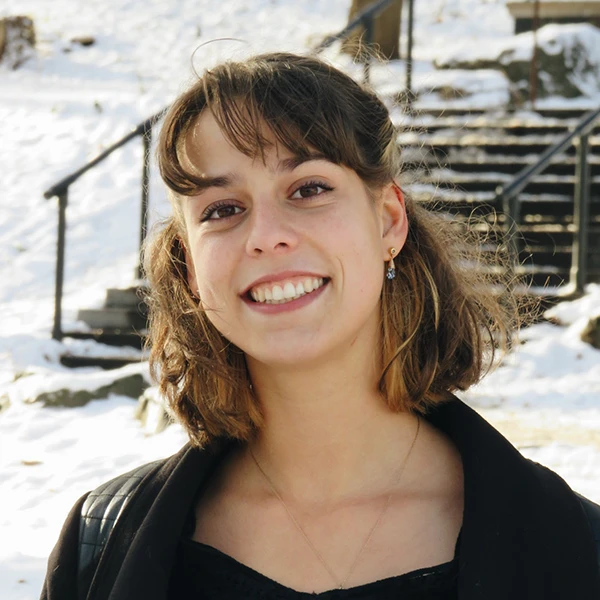
Katia Forgues is a young scientist with a profound passion for nature, our relationship with it, and empowering youth and communities to become environmental leaders. She serves as the co-director of Sustainable Youth Canada, a youth-led non-profit advocating for increased youth involvement in policy and empowering students across Canada to launch environmental projects in their regions, and she is also a member of Environment and Climate Change Canada’s Youth Council.
With a Master’s degree in Biology from McGill University, Katia has been involved in diverse projects, such as weather monitoring in Northern Quebec with Cree communities, studying the impacts of climate change on berries that are traditionally harvested by the Innus, and working on reforestation and carbon offset initiatives in Panama with an Embera community. Her journey is fueled by a love for learning and a deep appreciation for the diverse perspectives of the people with whom she connects along the way.
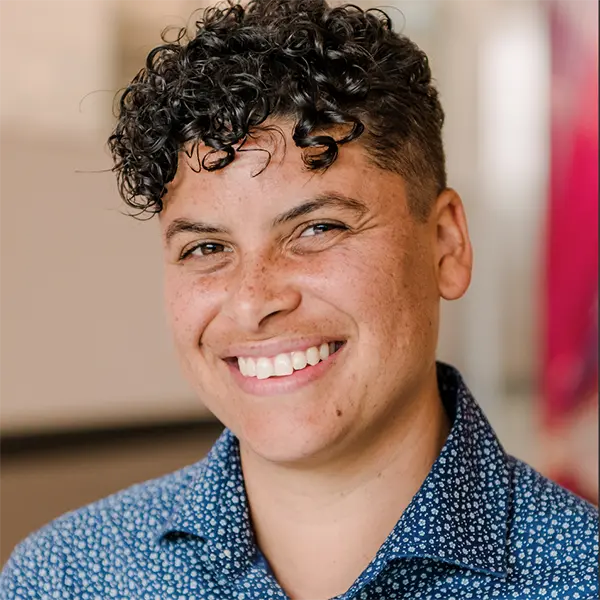
Cameron is an environmental justice organizer, oral historian, award-winning journalist, and a developing author who is dedicated to re-centering the voices, narratives, and knowledge of historically disinvested communities in conservation, environmental policy, storytelling, and corporate decision-making.
A double alumnus of Duke University (2021 and 2023), Cameron, in partnership with prominent leaders and movement icons, has spent her seven years in North Carolina working with university and community leaders to establish climate education initiatives, leverage institutional power, and report on the intersection of environmental racism, infrastructure and policy, and land and agriculture. Her journalism has appeared in The Nation, The Assembly NC, Atmos Magazine, Grist, Southerly, Yale Climate Connections, and Earth in Color. She is an advisory board member for the Rural Beacon Initiative, a member of the strategic planning committee of Warren County Environmental Action, and is the project lead for the Environmental Justice Oral History Project: a storytelling hub and repository that combines a diverse set of storytelling modalities to provide a comprehensive view of environmental justice in the southern US.
She is also a National Geographic Young Explorer, 2024 Aspen Institute Future Leader Climate Fellow, Covering Climate Now’s 2023 Student Journalist of the Year Awardee, a 2023 NAAEE Environmental Education 30 Under 30 Leader, and a 2022 Yale/Op-Ed Project Public Voices Fellow on the Climate Crisis.
Cameron’s work is inspired by her own connection to ancestral farmland in Maryland that has been in her family for almost 100 years.
Colton Buckley
Chief Executive Officer, National Association of Resource Conservation and Development Councils and Administrator, EPA National Environmental Youth Advisory Council
Colton Buckley
Chief Executive Officer, National Association of Resource Conservation and Development Councils and Administrator, EPA National Environmental Youth Advisory Council
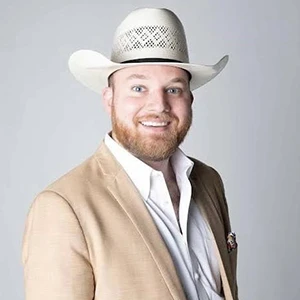
Colton Buckley serves as the Chief Executive Officer of the National Association of Resource Conservation and Development Councils (NARCDC), a national nonprofit organization comprising over 180 RC&D Councils across nearly 40 states, committed to advancing agricultural and conservation initiatives and fostering rural economic growth and community development. He previously served on the NARCDC board of directors, as well as on the boards of the Texas and Oklahoma RC&D Associations. Recently, Colton was appointed by the Environmental Protection Agency (EPA) Administrator to the National Environmental Youth Advisory Council (NEYAC) as the sole representative of rural and agricultural communities on the Federal Advisory Council. He has also represented the next generation of rural Americans through his appointment on Texas Governor Greg Abbott’s Young Texans Steering Committee, the Texas Commissioner of Agriculture’s Advisory Council, the Texas Workforce Commission’s Workforce Solutions of West Central Texas board of directors, and as Texas’ youngest appointee to the Texas A&M University System Board of Regents, appointed by Governor Rick Perry.
Colton holds a Bachelor's degree in Agricultural Services and Development and a Master's degree in Communication. His deep-rooted passion for rural America, shaped by his personal experience growing up on his grandparents' Brangus cow-calf operation in Arnett, Texas (population 15), has driven his educational and advocacy efforts for the agricultural sector and the revitalization of rural communities.
Fátima Zúñiga
Student, Renewable Natural Resources Engineering, Universidad Autónoma Chapingo
Fátima Zúñiga
Student, Renewable Natural Resources Engineering, Universidad Autónoma Chapingo
Sacnité Acosta
Co-Founder and Co-Leader, LEGAIA
Sacnité Acosta
Co-Founder and Co-Leader, LEGAIA
4:00 pm-5:30 pm
Mesa redonda de especialistas con el director ejecutivo de la CCA: “Justicia ambiental: orígenes, evolución y políticas emergentes en América del Norte”
“Justicia ambiental: orígenes, evolución y políticas emergentes en América del Norte”
Esta mesa redonda se centrará en iniciativas pasadas, presentes y en ciernes encaminadas a fomentar la justicia ambiental en América del Norte, en especial en el contexto de la triple crisis planetaria: cambio climático, contaminación y pérdida de biodiversidad. Se pedirá a las personas especialistas invitadas que expongan sus puntos de vista acerca de las similitudes y divergencias en el concepto y entendimiento de la justicia ambiental en Canadá, Estados Unidos y México, al igual que sobre su evolución y la forma en que comunidades y organismos públicos se han involucrado en ella. Asimismo, se reflexionará en torno a cómo las acciones en materia de justicia ambiental (lo que incluye un mayor acceso a la información; la promoción de una participación significativa, y la aprobación de leyes, políticas y programas específicos en este ámbito, entre otros elementos) pueden contribuir a abordar las desigualdades ambientales padecidas por comunidades históricamente desfavorecidas y marginadas que enfrentan situaciones de contaminación del aire y el agua, calor extremo, sequía, fenómenos meteorológicos extremos, inundaciones, escasez de alimentos y otras vulnerabilidades interseccionales.
Jorge Daniel Taillant serves as the CEC’s Executive Director since August of 2022.
He is a life-long global advocate for human rights and environmental protection. His career spans several decades, working with international development agencies, as an advisor to governments, leading innovative civil society organizations and networks, and with disadvantaged communities to tackle some of the world’s most pressing environmental challenges.
He has spear-headed incisive global initiatives to link human rights and environmental advocacy, pushing for more effective public policies, stronger legislation and greater corporate accountability and respect for human rights and environmental sustainability.
During the past decade, he has turned his focus to tackling the triple planetary crisis of climate change, pollution and biodiversity loss, advocating for immediate actions to aggressively phase out the most intense climate pollutants, such as methane, black carbon, hydrofluorocarbons (HFCs), and tropospheric ozone (O3), while promoting inclusive, equitable and resilient adaptation for the most climate-vulnerable and disadvantaged communities.
Michael S. Regan
U.S. Environmental Protection Agency Administrator
Michael S. Regan
U.S. Environmental Protection Agency Administrator
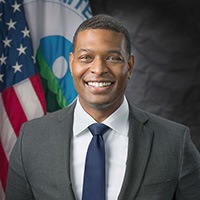
Michael S. Regan is the first Black man and second person of color to lead the U.S Environmental Protection Agency.
Raised in North Carolina where he developed a passion for the environment, Mr. Regan most recently served as the Secretary of the North Carolina Department of Environmental Quality.
As Secretary, Mr. Regan spearheaded North Carolina’s initiatives to address climate change, transition the state to a clean energy economy, secured the largest coal ash clean-up in United States history, in addition to establishing North Carolina’s first-of-its-kind Environmental Justice and Equity Advisory board to better align social inequities, environmental protection, and community empowerment.
Previously, Administrator Regan served as Associate Vice President of U.S. Climate and Energy, and as Southeast Regional Director of the Environmental Defense Fund where he convened energy companies, business leaders, environmental and industry groups, and elected officials across the country to achieve pragmatic solutions to the climate crisis.
Mr. Regan began his career with the U.S. EPA, eventually becoming a national program manager responsible for designing strategic solutions with industry and corporate stakeholders to reduce air pollution, improve energy efficiency and address climate change.
Administrator Regan is a graduate of the North Carolina Agricultural & Technical State University and he earned a master’s degree in Public Administration from The George Washington University.
Mr. Regan and his wife, Melvina, are proud parents to their son, Matthew.
Executive Director and Host, The Chavis Chronicles
Dr. Benjamin Franklin Chavis Jr. (born January 22, 1948) in Oxford, North Carolina is an African American civil rights leader and icon, United Church of Christ (UCC) ordained minister, author, journalist, organic chemist, environmentalist, global entrepreneur, and currently President and CEO of the National Newspaper Publishers Association (NNPA) based in Washington, DC since 2014.
Dr. Chavis is the Executive Producer and Host of The Chavis Chronicles, www.TheChavisChronicles.com, broadcast weekly on PBS TV Network stations reaching over 90 million households throughout the United States. THE GOOD NEWS is a new nationally syndicated, daily radio commentary www.TheGoodNewsRadio.com hosted by Dr. Benjamin F. Chavis, Jr. powered by the Krantz Media Group.
The Chavis family has been deeply rooted in the “freedom movement” in Granville County, North Carolina for over 250 years as landowners, farmers, educators, theologians, physicians, and activists. Benjamin F. Chavis Jr is the great, great, great-grandson of the Reverend John Chavis (1763–1838), the first Black American to attend Princeton University and the first Black American to be ordained as a Presbyterian minister in the United States (in 1799).
In his youth in the early 1960s, Chavis was the North Carolina statewide youth coordinator and Southern Christian Leadership Conference (SCLC) assistant to Martin Luther King Jr., who inspired him to work and to become a Christian minister in the civil rights movement across the United States, and to later to champion African liberation in Angola, Namibia, South Africa and in the Democratic Republic of the Congo (DRC). Chavis became an active supporter and associate of the African National Congress (ANC) led by Oliver Tambo and Nelson Mandela.
Chavis first attended Saint Augustine University (HBCU) in Raleigh, NC in 1965 and 1966 majoring in chemistry. He transferred to the University of North Carolina at Charlotte in 1967 and graduated with a BA in Chemistry in 1970. While in Charlotte, Chavis continued to work as a college student for SCLC and as a labor organizer for the American Federation of State, County, and Municipal Employees (AFSCME).
At the age of 24, Reverend Benjamin F. Chavis Jr rose to international prominence in 1972 as the leader of the Wilmington Ten in NC, civil rights activists who were “political prisoners” as designated by Amnesty International, and who were unjustly convicted of committing arson and sentenced to a combined total of 282 years in prison. The Wilmington Ten convictions and sentences were appealed and eventually overturned in 1980 by the US 4th Circuit Court of Appeals due to unconstitutional systemic racism and "prosecutorial misconduct." During Chavis’ frontline foot-soldier civil rights career in the 1960s, 1970s, and in the1980s, he has been unjustly charged, arrested and jailed over 67 times, and in each case subsequently found not guilty or dismissed as unjustly charged.
Chavis returned to graduate schools in NC, DC and NY in the field of civil rights as a minister and a program director of the United Church of Christ Commission for Racial Justice under the leadership of another mentor, the Reverend Dr, Charles E. Cobb, Sr, Chavis received the Master of Divinity (magna cum laude) from Duke University (1980) and a Doctor of Ministry from Howard University (1981). Chavis was admitted in 1982 into the PhD program in Systematic Theology as a graduate student at Union Theological Seminary in New York City and completed all of the academic course requirements in 1984. Chavis was elected National Vice President of the National Council of Churches in 1988.
In 1993, the national board of directors of the National Association for the Advancement of Colored People (NAACP) elected Dr. Benjamin F. Chavis, Jr as the youngest Executive Director and CEO of America's oldest national civil rights organization. In July of 1993, Chavis was proud to introduce The Honorable Nelson Mandela to speak in person at the NAACP national convention in Indianapolis, Indiana.
Benjamin Chavis actually began his journalistic career at the age of 11 while in the sixth grade at Angier B. Duke Elementary School in Oxford, NC. Chavis wrote weekly news stories about Black youth activism for The Carolina Times, published by one of the leading members of the NNPA, Louis E. Austin, in Durham, NC. From 1985 to 1993, Chavis authored and produced a weekly national commentary “Civil Rights Journal” for the NNPA, Jet Magazine, National Black Radio Network, and for the American Urban Radio Network. Chavis has continued to write award-winning Op Eds, news features, and columns for the NNPA from 2003 to 2023.
In 1982, Dr. Chavis was the first person to coined the term environmental racism during environmental justice protests in Warren County, NC. Over the past four decades, Dr. Chavis has emerged as the "Godfather of the Environmental Justice Movement” that today has evolved into an effective worldwide movement for environmental and climate justice and equity.
Dr. Chavis defined environmental racism as “racial discrimination in the deliberated targeting of ethnic and minority communities for exposure to toxic and hazardous waste sites and facilities, coupled with the systematic exclusion of minorities in environmental policy making, enforcement, and remediation.”
In 1986 Dr. Chavis conducted, co-authored and published the landmark national study: Toxic Waste and Race in the United States of America, that statistically revealed and substantiated the national correlation and causation between race and the location of toxic waste throughout the United States. In 1991, as Executive Director of the United Church of Christ Commission for Racial Justice, Dr. Chavis Co-Chaired, funded and organized the First People of Color Environmental Leadership Summit in Washington, DC that codified the Principles of Environmental Justice
In 1992–1993, Dr. Chavis served as a member of the Clinton-Gore Transition Team and later became an active member of the President’s Council on Sustainable Development. Dr. Chavis was the National Director of the successful Million Man March on October 16, 1995, in Washington, DC., the largest African American event mobilization in the history of America.
In 2001, Dr. Chavis and Russell Simmons co-founded and organized the first National Hip-Hop Summit in New York City that led to establishment for the Hip-Hop Summit Action Network (HSAN),www.HSAN.org the world’s largest international coalition of recording artists, producers, and entertainment industry leaders. From 2001 to 2012, over 75 Hip-Hop Summits were held in NY, TX, CA, Il, MI, MD, PA, NJ, NC, GA, MO, IN, WI, VA, AL, Toronto, and Johannesburg.
Currently, Dr. Chavis also serves as the Co-Chair of No Labels; Chairman of the National Association for Equal Opportunity in Higher Education (NAFEO); Chairman of the Thurgood Marshall Center Trust; and Co-Founder Chair Emeritus of Diamonds Do Good.
Dr. Chavis has four sons: Benjamin III, Franklin, John Mandela and Reginald Louis. He has four daughters are Michele, Paula, Renita, and Ana Elisabeth. He is a grandfather and a great grandfather.
Kenneth Martin
American Indian Environmental Office, EPA
Kenneth Martin
American Indian Environmental Office, EPA
Kenneth Martin is the Director of the American Indian Environmental Office at the US Environmental Protection Agency.Previously, he had served as Senior Policy Advisor on the Senate Environment and Public Works Committee,dealing on a wide range of issues under the Committee’s jurisdiction, from infrastructure policy to environmental policy. In 2016, he had been appointed by former President Obama as the first-ever Deputy Assistant Secretary for Tribal Government Affairs at the US Department of Transportation. Kenneth had also worked for the Senate Committee on Indian Affairs for former Chairman Jon Tester and former Chairwoman Maria Cantwell. He began his government service working for US Senator Tim Johnson in 2004. Originally from Wisconsin, Kenneth is an enrolled member of the Bad River Band of Lake Superior Chippewa Indians and was raised on the Menominee Indian Reservation, where he is a descendant. He studied Political Science at the University of Wisconsin at Madison.
Eriel Deranger
Executive Director and Founder, Indigenous Climate Action
Eriel Deranger
Executive Director and Founder, Indigenous Climate Action
Eriel Tchekwie Deranger is a member of the Athabasca Chipewyan First Nation (ACFN) and Executive Director/Founder of Indigenous Climate Action (ICA). Deranger is active in international Indigenous rights advocacy movements participating in various boards and UN bodies. Deranger’s work focuses on Indigenous rights, climate justice and intersectional movements. She is recognized for her role as spokespersons for her community in the international Indigenous Tar Sands Campaign. Prior to this she was a Specific Land Claims and Treaty Land Entitlement Researcher for the Federation of Sovereign Indigenous Nations. Deranger has written for various magazines and publications; featured in documentary films including Elemental (2012); and is regularly interviewed for national and international media outlets.
Amanda Monforton is Algonquin from the Pikwakanagan First Nation, and the Director of Policy Development within the Strategic Policy Branch of Environment and Climate Change Canada, where she leads emerging policy development, including Environmental Justice and Gender-based Analysis Plus.
Octavio Rosas Landa is an economist with a master’s in geography, and a professor in the School of Economics at Universidad Nacional Autónoma de México (UNAM). He was a proponent of Mexico’s General Water Act (Ley General de Aguas) and is a founding member of the National Assembly of the Environmentally Affected (Asamblea Nacional de Afectados Ambientales—ANAA).
Director, Federal Infractions Against the Environment, Profepa
Marco Polo Huitrón Bernáldez holds a Bachelor's Degree in Law and a Master's Degree in Government and Public Policy. He has more than 10 years experience in public administration, litigation, procedural law and government management consulting. Currently, he is director of federal environmental crimes enforcement at Profepa.
Zona horaria: Tiempo del este, horario de verano (UTC-4)
El tercer día incluirá una segunda presentación del trabajo de la CCA en materia de justicia ambiental (parte 2) y concluirá con el segmento público de la sesión de Consejo, donde la comunidad de América del Norte tendrá la oportunidad de dialogar con los funcionarios de medio ambiente de más alto rango de la región. Este año, los debates se centrarán en el “Fortalecimiento de la justicia ambiental mediante el empoderamiento comunitario”.
10:00 am-11:30 am
Lugar: Centro de Convenciones, salón ABC
Presentación del trabajo de la CCA:
Espacio en el que se darán a conocer proyectos comunitarios subvencionados con fondos del Programa de Subvenciones para la Equidad Ambiental y la Resiliencia Climática (EJ4Climate), así como el proyecto de la CCA titulado Red de comunidades en favor de la justicia ambiental, iniciativa de reciente creación dirigida a propiciar la participación de comunidades y organizaciones para facilitar procesos de intercambio de aprendizajes y conocimientos con el objetivo de fortalecer las capacidades de adaptación al cambio climático.
Violaine Pronovost Moderadora
Líder de Programas de subvenciones comunitarias, CCA
Violaine Pronovost
Líder de Programas de subvenciones comunitarias, CCA
Jackie Medcalf
Executive Director, Texas Health and Environment Alliance
Jackie Medcalf
Executive Director, Texas Health and Environment Alliance
Jackie Medcalf is the resounding voice of Texans who are negatively affected by toxins in their environment. With her Environmental Geology degree in hand and a passion for public health, Jackie discovered what no doctor could: a hidden menace that threatened the lives within her home and those in her community; toxic chemicals and heavy metals seeping into the water supply.
Today, as the Executive Director of Texas Health and Environment Alliance (THEA), she is on the front lines of protecting public health by collaborating with government agencies, academic institutions, and community members to cleanup historic toxic waste sites.
Orion Kriegman
Founding Executive Director, Boston Food Forest Coalition
Orion Kriegman
Founding Executive Director, Boston Food Forest Coalition
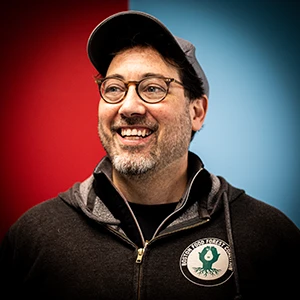
Orion is the founding Executive Director of the Boston Food Forest Coalition (BFFC) and played a major role in the conception of Egleston Community Orchard in Jamaica Plain, the first food forest site to be adopted into the BFFC land trust. Since then, Orion has collaborated with the City of Boston, colleagues and local neighbors to expand the number of healthy food forests included in the land trust and the number of Bostonians included in the movement.
Prior to the creation of BFFC, Orion received his Masters in Public Policy and Urban Planning from Harvard Kennedy School of Government. He spent nine years at the Tellus Institute coordinating the Great Transition Initiative, an international network of scholars and activists examining the requirements for a transition to a sustainable planetary civilization.
BFFC is a 2023–2024 EJ4Climate grant recipient for the project Community-led Food Forest Development for Climate Resilience in Boston.
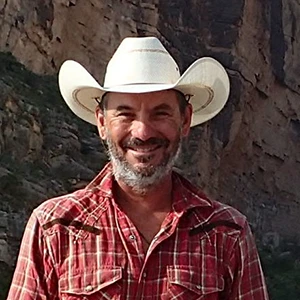
Jeff Renfrow has been living and working along the Big Bend reach of the Rio Grande/Río Bravo border and its watershed for the last 35 years. During this time, he has worked as a river guide and restoration ecologist and has deep ties to the people and places on both sides of the border. He has worked extensively with managing agencies and communities on the US and Mexican sides to improve resiliency of the region’s land and people.
When not working as Director of Rio Bravo Restoration, Jeff can often be found floating a river somewhere for fun or building something in his shop.
Jose Torcal is a civil engineer with over ten years working across six countries in regeneration, sustainability and public space through water. His projects and interventions address climate change and improve neighborhoods, starting from the community. He has a strong commitment to collaborate across sectors and organizations to support the global movement towards sustainable communities.
One of his most recent projects, One Water. Somos Agua, a collaboration between Indigenous communities in Mexico and Canada to increase water resilience through rainwater harvesting and led by the NGO Isla Urbana (Mexico) and Nipissing First Nation (Canada), received an EJ4Climate grant in 2022–2023.
Marley Kozak
National Program Manager, The Resilience Institute
Marley Kozak
National Program Manager, The Resilience Institute
Marley Kozak is The Resilience Institute’s National Program Manager. She holds a master’s degree in Environmental and Regional Planning from the University of Calgary. She has spent the last decade building respectful, mutually beneficial relationships with a diverse group of partners, including Indigenous communities, governments, academia, environmental interest groups, and industry, to address major trends, issues and knowledge gaps related to the condition of the environment.
She has collaborated with partners to develop and implement community-based monitoring programs, knowledge co-production, and citizen science initiatives to enhance environmental stewardship and build climate change resiliency and adaptation in communities.
A native of the state of Baja California, Mexico, Jaziel Soto Torres is a proud member of the Cucapá Indigenous nation. Influenced since childhood by the teachings of his grandmother, Inocencia González Sainz, a respected traditional leader in the community, Jaziel developed an unbreakable commitment to the social wellbeing of his people and the preservation of its rich cultural heritage. Motivated by a keen interest in the sustainable development of his community, he is currently studying aquaculture engineering and pisciculture.
Jaziel’s contributions have not gone unrecognized. In 2021, he was awarded the State Youth Prize (“Strengthening Culture” category), and had previously merited the 2008 National Youth Prize (“Environmental Protection” category).
Segmento público de la sesión de Consejo
«Fortalecimiento de la justicia ambiental mediante el empoderamiento comunitario»
1:30 pm-1:40 pm
Palabras de bienvenida
El PGLA invita a equipos de jóvenes líderes de América del Norte a proponer soluciones para apoyar a las comunidades y preservar nuestros suelos, aguas y aire compartidos. El programa está dirigido a jóvenes de 18 a 35 años de edad, que formen parte de un equipo, ya sea de emprendedores e innovadores juveniles con interés en crear sus propias empresas, o bien como integrantes de organizaciones dirigidas por jóvenes (por ejemplo, asociaciones u organizaciones no gubernamentales) o empresas sin ánimo de lucro también con un liderazgo juvenil. Los equipos seleccionados presentarán sus soluciones innovadoras al Consejo y al público.
1:40 pm-2:10 pm
Equipos de jóvenes del Programa Generación de Líderes Ambientales (PGLA)
El PGLA invita a equipos de jóvenes líderes de América del Norte a proponer soluciones para apoyar a las comunidades y preservar nuestros suelos, aguas y aire compartidos. El programa está dirigido a jóvenes de 18 a 35 años de edad, que formen parte de un equipo, ya sea de emprendedores e innovadores juveniles con interés en crear sus propias empresas, o bien como integrantes de organizaciones dirigidas por jóvenes (por ejemplo, asociaciones u organizaciones no gubernamentales) o empresas sin ánimo de lucro también con un liderazgo juvenil. Los equipos seleccionados presentarán sus soluciones innovadoras al Consejo y al público.
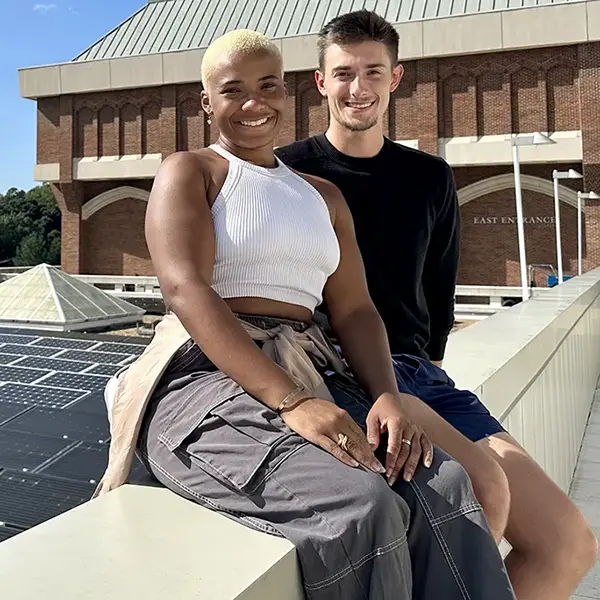
Jake Barnet advocates for sustainable global energy systems, advancing efficiency, distributed generation, and grid enhancements. He supports analysis of the impacts on communities from data centers, and adding virtual energy assessment capabilities to state energy plans to ensure equitable, affordable energy retrofits for all communities.
McKenna Dunbar (they/them)
McKenna Dunbar is a thought leader in building electrification, committed to environmental justice and clean energy transitions. Dunbar plays a pivotal role in shaping Virginia's building energy code and energy efficiency policies, driving the development of equitable clean energy finance mechanisms and community engagement efforts with a particular focus on IRA and BIL implementation.
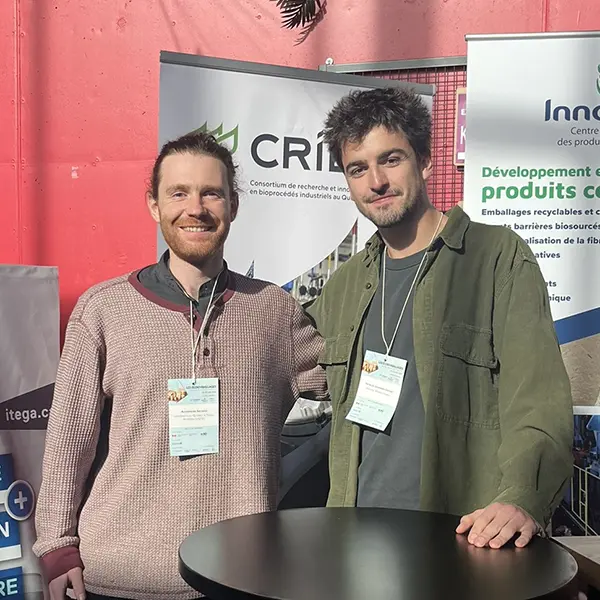
Passionate about the plastic pollution issue, Alexandre founded the student project Hoola One, which is now a successful Quebec start-up. After completing his bachelor's degree in mechanical engineering (Universite de Sherbrook), Alexandre worked for various impact companies, including Oneka Technologies, where he held the position of Operations Manager. Wishing to find solutions to replace single-use plastic parts, he decided to go back to school and start his own business.
Alexandre is responsible for the company's technological development and financing.
Nicolas Jourdan-Gassin (he/him)
Nicolas is an enthusiast for circular economy. With a background in business management, he has outstanding communication skills. Before embarking on his entrepreneurial adventure, Nicolas worked as a research assistant at McGill University and as an impact analyst at Impak.
With a strong network in Quebec's sustainable development community, Nicolas will lead the company's business development and marketing.
Ana Cristina Posadas García & Daniela Guadalupe De Regil Muñoz
Cofunders, ORMA
Ana Cristina Posadas García
With a bachelor’s in environmental sciences and health from Universidad Autónoma de San Luis Potosí and a master’s in wildlife conservation and management from Universidad Nacional de Costa Rica, Ana Cristina Posadas García has also completed various certificate programs in areas such as carbon markets, environmental education, water management and environmental law. She is cofounder of the Organization to Restore the Environment and Social Harmony (Organización para Restaurarel Medio Ambiente y la Armonía Social—ORMA), an association that works in San Luis Potosí and elsewhere in Mexico. She was a member of the Sustainable Development Advisory Committee of the Ministry of Environment and Natural Resources (Secretaría de Medio Ambiente y Recursos Naturales—Semarnat) and has participated in numerous conservation projects on protected natural areas, environmental restoration and sustainable forestry in collaboration with the National Forestry Commission (Comisión Nacional Forestal—Conafor), the National Protected Natural Areas Commission (Comisión Nacional de Áreas Naturales Protegidas—Conanp) and various nongovernmental organizations.
Daniela Guadalupe De Regil Muñoz
Bio will be made available soon.
2:10 pm-3:40 pm
Diálogo con los integrantes del Consejo en torno a la justicia ambiental
Durante esta segmento, quienes integran el Consejo y las personas especialistas invitadas participarán en un diálogo público sobre justicia ambiental.
Emiliano Reyes
Technical Advisor on Climate Change at the German Development Cooperation (GIZ)
Emiliano Reyes
Technical Advisor on Climate Change at the German Development Cooperation (GIZ)
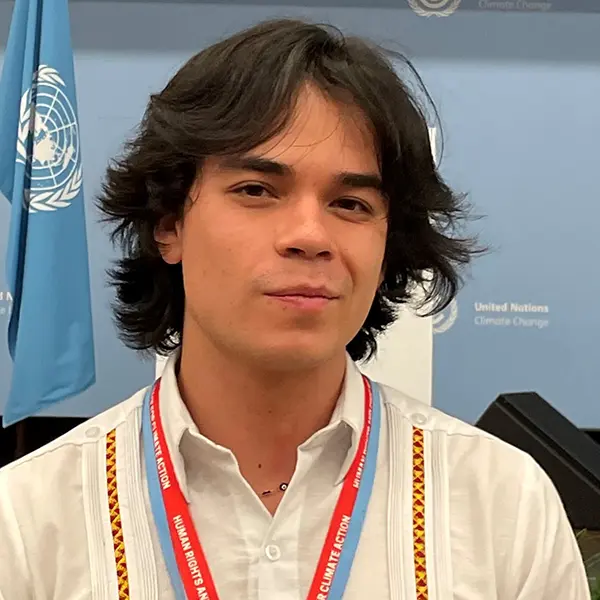
Emiliano Reyes supports climate action at various levels, as well as emphasizing climate justice, intersectionality, intergenerational equity, gender equality, resilience, and just transitions. As a young leader with experience in multilateral negotiations, he has been Mexico’s delegate in the G20, and was lead adaptation negotiator in the United Nations Framework Convention on Climate Change (UNFCCC) for the Mexican Delegation. He collaborated with the Commission for Environmental Cooperation (CEC) as an expert at the 2SLGBTQIA+, in the Environmental Justice Dimensions Roundtable in North America, and as an author in the discussion paper on the same topic. He has provided guidance to youth initiatives within the Climatón UNAM, Resilient Youth with the German Embassy, and the GELP with the CEC, aiding in the development of solutions to address the climate crisis. Currently, he works as a Technical Advisor on Climate Change at the German Development Cooperation (GIZ), specializing in climate policy.
Fe Magdalena de Leon
Senior researcher and a paralegal with the Canadian Environmental Law Association (CELA)
Fe Magdalena de Leon
Senior researcher and a paralegal with the Canadian Environmental Law Association (CELA)
Fe de Leon is a senior researcher and a paralegal with the Canadian Environmental Law Association (CELA). She holds a Masters degree in Public Health. Fe has worked extensively on chemicals and waste management policy issues focused particularly in the Great Lakes Basin, the federal Chemicals Management Plan, and on international agreements such as the Great Lakes Water Quality Agreement, the Stockholm Convention on Persistent Organic Pollutants, the Minimata Convention on Mercury, and the Rotterdam Convention on Prior Informed Consent. She has worked collaboratively with Canadian and international nongovernmental organizations to support the listing of chrysotile asbestos for Prior Informed Consent Procedures under the Rotterdam Convention. Fe has worked extensively to promote community right-to-know and regimes to strengthen public participation in decision-making processes with underserved and disadvantaged communities, through the Canadian Environmental Protection Act and with pollution data from Canada's National Pollutant Release Inventory (NPRI). She was a member of Canada's Stakeholder Advisory Council for the Chemicals Management Plan, between 2007 and 2019. Fe has also been a member of the NPRI Working Group since 2018 and was appointed to the Great Lakes Water Quality Board in 2023.
William J. Barber III
Senior Director of Impact and Equitable Investments at the Coalition for Green Capital
William J. Barber III
Senior Director of Impact and Equitable Investments at the Coalition for Green Capital
William J. Barber III is the Senior Director of Impact and Equitable Investments at the Coalition for Green Capital. As Senior Director, William works with CGC’s investment and impact teams to analyze investing strategy through both social and economic indicators. William also coordinates with the investment team to prioritize perspectives of communities, households, and customers by developing and integrating financial products/models responsive to the needs of underserved communities, including alternative underwriting strategies and reparative/catalytic capital strategies to drive product adoption in communities while also achieving GHG reduction goals.
Over the course of his career, William has served as an environmental advocate, a renewable energy executive, and a climate scholar–leveraging over a decade of experience, academic and legal training, and entrepreneurship towards driving community solutions to the climate crisis. He has contributed as a thought leader on numerous publications and articles describing the historic opportunity to use green finance, technological innovation, and policy to create wealth generation for communities, especially rural communities on the frontlines of climate impact. William has sat on numerous advisory boards notably including the DOE Boost Energy Innovation Board convened by Sandia National Laboratory and the Southeast Energy Insecurity Advisory Board convened by Duke University’s Nicholas School of the Environment.
His academic background includes a Bachelor’s degree in environmental physics from North Carolina Central University and a Juris Doctorate from UNC School of Law, where he focused on environmental and energy policy.
In 2019, he founded The Rural Beacon Initiative, a North Carolina-based social enterprise that provides consultation on operationalizing equity frameworks within sustainable solutions, and works to increase BIPOC ownership in the growing supply chains of regenerative agriculture and renewable energy. As a self-described son of the south, he is especially interested in increasing opportunities for self-determination and rural revitalization within the clean economy. William’s work on community solutions has been featured in numerous outlets, including NextGen’s 30 under 30 Young Black Changemakers and Paypal’s Rising Leaders Series.
3:40 pm-3:55 pm
Receso
Sesión interactiva para celebrar los 30 años de la CCA y mostrar proyectos e iniciativas exitosos y reproducibles que la organización ha emprendido a lo largo de sus tres décadas de existencia.
3:55 pm-4:25 pm
Celebración del trigésimo aniversario de la CCA
Sesión interactiva para celebrar los 30 años de la CCA y mostrar proyectos e iniciativas exitosos y reproducibles que la organización ha emprendido a lo largo de sus tres décadas de existencia.
4:25 pm-4:45 pm
Cierre de la sesión de Consejo
Apoyo financiero
Si tiene usted la intención de asistir a la trigesimoprimera sesión anual del Consejo de la Comisión para la Cooperación Ambiental (CCA) y el foro público del Comité Consultivo Público Conjunto (CCPC) y participar de manera presencial, podrá solicitar apoyo financiero de la CCA a efecto de cubrir sus gastos de viaje y alojamiento. Este apoyo, sin embargo, es limitado y se otorga únicamente a organizaciones sin ánimo de lucro y a personas con residencia en Canadá, Estados Unidos o México. Las personas representantes del gobierno no son elegibles para recibir asistencia financiera. En el caso de organizaciones, el financiamiento se limita a una persona representante por institución. Para solicitar apoyo financiero, siga el enlace de registro presencial. Debe tenerse en cuenta que las personas participantes son responsables de obtener los documentos necesarios para viajar (pasaporte y visa, si corresponde), así como de cubrir los gastos relacionados con la expedición de tales documentos. La fecha límite para solicitar apoyo financiero es el 20 de mayo de 2024.
Accesibilidad a los eventos
Con el propósito de que todas las personas tengan la posibilidad de participar plenamente en las actividades de la CCA, nos esforzamos por organizar eventos incluyentes y sin barreras. Por ello, las sesiones, paneles y presentaciones de la #CCA31 se transmitirán en directo, vía internet, y se dispondrá de interpretación simultánea en español, francés e inglés, así como de servicios de subtitulado.
A efecto de consolidar este compromiso y con objeto de mejorar la accesibilidad a nuestras actividades, estamos recabando observaciones y comentarios de nuestro público destinatario. Sírvase indicarnos sus requerimientos, pues de este modo tendremos posibilidades de mejorar nuestros eventos y satisfacer sus necesidades por cuanto a acomodo e inclusión. Su opinión es muy valiosa para ayudarnos a identificar áreas a mejorar. En este caso, le agradeceremos nos haga llegar un correo electrónico dirigido a: cec31@cec.org.
Si desea conocer más sobre las iniciativas, esfuerzos y oportunidades de la CCA, suscríbase a nuestro boletín informativo y síganos en redes sociales.