Implementation of Strategies to Increase Climate Resilience Along the Urban Rivers of Villahermosa
@ COBIUS
Background
The city of Villahermosa has been beset by flooding for many decades. From a historical standpoint, the people of Tabasco have learned to live with the rising and falling of water levels in the rivers. However, population growth has caused rapid urban expansion, leading to backfilling of various bodies of water, such as swamps and lagoons, that formerly had a regulating effect. Exacerbated by immigration from other states of the Republic, this growth has also meant that the new residents do not possess the same understanding of how flooding works and have a negative perception of it. Furthermore, the clearing of vegetation from the banks of rivers, lagoons, and canals has caused many bodies of water to silt up, and this, together with extreme weather events induced by climate change, has created major disasters in Villahermosa. The effects of these phenomena are compounded by increased volumes of solid waste, newly arrived invasive species, and larger human populations in zones at risk.
Goals
- To enhance the climate change resiliency of vulnerable populations in riverside areas of Villahermosa through measures providing for their food security.
- To increase restoration of riverbank protection along sections lacking tree cover, in order to reduce silting and contaminant loads.
- To help reduce urban solid waste pollution in the rivers of Villahermosa (Carrizal and Grijalva) through the revitalization of these rivers.
- To create a community early warning system for flooding caused by extraordinary weather phenomena.
- To decrease the population of suckermouth catfish (Hypostomus plecostomus) in the urban lagoons of Villahermosa by making use of it as a biofertilizer.
Main activities
- Creating riverside gardens to provide food for vulnerable families and, at the same time, restoring the riverbank along sections of the river lacking tree cover.
- Taking part in the revitalization of the local nursery in Villahermosa.
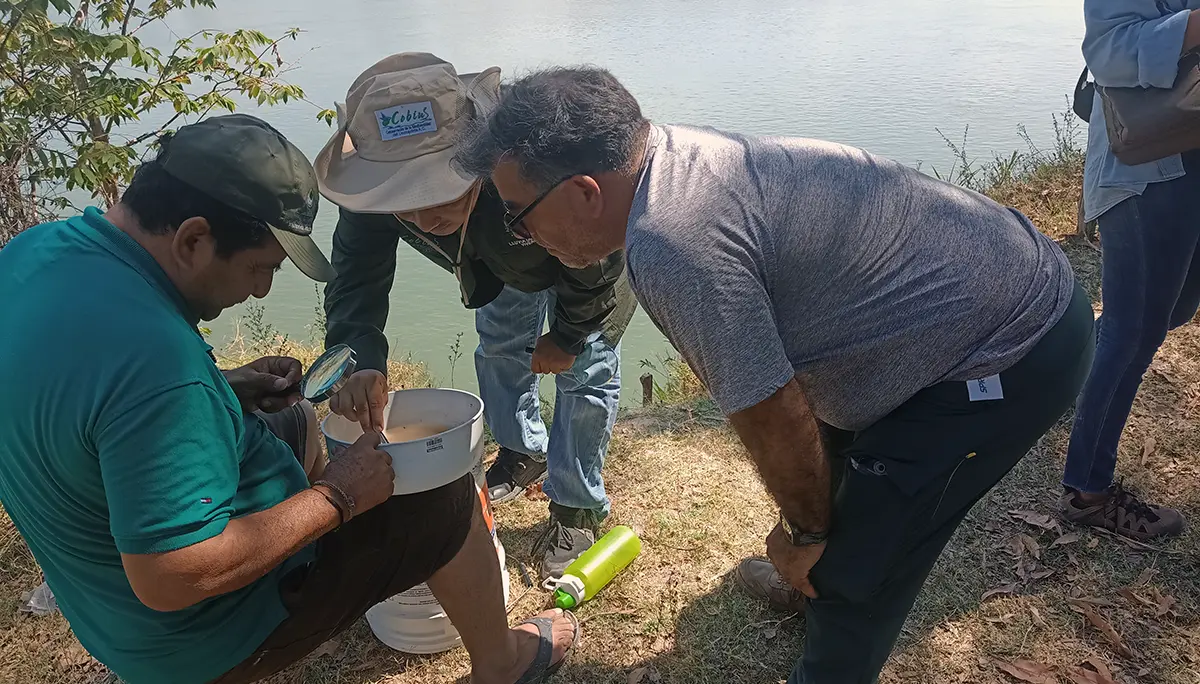
- Performing water quality analyses (phosphorus and nitrates, BOD and COD) in areas with and without bank restoration, as well as in areas with or without catfish.
- Signing cooperation agreements with recycling companies to reduce urban solid waste pollution.
- Establishing semiautomatic monitoring stations on rivers with community participation in order to feed data into an early warning system for rising water levels.
- With the participation of local fishermen’s groups, effect a mass harvest of catfish and test muscle tissue for heavy metals, with a view toward assessing the suitability of the fish for human or pet consumption.
Expected outcomes
- Empowering the community to create riverside gardens in vulnerable neighborhoods in order to improve food security and resiliency, thanks to the reforestation and concomitant protection of riverbanks.
- Revitalizing the local nursery for timber and fruit tree propagation.
- Water quality monitoring and assessment with and without restoration and in areas with catfish populations.
- Solid waste identification and management (separation and recycling/reuse) by participants, and as a contribution to natural resource conservation.
- Water flow monitoring stations in the Grijalva-La Sierra and Carrizal rivers where they enter the city of Villahermosa, with the support of the “Centinelas del Cambio” community water monitoring groups.
- Creation of a flood data management and reporting platform.
- Decreasing the abundance of catfish in the rivers of Villahermosa as well as in interconnected canals and lagoons.
- Detecting contaminant levels in samples of catfish muscle tissue to determine the suitability of the species as food.