Food loss and waste (FLW) remains a significant challenge in North America, with close to 170 million tonnes of food produced for human consumption lost or wasted each year across the supply chain. To help address this challenge, the Commission for Environmental Cooperation (CEC) developed a practical set of resources through the project Stimulating Behavioral Changes to Reduce Food Loss and Waste (FLW) in North America and Expanded Promotion and Uptake of Related CEC FLW Resources.
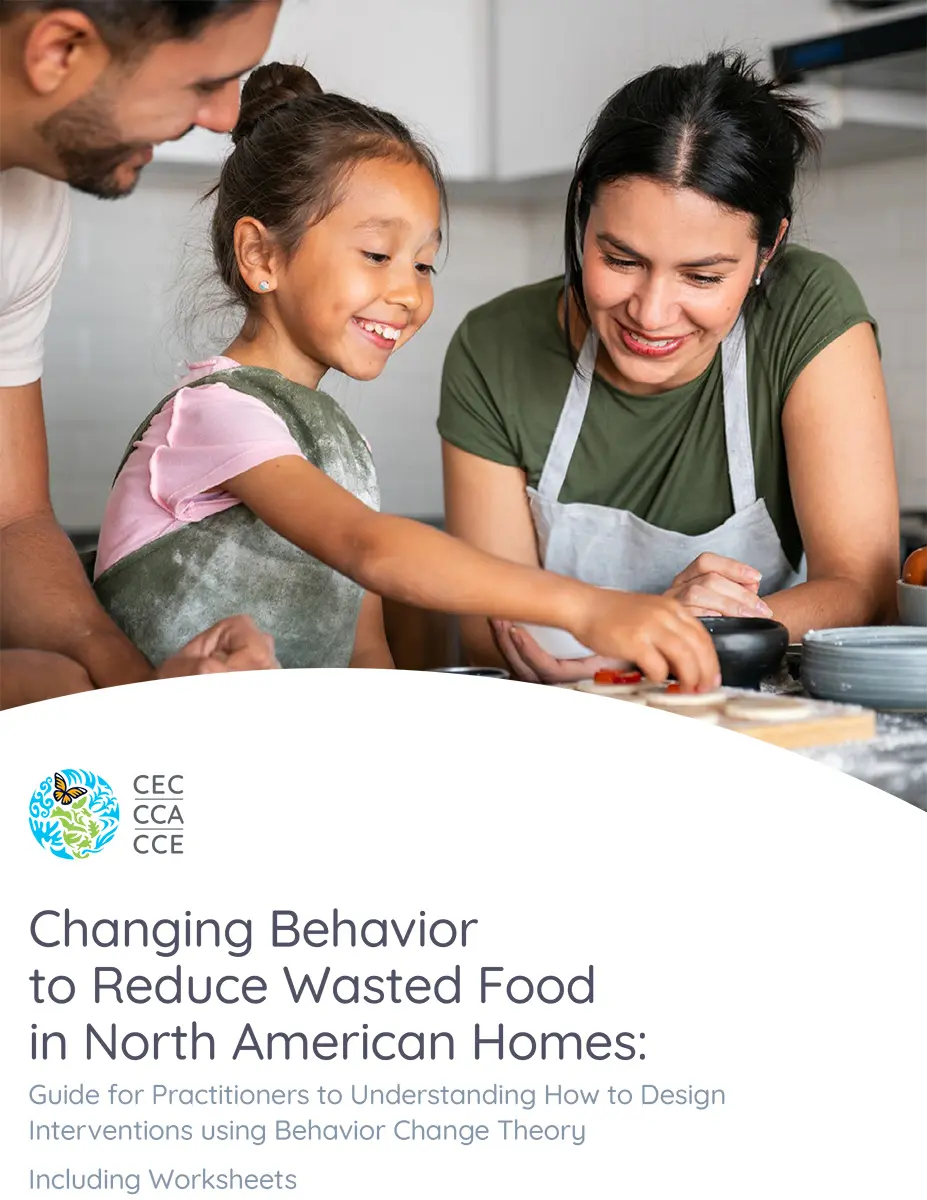
This portal brings together the project’s key outputs, including a Guide for Practitioners, an accompanying Workbook with downloadable worksheets and case studies, and five learning modules. Together, these resources support practitioners, local policymakers, communities and other key actors in applying behavioral science to design, implement and evaluate interventions that encourage households to reduce wasted food.
Built around a 5-Step Behavior Change Approach, the resources combine theory, practical tools, real-world examples and expert guidance to help users design, implement and evaluate effective actions and policies that drive lasting behavior change.
The 5-Step Behavior Change Approach

Define

Diagnose

Design

Deliver

Adapt and Scale
The Guide and accompanying Workbook are complementary resources that help users apply the 5-Step Behavior Change Approach in their communities to encourage households to reduce wasted food.
Together, they offer a practical step-by-step approach to applying behavior change theory in real-world settings, with clear tools and strategies that can be used right away.
Learning Modules
Ready to put the 5-Step Behavior Change Approach into practice?
The five learning modules walk users through the Guide and worksheets, showing them how to use these resources effectively to design thoughtful, practical interventions that help households reduce wasted food.
The modules present the 5-Step Behavior Change Approach in a progressive, detailed and practical way, demonstrating how it can be applied in real-world settings.
Worksheets
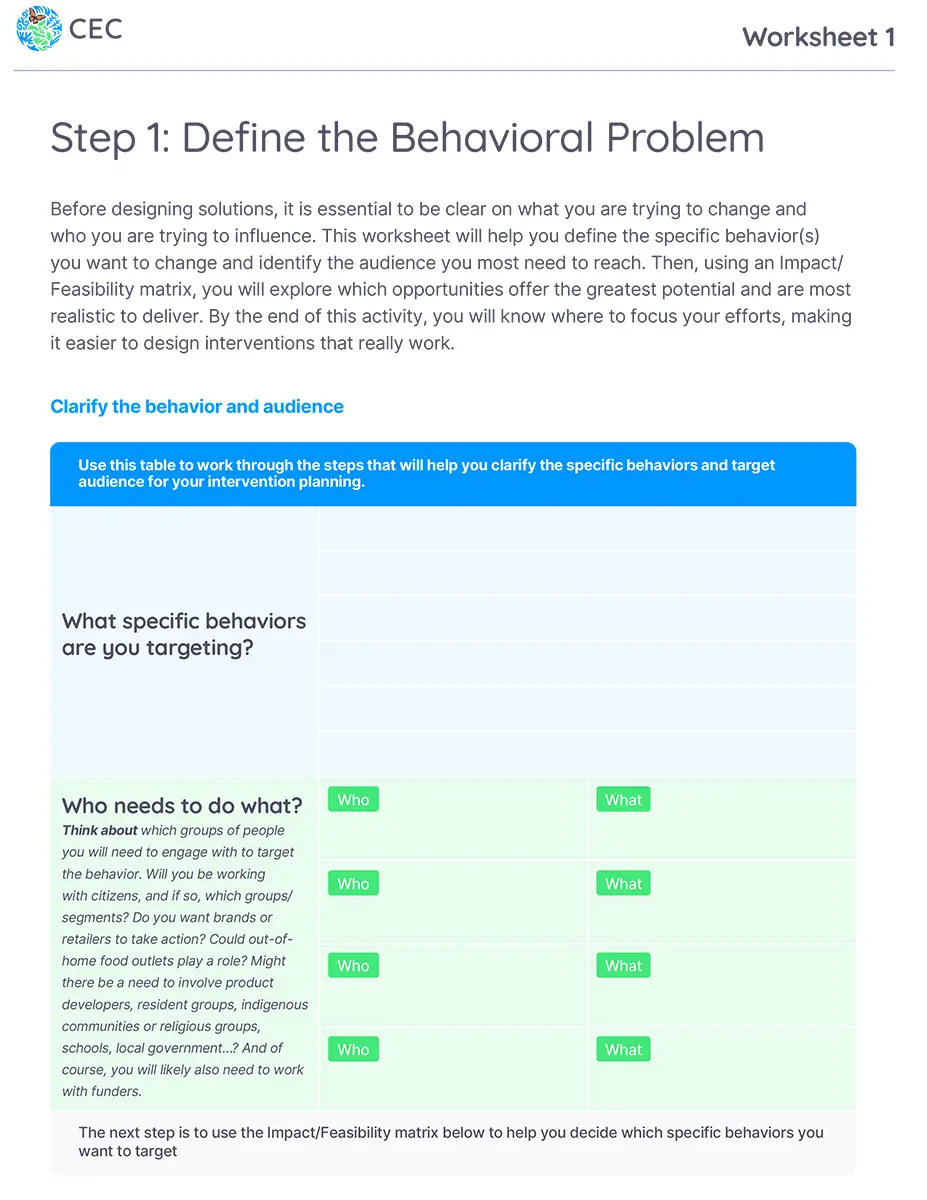
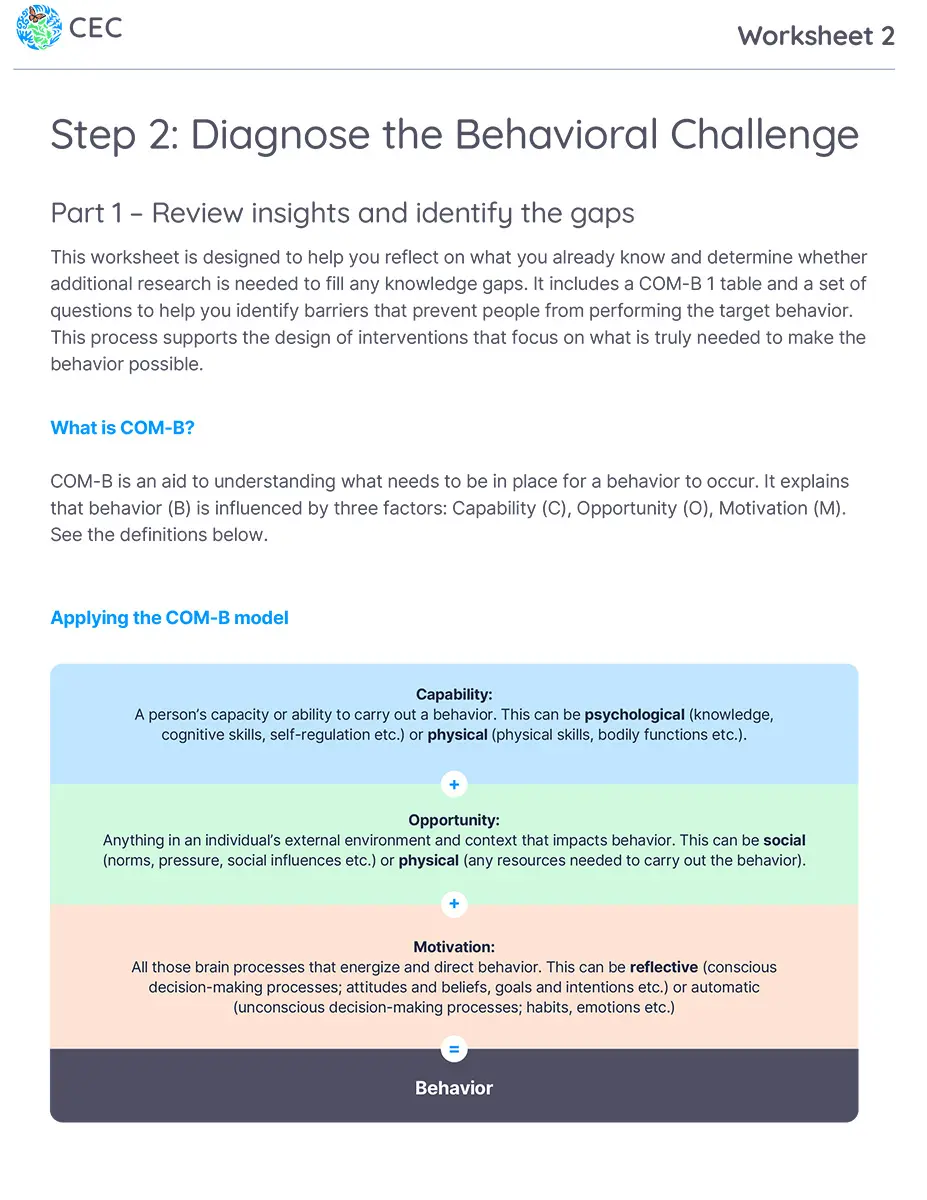
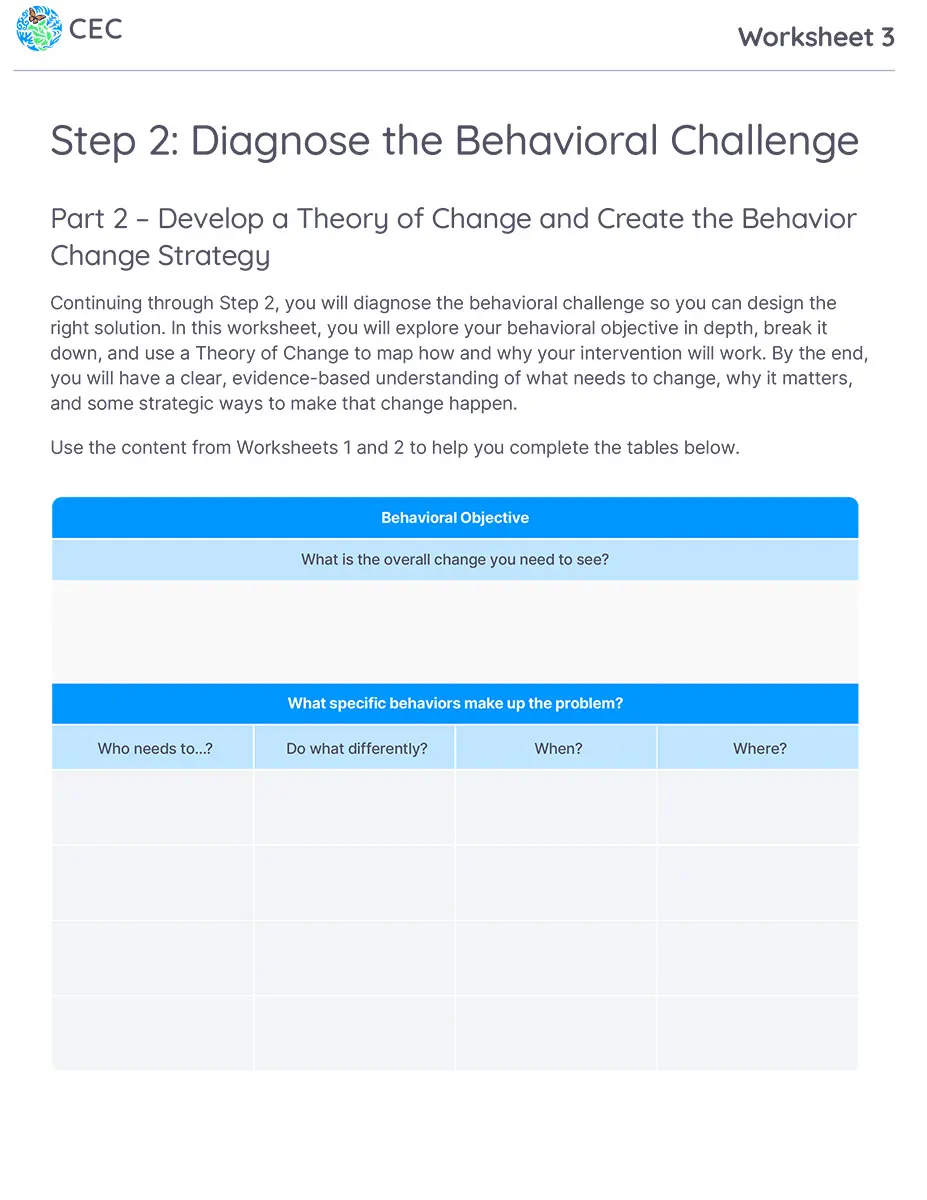
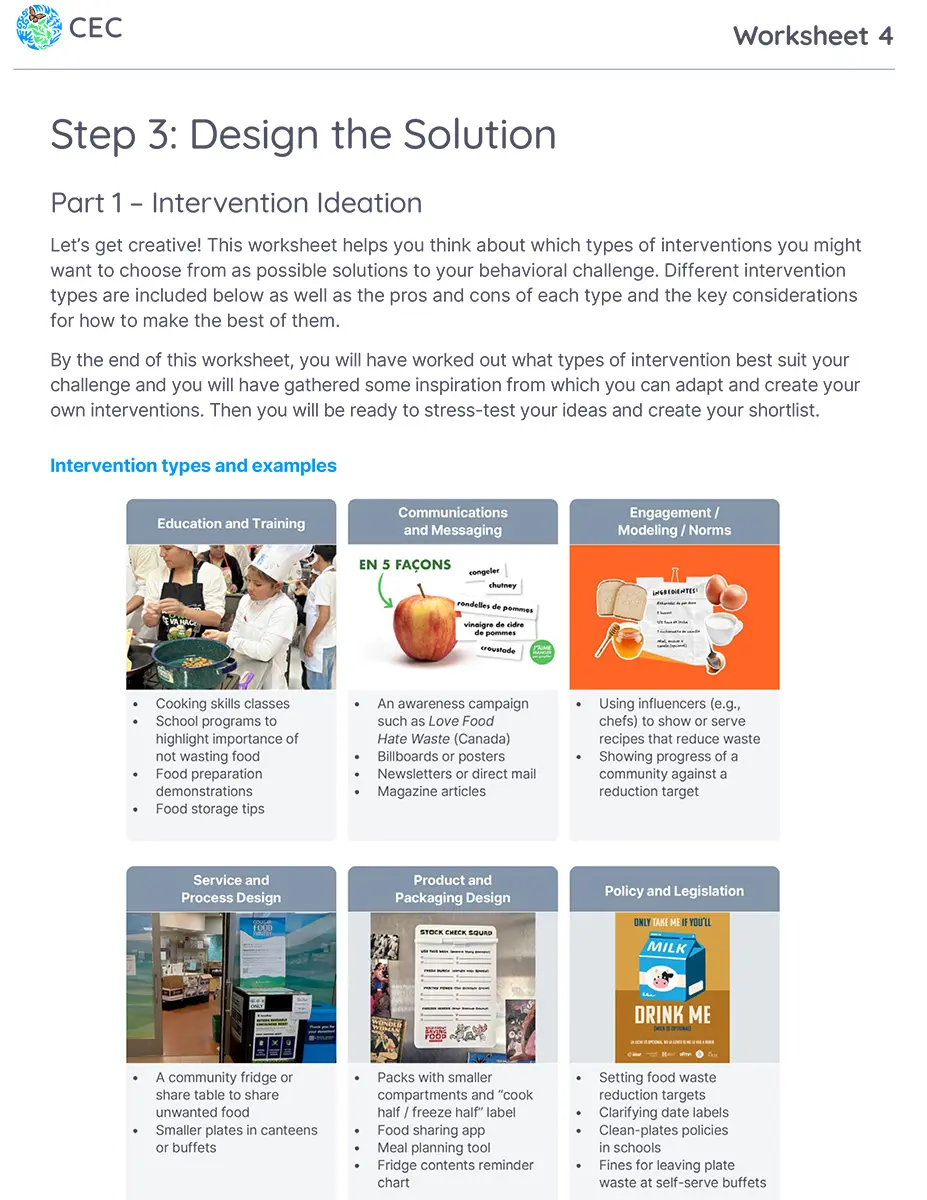
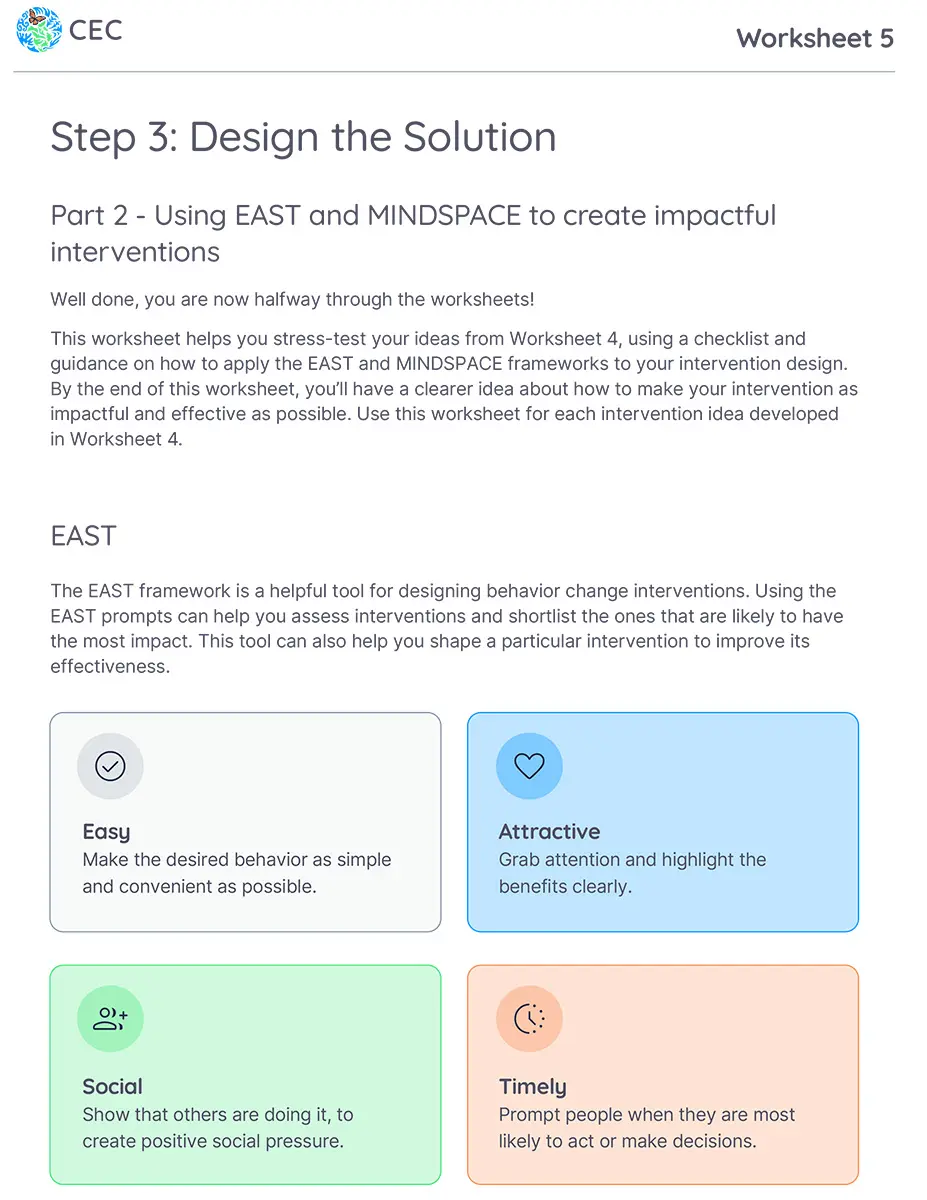
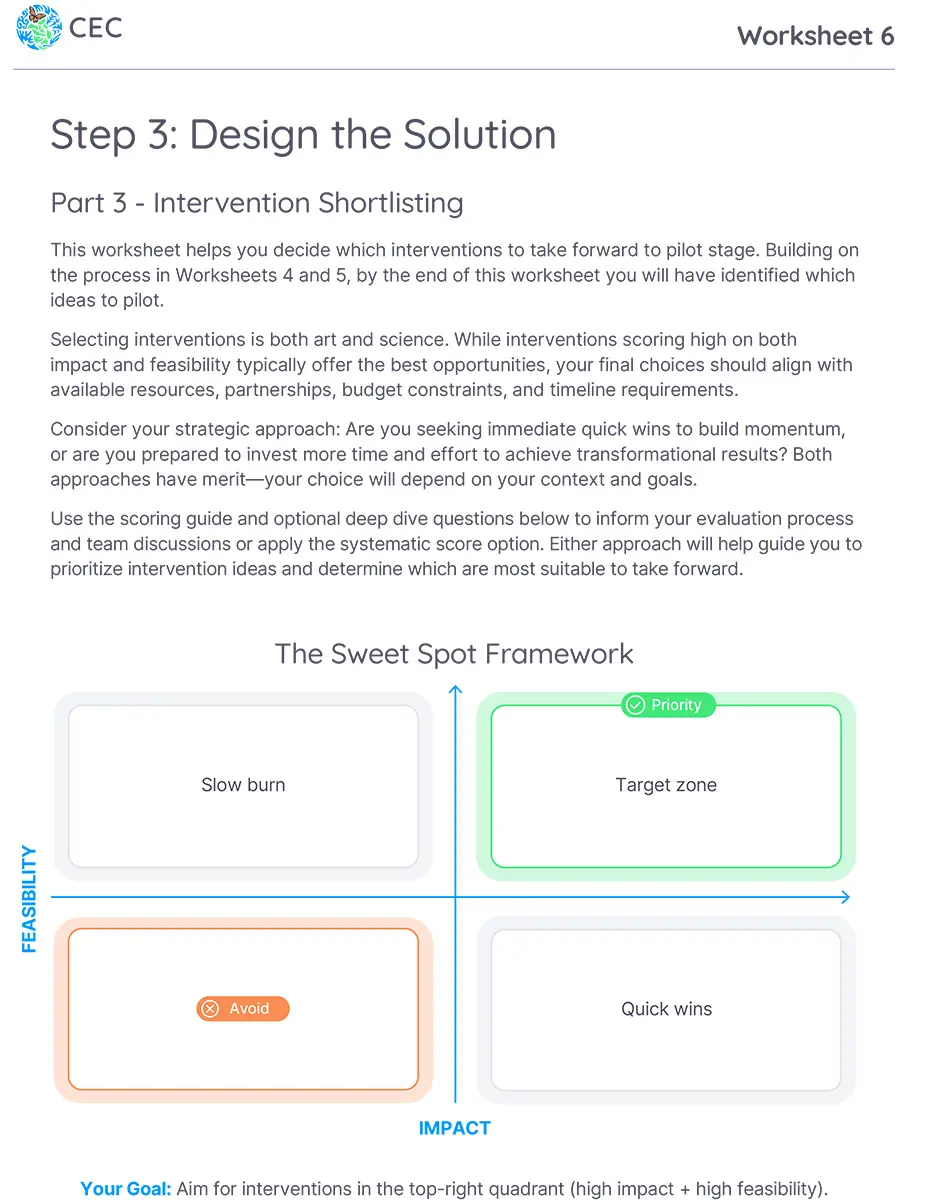
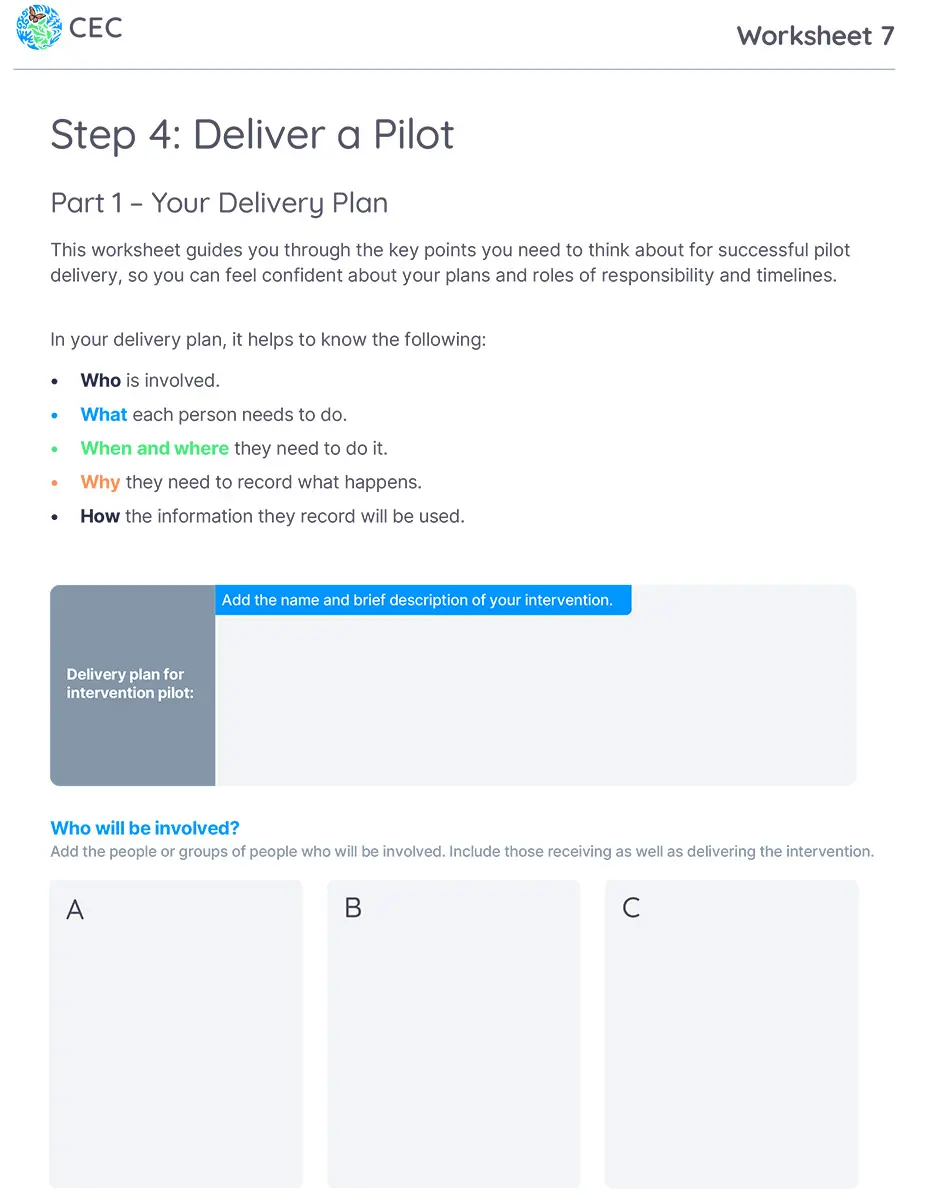
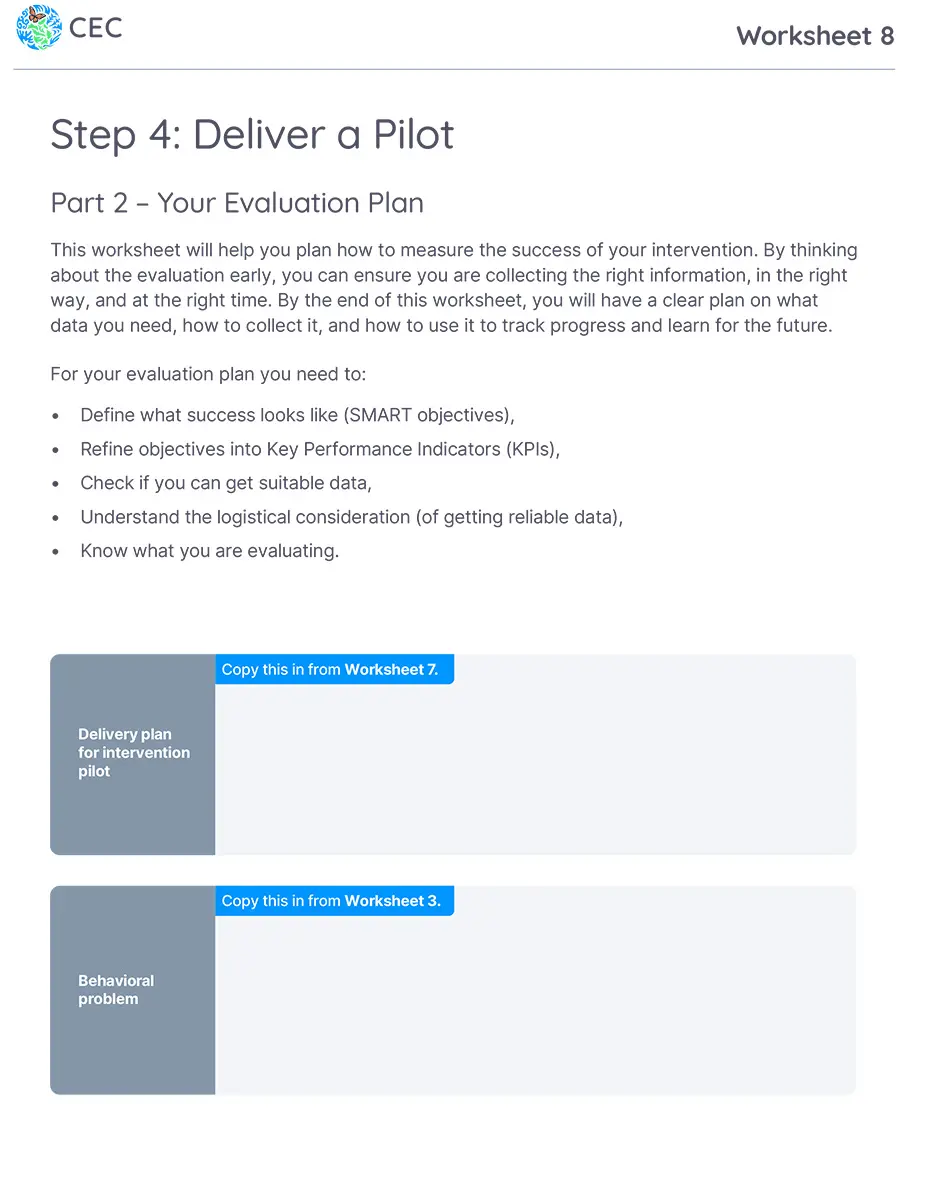
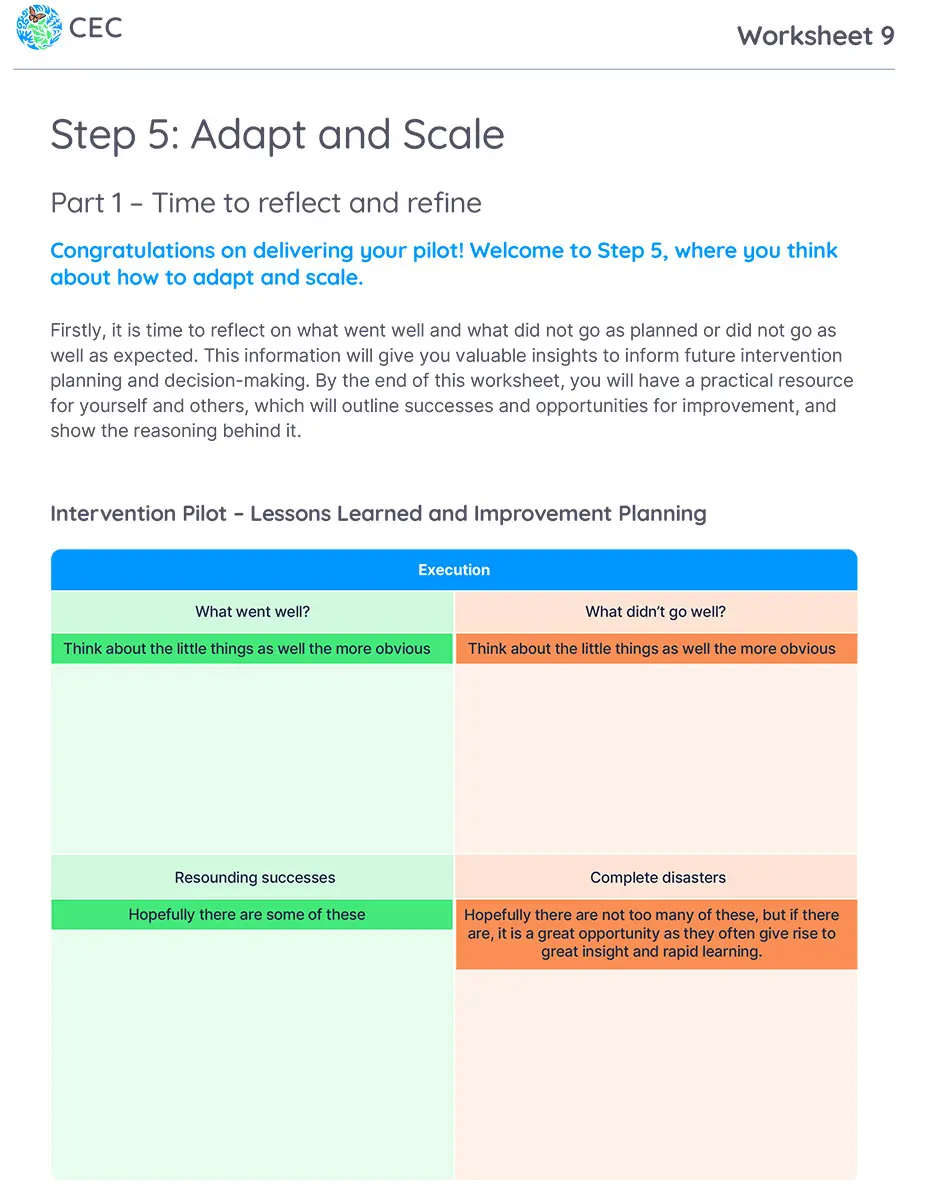
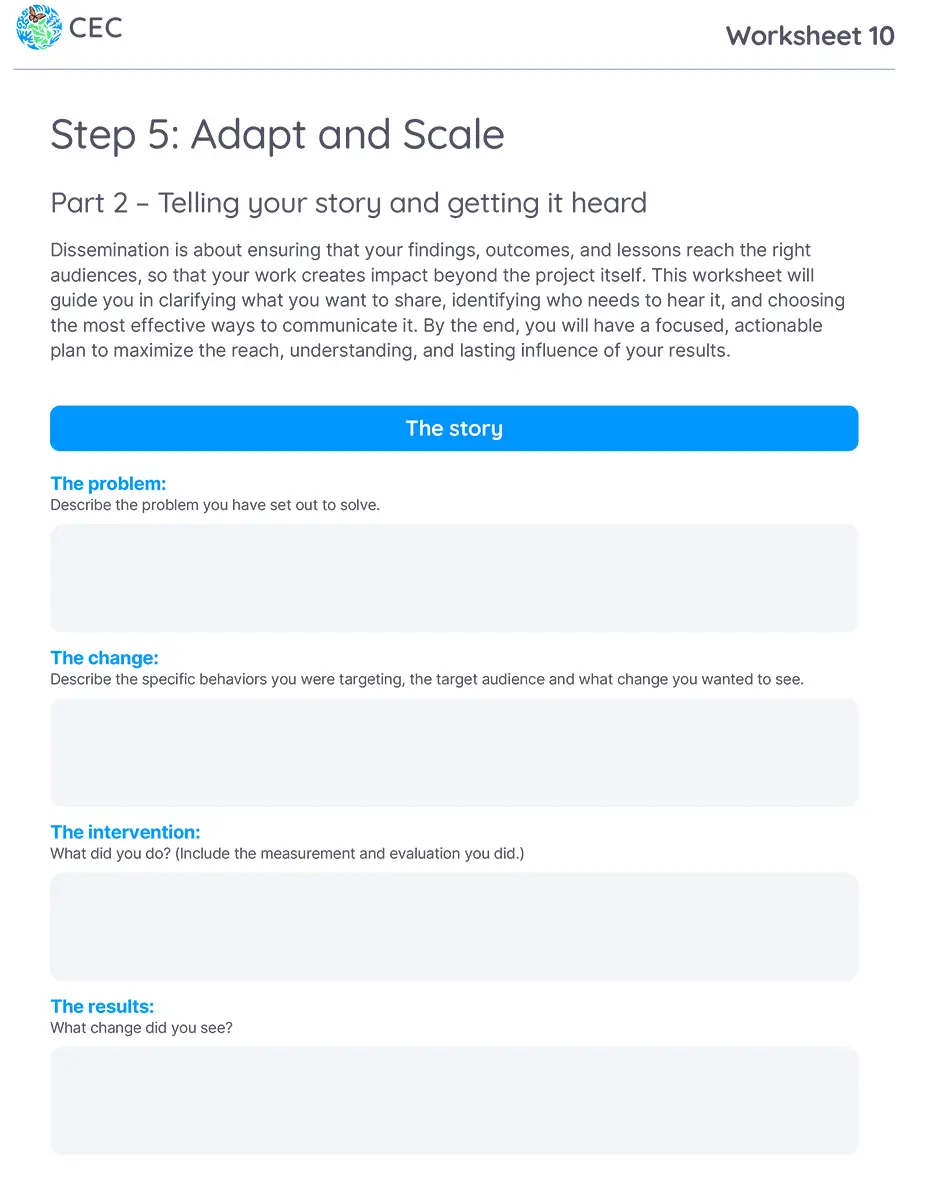
Put the 5-Step Behavior Change Approach into practice with these ten downloadable worksheets designed to support the planning, implementation and evaluation of interventions that help households reduce wasted food.
Case Studies
The worksheet set is complemented by two completed case studies from Denver and Hamilton County that demonstrate how the approach can be applied in real-world projects.
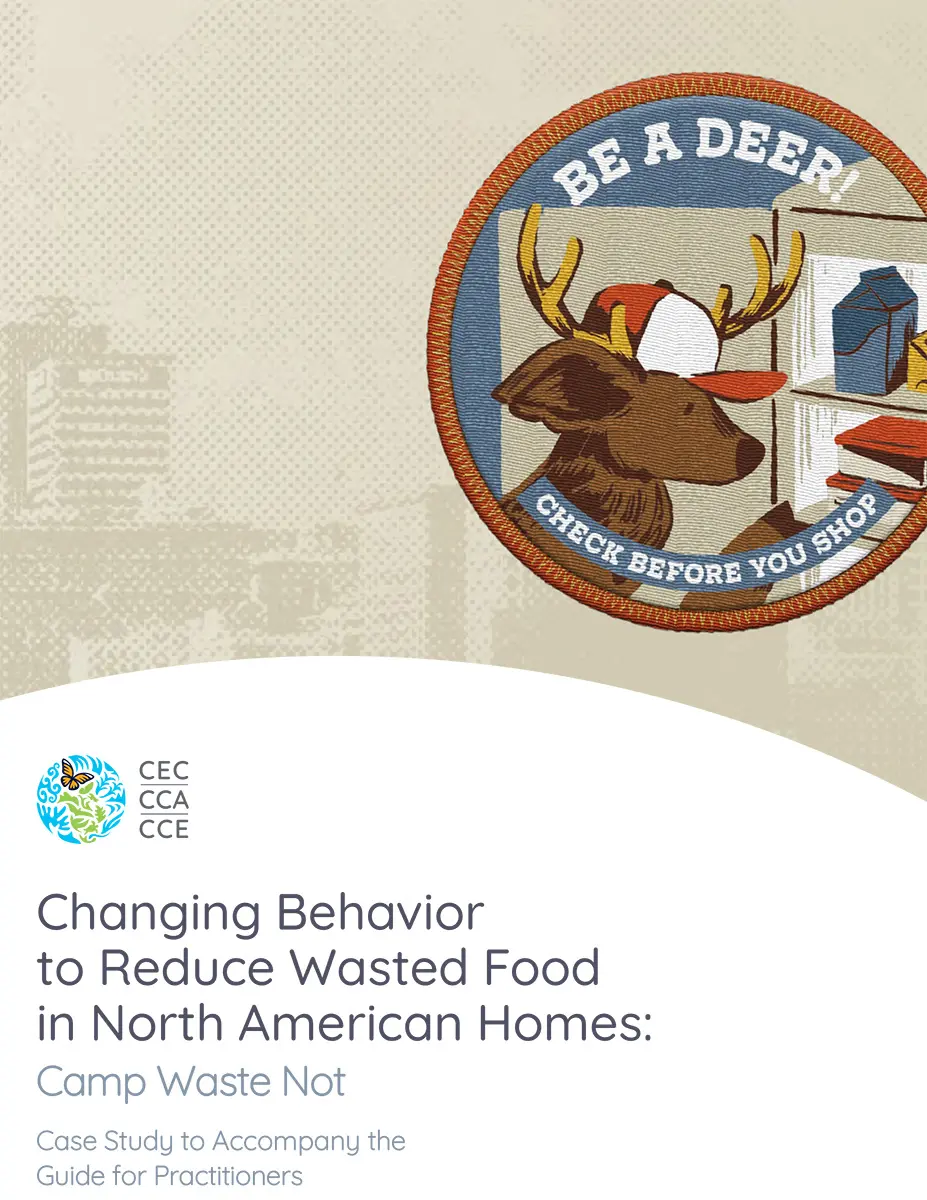
Camp Waste Not
Camp Waste Not helps Denver households assess food’s edibility by clarifying date labels, encouraging appropriate sensory checks and dispelling misconceptions about edible food. The program builds confidence in deciding what to eat and helps prevent premature disposal.
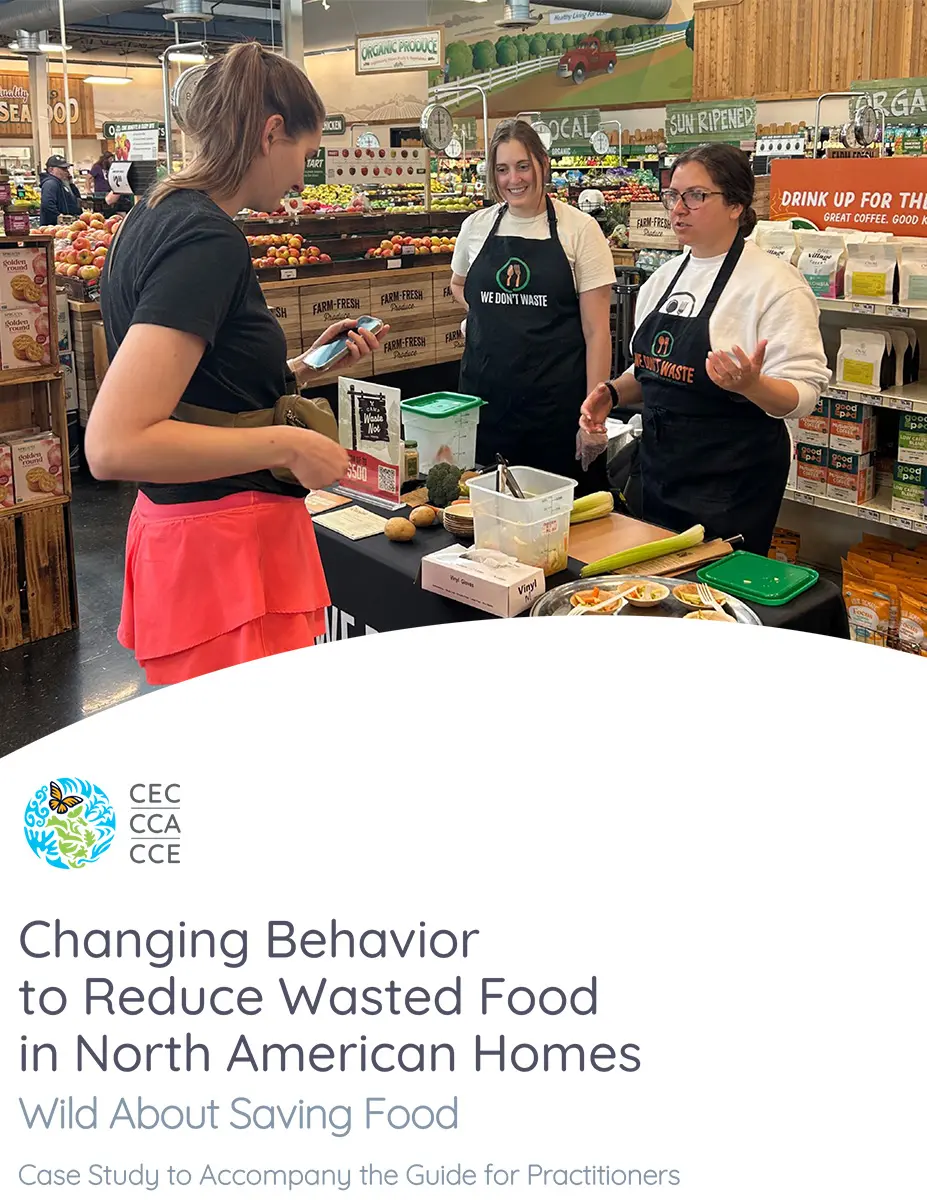
Wild About Saving Food
Wild About Saving Food helps Hamilton County households eat what they have and store produce properly. Refrigerator whiteboards track food, “Use It Up” tape highlights what to eat first, and point-of-sale stickers provide storage guidance.

Preventing wasted food in the home involves a chain of decisions and constraints throughout the food journey, from buying and storing food to preparing, cooking and eating it. Human behavior is influenced by subtle cues, social expectations, habits and emotions. By understanding how people think and act, practitioners can design more-effective interventions and make it easier for households to reduce the food they waste. Together, the resources presented in this portal provide practical tools to support effective and lasting action to reduce household wasted food, improving outcomes for people and the environment in a cost-effective and measurable way.
Looking for more resources on preventing food loss and waste?
Explore the CEC’s broader work on food loss and waste, including additional tools, guidance, educational materials and resources developed for a variety of audiences across North America.
Contact
For more information about this project or to partner with us, contact:
Antonia Andúgar Miñarro
Project Lead, Sustainable Living and Economies
(514) 350-4327