CEC Publishes Factual Record on the Effective Enforcement of Environmental Law Regarding the North Atlantic Right Whale Submission
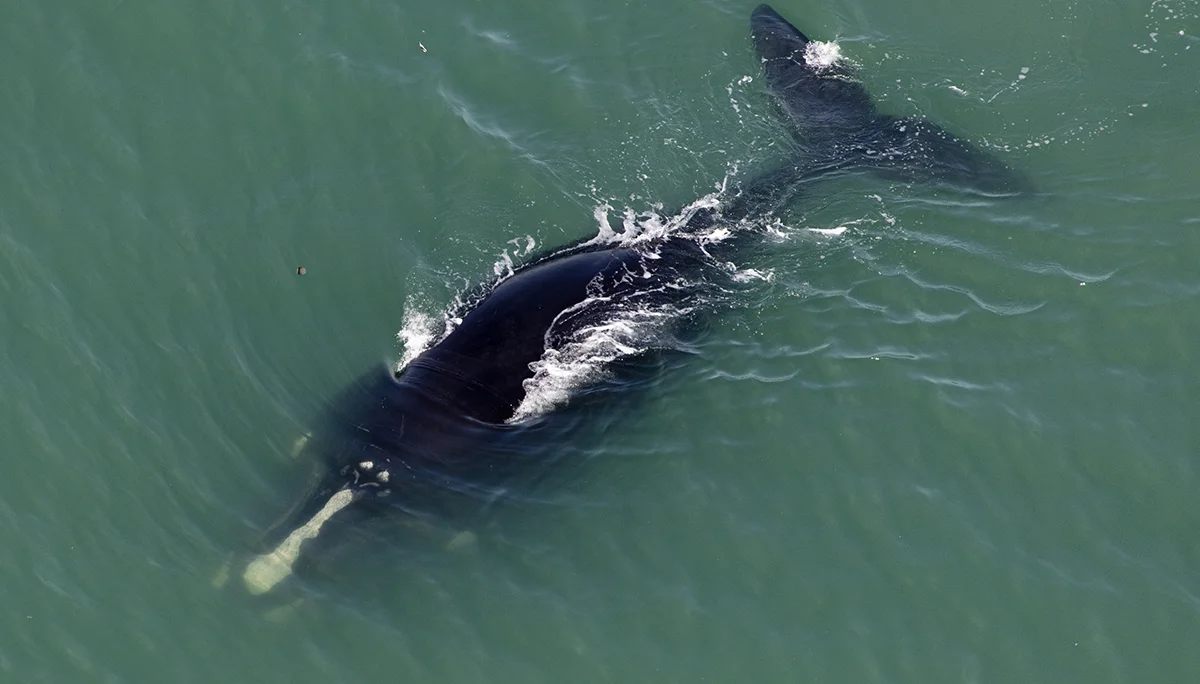
Tiohtià:ke (Montreal), 6 January 2026—On 19 December 2025, the Secretariat of the Commission for Environmental Cooperation (CEC) published the factual record regarding submission SEM-21-003 (North Atlantic right whale) filed by Oceana (“Submitter”), who asserted that the United States is failing to effectively enforce its environmental laws to protect the North Atlantic right whale (Eubalaena glacialis) from collisions with ships, known as “vessel strikes,” and from entanglement in commercial fishing gear.
On 17 January 2025, CEC Council members instructed the Secretariat to prepare this factual record, covering the effective enforcement of United States laws as it pertains to: (1) the Vessel Speed Rule (VSR), regarding the manner in which the United States enforces the VSR and the number of actions taken and sanctions sought, among other factors; (2) the requirements of the National Environmental Policy Act (NEPA) relating to the consideration of reasonable alternatives and analysis of cumulative effects when producing the Environmental Impact Statement (EIS) for the Risk Reduction Rule; (3) The Marine Mammal Protection Act (MMPA) and Endangered Species Act (ESA), with respect to reducing incidental mortality and serious injury of North Atlantic right whales from commercial fishing.
The factual record provides information about the North Atlantic right whale, which is considered one of the world’s most endangered whale species. The species has been listed as endangered in the United States since 1970 under earlier conservation laws and then under the ESA since the law was adopted in 1973, and is also protected under the MMPA. The primary human causes of serious injury and mortality facing North Atlantic right whales are vessel strikes and entanglement in fishing gear. The North Atlantic right whale’s customary feeding and birthing range includes Atlantic waters off the coast of Florida, along North America’s eastern continental shelf up into Canada.
In 2017, an unusual mortality event was declared for the species due to a rapid decline in the population. From 2017 to the date of preparation of the factual record, 41 North Atlantic right whales were killed and 39 were seriously injured, the vast majority as a result of entanglements and vessel strikes. As of the end of 2024, the population was estimated at 372 individual animals, approximately 70 of which were reproductively active females.
The United States has implemented various measures pursuant to the MMPA and ESA to mitigate the threats of vessel strikes and fishing gear entanglement to the species, including the VSR and regulations to implement the Atlantic Large Whale Take Reduction Plan (ALWTRP). As of 2008, the VSR mandates speed restrictions for certain vessels within specific Seasonal Management Areas in U.S. waters to reduce collisions with North Atlantic right whales. Voluntary programs requesting vessels to slow down have also been implemented. The ALWTRP, most recently updated in 2021, aims to reduce the serious injury and mortality of right whales from interactions with commercial fishing gear in U.S. waters. The ALWTRP regulations establish measures to reduce the amount of persistent buoy lines in the water, requiring utilization of weak links in lines to reduce entanglement severity, and closing certain areas seasonally to trap/pot fishing with persistent buoy lines.
The National Oceanic and Atmospheric Administration’s National Marine Fisheries Service (NOAA Fisheries), the U.S. Coast Guard, and state authorities (acting under Joint Enforcement Agreements with the U.S. federal government) enforce the MMPA and ESA. Enforcement tools include education, outreach, compliance assistance and issuance of violations and penalties.
NOAA Fisheries has also issued compliance assistance letters to potential violators of the VSR. For example, approximately 400 such letters were sent out during 2022. The number of violations issued for the VSR fluctuates from year to year, with some years as low as zero violations (2016) and one year where 36 violations were issued (2023). Between 2011 and 2024, NOAA issued a total of 176 notices of violation for the VSR (73 in the Northeast and 103 in the Southeast). These violations resulted in a total of just over USD 4 million in penalties assessed between 2011 and 2024. According to NOAA, VSR compliance rates are currently around 80 percent along the U.S. East Coast, in general. But looking at the data on a more granular level reveals that compliance rates can vary significantly by year, vessel type and seasonal management area.
The ALWTRP regulations have mostly been enforced through at-sea patrols, compliance assistance and summary settlements. Since 2019, NOAA has issued 23 summary settlements, which allow NOAA to quickly assess monetary penalties, for cases involving ALWTRP violations. There were no notices of violation for ALWTRP gear violations between 2014 to 2021, and eight notices of violation since 2022. The factual record also covers aspects of the Environmental Impact Statement prepared for the latest update to the ALWTRP in 2021, focusing on how NOAA Fisheries considered certain alternatives and analyzed cumulative effects, as required by the law and regulations in effect at the time.
Federal and state partners and stakeholders declare working closely to further efforts to conserve and rebuild the North Atlantic right whale population, including by using existing management measures, technological innovations and partnerships to help reduce the risk of vessel strikes. NOAA Fisheries plans for and addresses the species’ recovery and monitoring though a variety of tools.
USMCA/CUSMA Article 24.28(7) directs the Environment Committee to consider the final factual record in light of the objectives of Chapter 24 and states that the Committee may provide recommendations to the CEC Council on whether the matter raised in the factual record could benefit from cooperative activities.
The full text of the factual record, including background information on the submission, is available on the Public Registry of Submissions page for SEM-21-003 (North Atlantic right whale) on the CEC website. The United States may provide updates on the final factual record in accordance with USMCA/CUSMA Article 24.28(8).
The CEC SEM Process
The CEC Submissions on Enforcement Matters (SEM) process supports public participation in effective enforcement of environmental law in North America. If you have reason to believe that an environmental law is not being effectively enforced by Canada, Mexico or the United States, the SEM process may help address your concerns.
As of 1 July 2020, the CEC’s SEM process is governed by Articles 24.27 and 24.28 of the Environment Chapter of the free trade agreement between Canada, Mexico and the United States.
Want to learn more about the SEM process? Watch this two-minute short video about how to file a submission.
Be sure to sign up for CEC media releases and newsletters for the latest developments on Submissions on Enforcement Matters.