International Monarch Monitoring Blitz
Every Observation Matters!
Celebrating 10 Years of North American Community Science!
The International Monarch Monitoring Blitz is back for its 10th anniversary! From 31 July to 9 August 2026, join the celebration and help search for monarch butterflies and milkweed plants in your area.
The Monarch Blitz is a community science initiative open to anyone in North America. Last year, over 9,000 volunteers contributed thousands of observations. For our 10th anniversary, help us reach our goal of 10 Years: 10,000 More Participants!

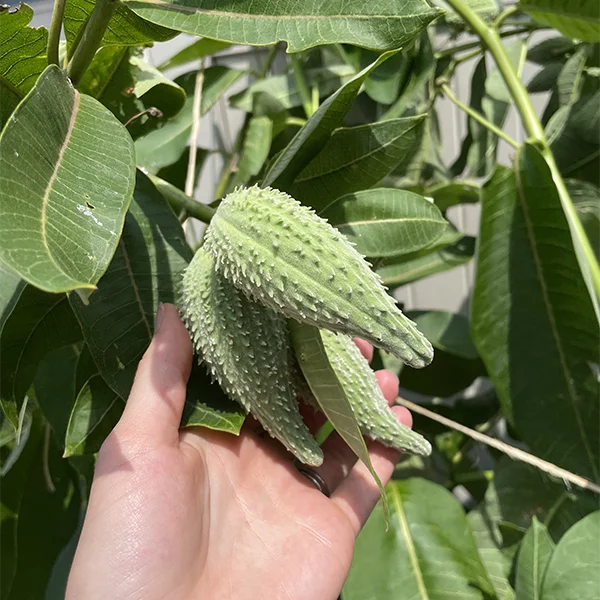
Milkweed
Milkweed is a flowering plant essential to the life cycle of the monarch, as it is the sole source of food for the larvae. The survival of the butterfly depends on the accessibility of this host plant.
The extensive loss of these plants, due to changes in agricultural practices, urban and suburban development, land management activities and severe weather events, has negatively affected monarch butterfly populations.
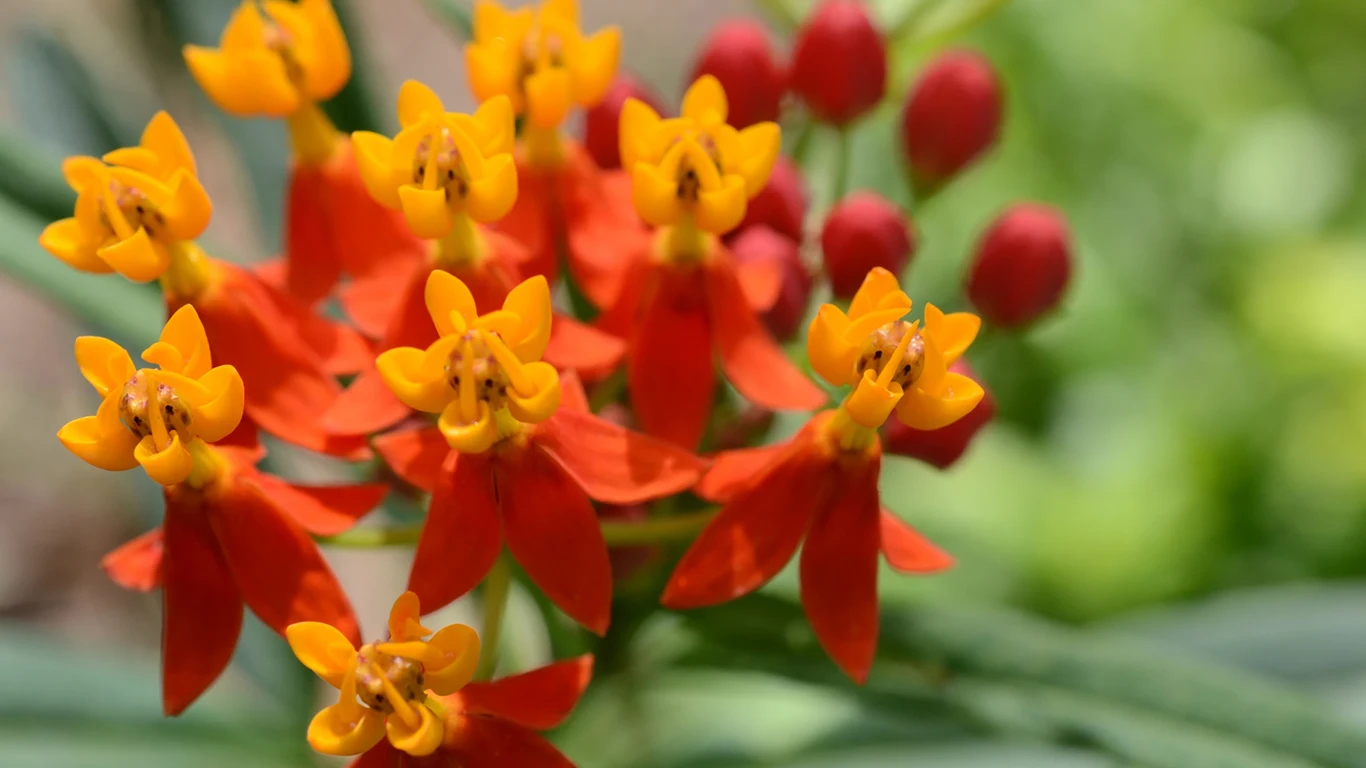
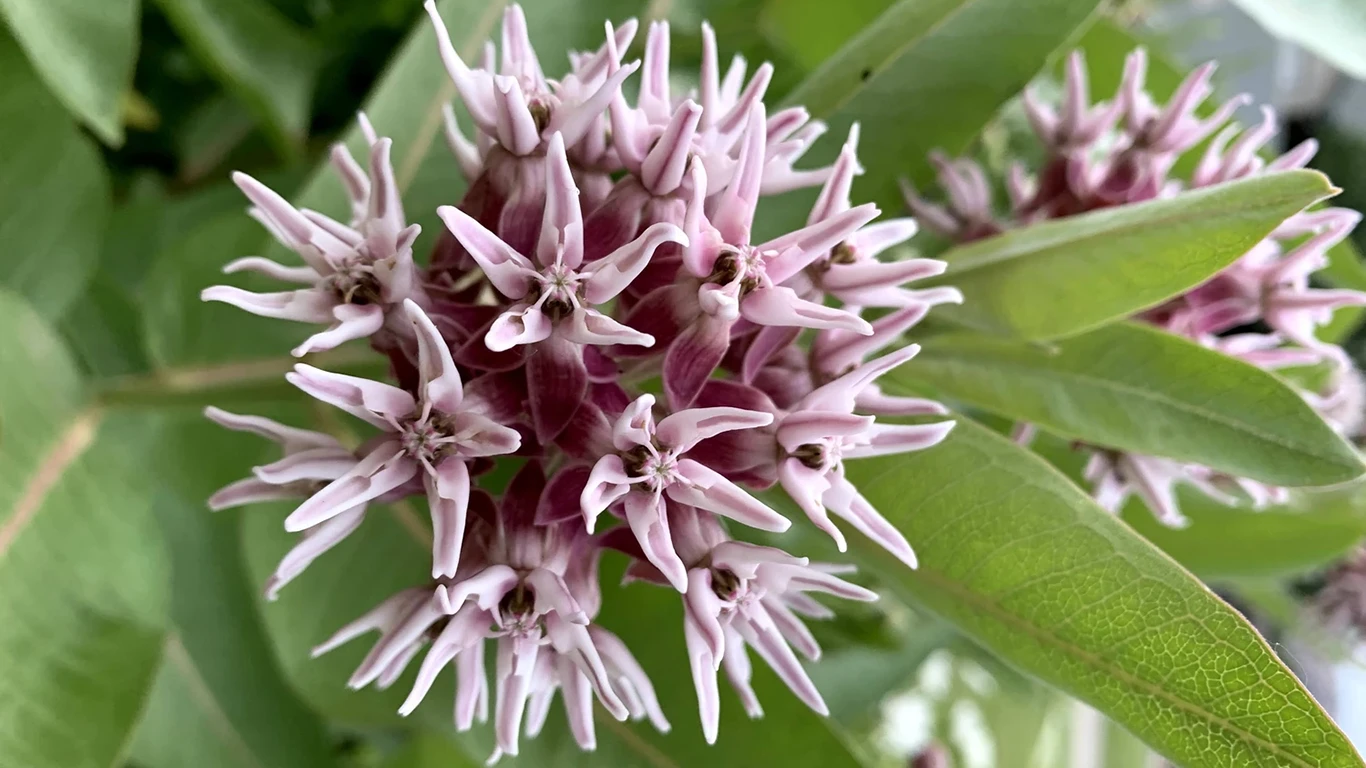
There are more than 100 species of milkweed in North America and monarchs are reported to use more than 30 of these in the wild (Oberhauser et al., 2015).
Milkweed species in the United States


Egg
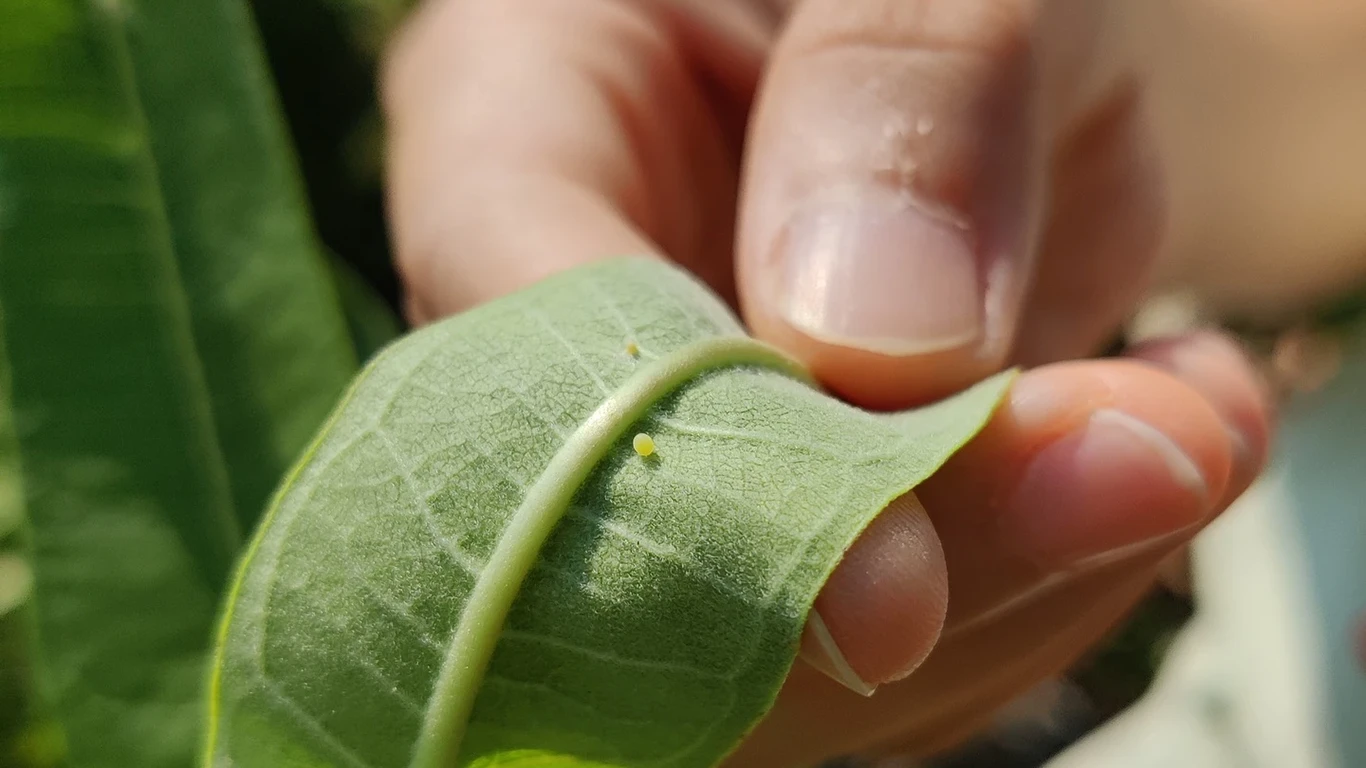
The egg is the first stage in a monarch’s life. In the wild, a female monarch can lay 300 to 400 eggs in the space of a few weeks. Females usually lay one egg per milkweed plant, gluing it to the underside of a leaf to protect it from nasty weather.
Monarch eggs are 0.9 to 1.2 mm long. They are creamy yellow and covered in narrow longitudinal ridges. They hatch 3 to 8 days after being laid. Eggs hatch into larvae.


Larva
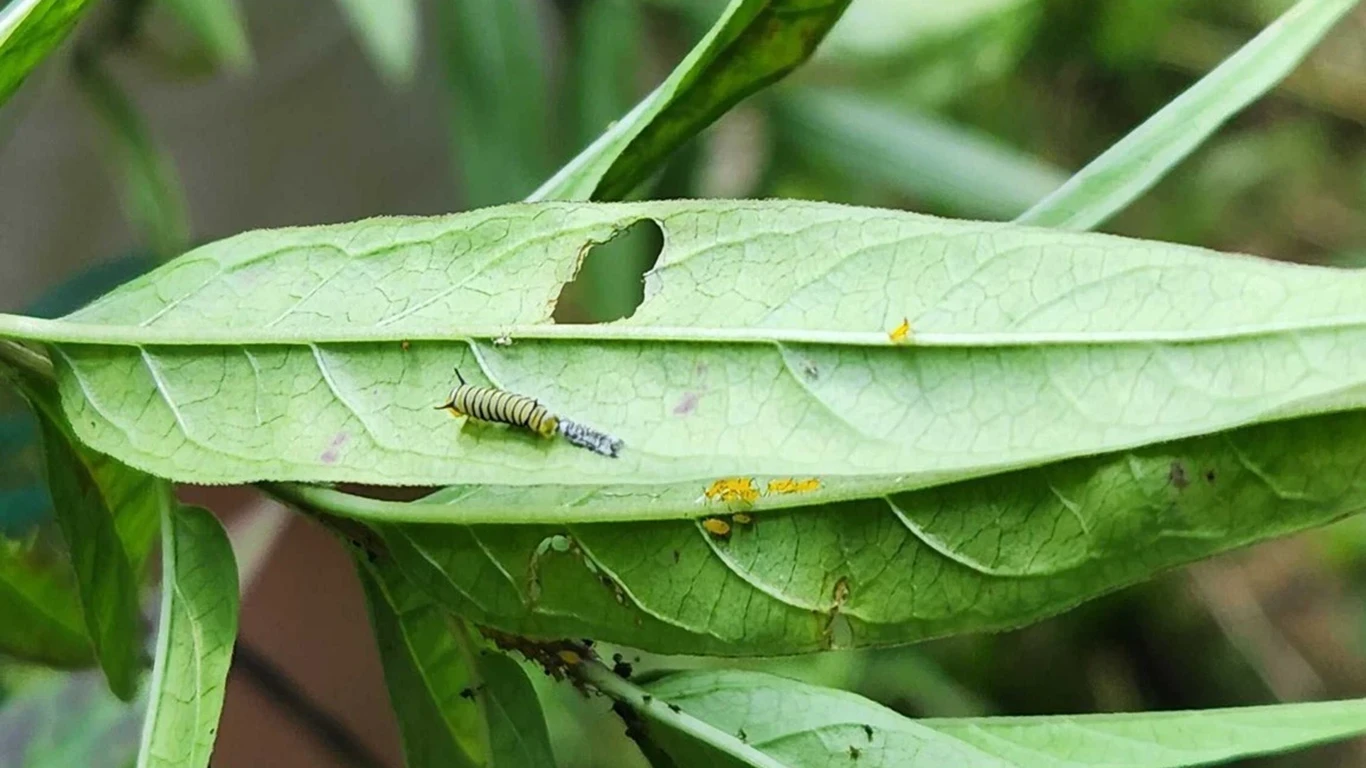
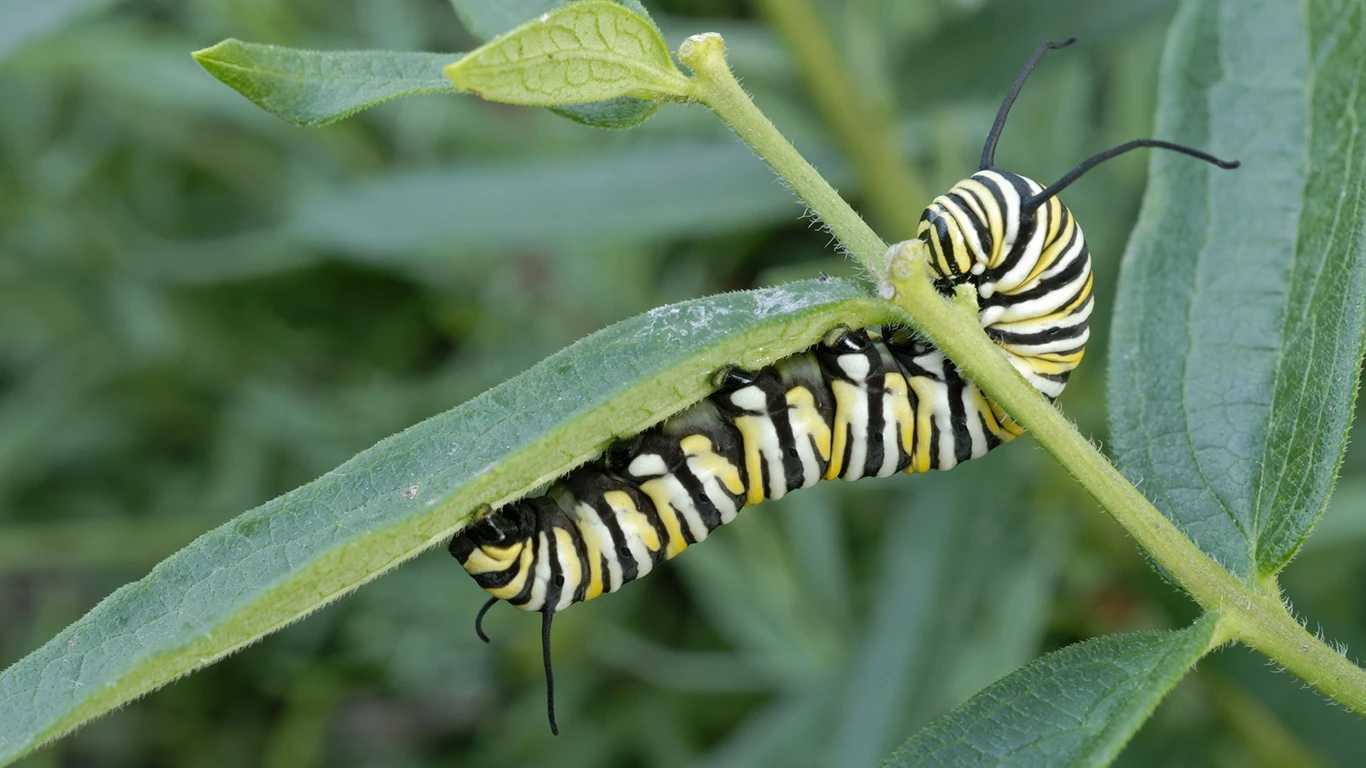
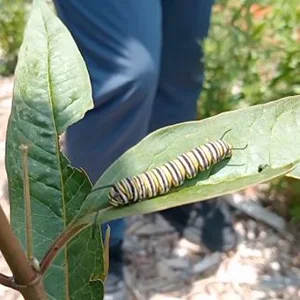
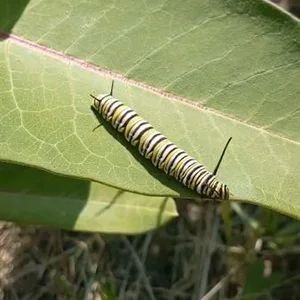
A larva spends most of its time eating. Its first meal, immediately after it hatches, is its egg case, which provides it with vital nutrients. Then it starts on milkweed. Monarch larvae feed exclusively on milkweed. They are one of the few species able to tolerate milkweed’s poisonous sap and accumulate the cardenolides that make them poisonous in turn. The more they eat, the more they accumulate, and the more toxic they are to predators.
With all this eating, the larva grows quickly. In 7 to 17 days, its weight increases by up to 2,700 times! To keep up with the growth, its body has to adapt. That means a larva undergoes five successive moults, or instars (also called larval stages).
Chrysalis
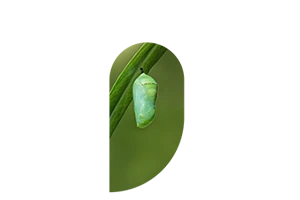
A larva usually leaves the milkweed plant during the fifth instar to go in search of a well-camouflaged spot high off the ground, where it can pupate. Once there, it weaves a tiny silk pad as an anchor. It then inserts the hooks at the tip of its abdomen into the anchor and assumes a J shape. It stays in this position for 12 to 48 hours before extracting itself from its larva skeleton – it is now a pupa.
Its turquoise-green coloring, gold spots that reflect light and small size (3 cm) make a pupa very difficult to spot in the wild. It gradually changes from jade green to bluish, until the adult colors show through the transparent case. After 8 to 15 days, the adult butterfly finally emerges from the pupa case.



Butterfly
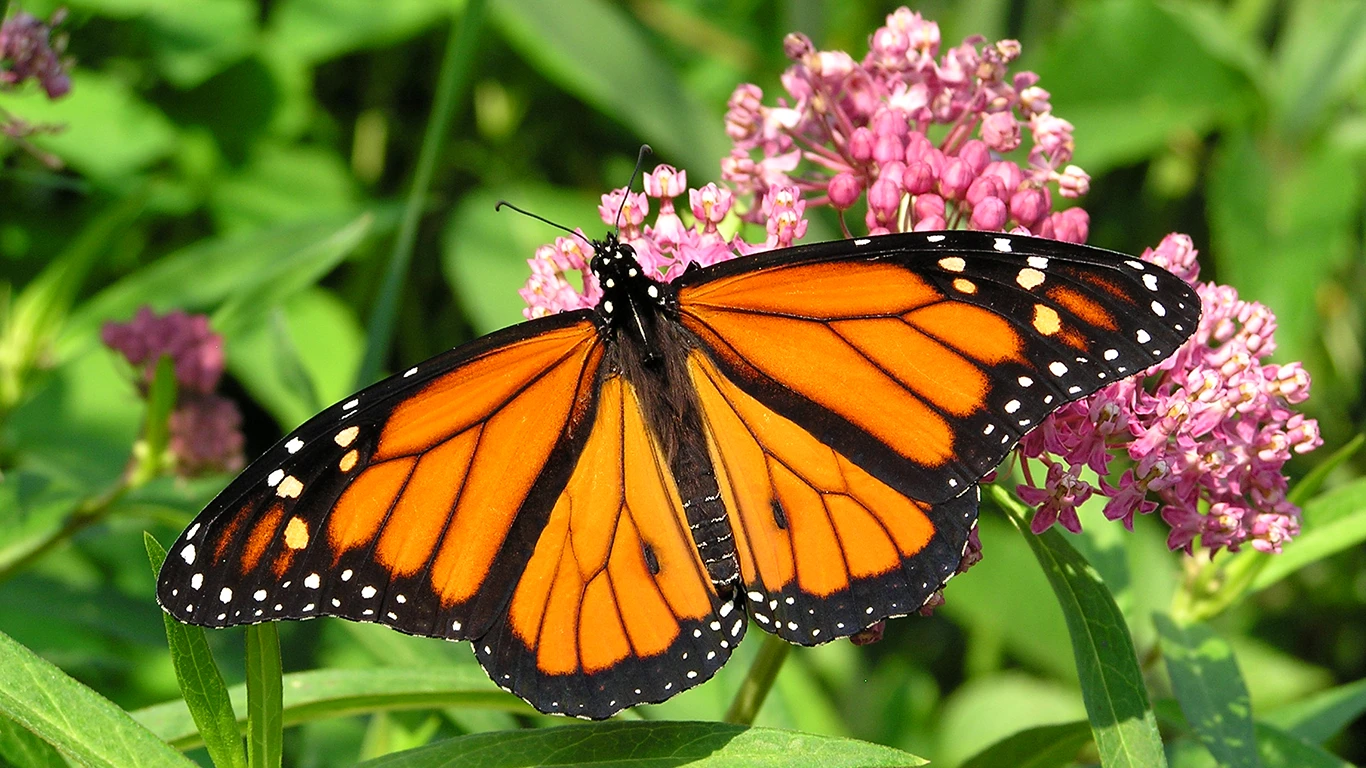
It is called emergence when the adult butterfly comes out of its pupa case. Within about 4 or 5 hours, the wings will have unfolded and stiffened and the butterfly can take flight.
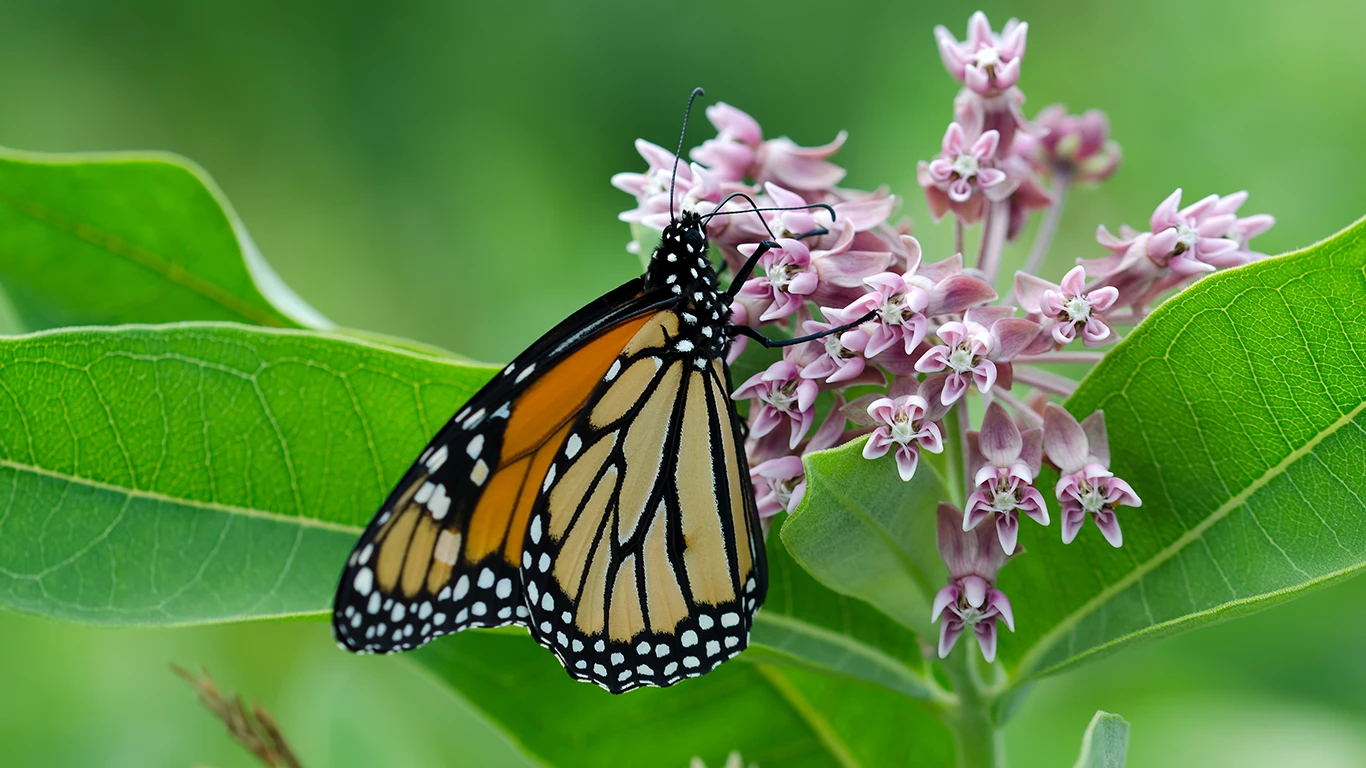
The monarch butterfly’s wingspan ranges from 8.9 to 10.2 centimeters (3.5–4.0 in). The upper sides of the wings are tawny-orange, with black veins and margins. Along the margins are two rows of white spots. Monarch forewings also have a few orange spots near their tips.

How to Participate
Participation in the Monarch Blitz is easy, and anyone can take part, whether in an urban or rural setting!
1
Choose the Community Science Program that’s right for you, based on where you live
2
Familiarize yourself with the program’s data platform (some require an account, but they are easy to use and take just a few clicks to get started)
3
During the Monarch Blitz, go outside and look for milkweed, the monarch’s preferred host plant
4
Inspect the plants for monarch eggs, caterpillars and chrysalises and look out for monarch butterflies
5
Report your observations and the number of milkweed plants you saw
Whether you participate once or throughout the 10 days, every observation matters and helps scientists better understand how to conserve this iconic species!
Choose a Community Science Program

Canada
iNaturalist Canada
Canadian Wildlife Federation
Part of the global iNaturalist network, iNaturalist Canada combines one of the world’s most popular nature apps with a bilingual interface, helping you instantly identify plants and animals anywhere you go; from backyards and neighborhoods to remote forests and countrysides.
Get connected with a community of over a million scientists and naturalists who can help you learn more about nature! By recording and sharing your observations, you’ll contribute research quality data for scientists working to better understand and protect nature. It’s community science that is fun, educational and impactful.
The Canadian Wildlife Federation is a national, not-for-profit charitable organization dedicated to conserving Canada’s wildlife and habitats for the use and enjoyment of all. By spreading knowledge of human impacts on wildlife and the environment, carrying out actions to conserve and restore species and habitats, developing and delivering conservation education programs, recommending changes to policy and programs and co-operating with like-minded partners, CWF encourages a future in which Canadians can live in harmony with nature. For more information, visit CanadianWildlifeFederation.ca.
Use this platform About this program (PDF)
Canada
Mission Monarch
Insectarium de Montréal | Espace pour la vie
Mission Monarch is a community science program that gathers data on monarch and milkweed distribution and abundance. The data collected helps researchers identify monarch butterflies breeding hotspots and implement efficient conservation actions. Participants find milkweed, look for monarch caterpillars and share their observations of milkweed, monarchs, eggs, caterpillars and chrysalis with scientists on the Mission Monarch website.
The program is a joint initiative of the Insectarium de Montréal | Espace pour la vie and the Institut de recherche en biologie végétale. It is part of an international research and education effort aimed at saving the migratory populations of this endangered species.
Use this platform About this program (PDF)
Mexico
Correo Real
Profauna, A.C.
Correo Real is a program of Profauna, the Mexican Wildlife Protection Society, which helps protect and preserve monarch butterfly migration in Mexico through education and community science activities, conservation actions and partnerships with the local communities, civil society organizations, the public sector and private enterprise.
Correo Real’s story began in 1992 with an initiative to form a network of concerned volunteers dedicated to studying and safeguarding this incredible natural phenomenon, as well as recording and sharing information on the monarch’s migratory routes in Mexico. This innovative approach has since inspired other environmental education and community science programs.
Use this platform About this program (PDF)
Mexico
iNaturalistMX
iNaturalistMX is a social network for community scientists where you can learn about Mexico’s plants, mushrooms and animals and help advance scientific knowledge about nature. iNaturalistMX is an encyclopedia, photographic catalog, map library, field guide and especially an educational hobby. You can use its app to record your nature observations in image or audio form and share them with the iNaturalistMX community, which will help you identify the species. The app activates your GPS to automatically record the date and location of your photos and allows you to navigate a map of observations recorded both near you and in other locations.
In addition, within the iNaturalistMX community, specific projects are developed to integrate information on species or ecosystems. In Mexico, the Monarch butterfly in Mexico project integrates all information on monarch monitoring. This project enhances knowledge about monarchs in Mexico and strengthens decision-making in the country’s Protected Natural Areas and elsewhere by identifying the principal sites in terms of conserving and protecting monarch migration in Mexico.
Use this platform
United States
iNaturalist
Western Monarch Milkweed Mapper | Xerces Society for Invertebrate Conservation
The Western Monarch Milkweed Mapper is a community science effort to map monarch butterflies and milkweed across the Western United States. To preserve and protect populations in western states, we need to better understand where and when monarchs and their milkweed host plants can be found. Data compiled through this project will improve our understanding of the distribution and phenology of monarchs and milkweeds, identify important breeding areas, and help inform monarch conservation needs.
Your help is critical to the success of this project! You can participate in this effort by uploading your photos of monarch butterflies (all life stages) and milkweed to the iNaturalist Project. Have fun while learning more about monarchs and the special habitats they depend on in your area!
The Western Monarch Milkweed Mapper is a collaborative partnership between The Xerces Society, Idaho Department of Fish and Game, Washington Department of Fish and Wildlife, National Fish and Wildlife Foundation and the U.S. Fish and Wildlife Service.
Use this platform About this program (PDF)
United States
Journey North
Monarch Joint Venture
Join the Journey North Monarch & Milkweed Project to track key phenological events in the life cycle of monarch butterflies and milkweed. An easy-to-use data entry portal allows you to quickly submit your observations.
In the spring, track first arrivals of migratory monarchs and first emergence of milkweed. During summer, document monarch breeding and feeding activity and the presence of milkweed. And in the fall, report monarch roost sites and peak migration events as monarch butterflies travel to overwintering sites.
Watch the migration unfold through real-time maps and subscribe to receive weekly news updates. Beyond monarchs and milkweed, you can help Journey North track the migration of hummingbirds, orioles, loons, swallows and many more species.
Use this platform About this program (PDF)Help Us Fill the Gaps
The interactive map below was created using observations reported by volunteers in recent Monarch Blitz editions. It highlights areas of high and low concentrations of observations of monarch butterflies (in all their stages) and milkweed sightings across North America. The map identifies three types of locations:
Hot spots
Areas where recent observations of monarchs and milkweed have been abundant
Cold spots
Areas where milkweed has recently been observed but monarchs have not (or in very low numbers)
Mixed spots
Areas where milkweed coverage is lower and monarch observations vary from high to low
- Cold spots are the priority! Zoom in on your area and locate a yellow hexagon near you. Milkweed is essential to the monarch life cycle, so where it thrives, monarchs may not be far behind. By exploring a cold spot, confirming the presence of milkweed and reporting what you see, you can help fill critical data gaps.
- No cold spot near you? No problem! Choose a place you’d like to explore or simply head outside, document your observations and contribute valuable data on monarch and milkweed sightings in your area. Every observation helps build a clearer picture of monarch distribution across North America.
Why Participating in the Monarch Blitz Matters
The International Monarch Monitoring Blitz is a call to action for individuals, organizations and community scientists across North America to join efforts to conserve monarch butterflies and the habitat they depend upon. For ten days each summer, everyone is encouraged to step outside, search for monarchs (eggs, caterpillars, chrysalises or butterflies) and milkweed plants, and share their observations on one of several data platforms. Scientists use these observations to better understand how to conserve monarch butterfly populations.
The Monarch Blitz is a unique cross-border effort to conserve one of North America’s most iconic migratory species: the monarch butterfly. Because monarchs migrate across the continent, cross boundary collaboration is essential to better understand the species, its movement patterns and the habitats it depends on. Understanding and conserving them requires collaboration that goes beyond borders.

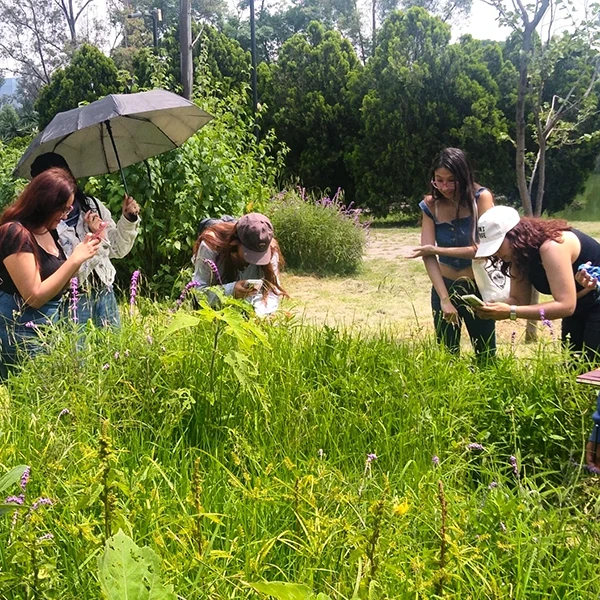
Monarch butterfly populations have experienced a significant decline over the last few decades. While the 2024-2025 wintering season saw an increase from the previous year, this remains one of the lowest recorded population sizes and highlights the ongoing challenges for monarch conservation, as well as the urgent need for coordinated, evidence-based conservation efforts.
The monarch butterfly is a keystone species, not only in the habitats where it breeds but also in those through which it migrates. By maintaining healthy monarch populations and conserving their habitats, particularly milkweed and nectar-rich areas, we are simultaneously protecting the broader environment that sustains many other species as well. Monarch butterfly conservation efforts, therefore, play a vital role in safeguarding biodiversity across North America, offering a powerful opportunity to support entire ecosystems through the protection of a single, iconic, North American species.

Learn more about monarchs, their life cycle, and why they need our help.
- Monarch butterflies weigh less than a gram.
- The monarch’s wingspan ranges from 8.9 to 10.2 centimeters (3.5–4.0 in).
- There are two recognized migratory routes in North America: Eastern and Western.
- Migration covers 3,000-5,000 km (2,000 to 3,000 miles) and spans three countries.
- The Eastern migratory population has declined by more than 80% in 20 years.
- Everyone can help the monarch butterfly by participating in community science, creating monarch-friendly habitats and spreading the word about the monarchs’ status and importance as a pollinator.
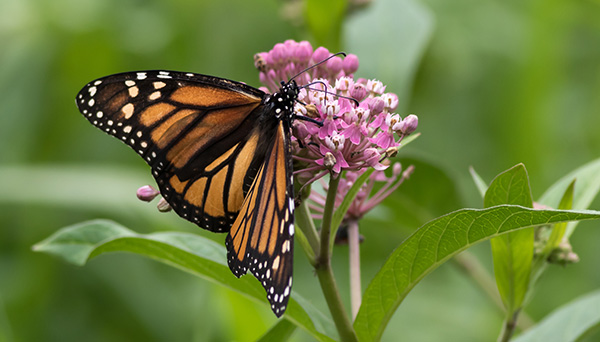
The Monarch Blitz database is made up almost entirely of observations shared by volunteers. Since monarch butterflies and milkweed populations cover such an extensive portion of North America, the participation of volunteer community scientists is key for furthering our understanding of these species. In the context of climate change, the range of monarchs and milkweed is likely to be impacted, highlighting the need for gathering and analyzing robust, long-term data in order to better understand population and habitat trends.
The information collected by the yearly growing number of participants across North American helps researchers identify priority areas for monarch conservation actions. Thanks to everyone sharing their observations during the Monarch Blitz, researchers can study the observation data and analyze trends in summer breeding populations.
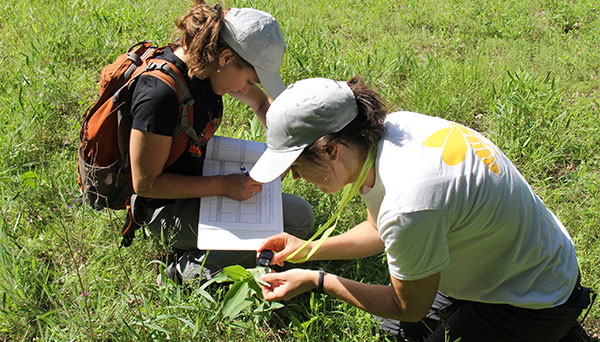
The Monarch Blitz data help provide an estimate of the size of the summer breeding population. Furthermore, researchers are interested in assessing population trends. Reporting the number of caterpillars and the number of milkweed stems can allow the calculation of a caterpillar-to-milkweed ratio. Researchers can then use this ratio to estimate the size of the population of monarchs that will be traveling to the overwintering grounds in Mexico.
All partner organizations have agreed to share volunteer-collected data to a central data repository. In this way, anyone can consult and download Monarch Blitz data by visiting the Trinational Monarch Knowledge Network.
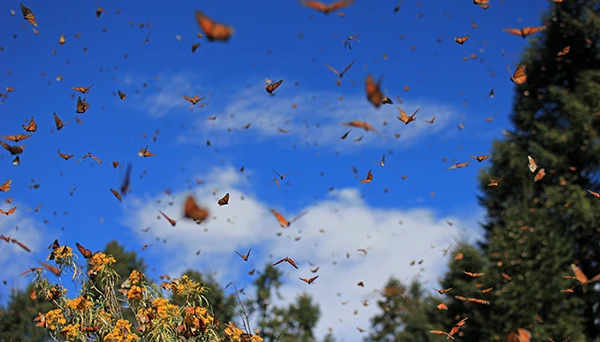
Celebrating 10 Years of Monarch Blitz
We are celebrating a decade of community science! Since the first Monarch Blitz, tens of thousands of volunteers across North America have contributed observations that help scientists learn more about monarch butterflies’ summer breeding habitat, identify priority areas for conservation, track population trends and guide on-the-ground habitat restoration.
Explore highlights from past Monarch Blitz editions:
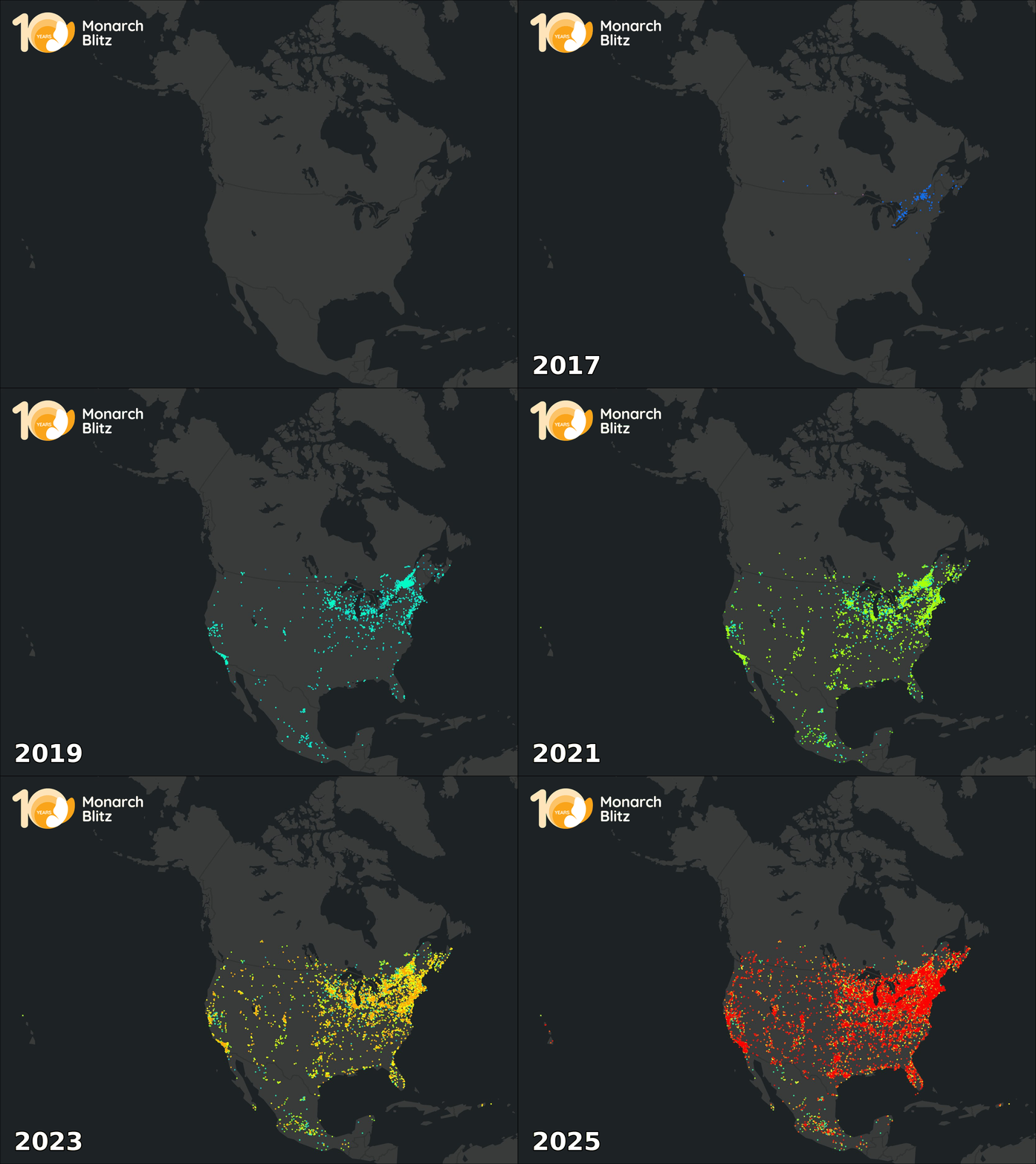
Together, these contributions include:
24,531
Participants across North America
51,557
Observations
461,916
Milkweed plants monitored
162,870
Butterflies observed
56,558
Eggs
50,199
Larvae
2,868
Chrysalises
Thank you to the incredible community of Monarch Blitz observers, without whom none of this would be possible!
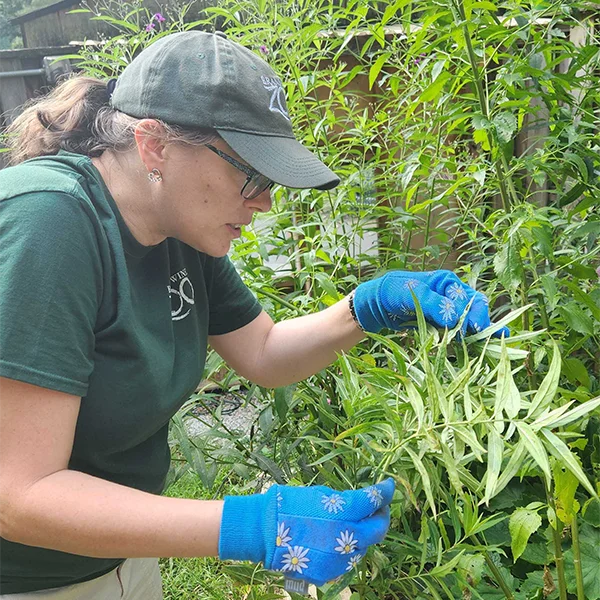


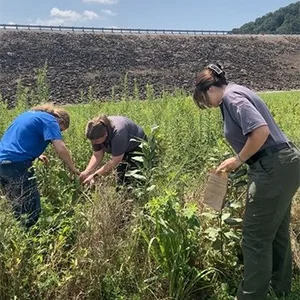
We were surveying for butterflies at Panola Mountain State Park.

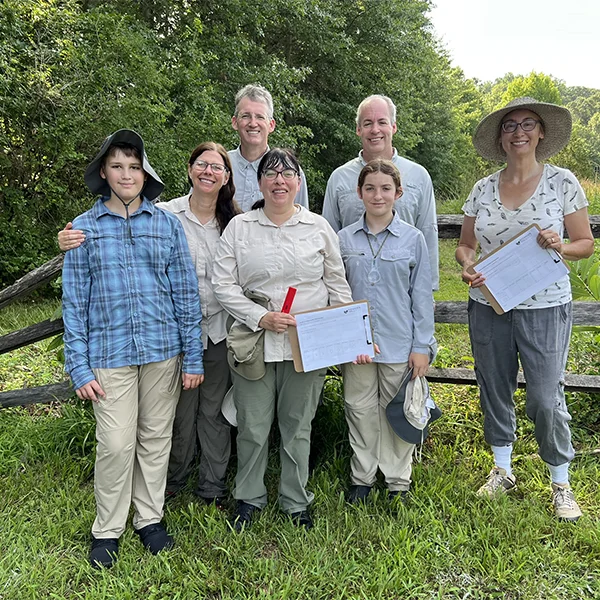

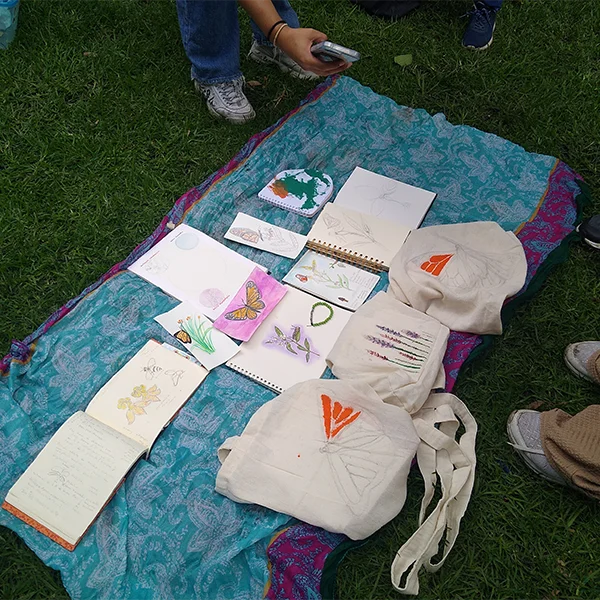
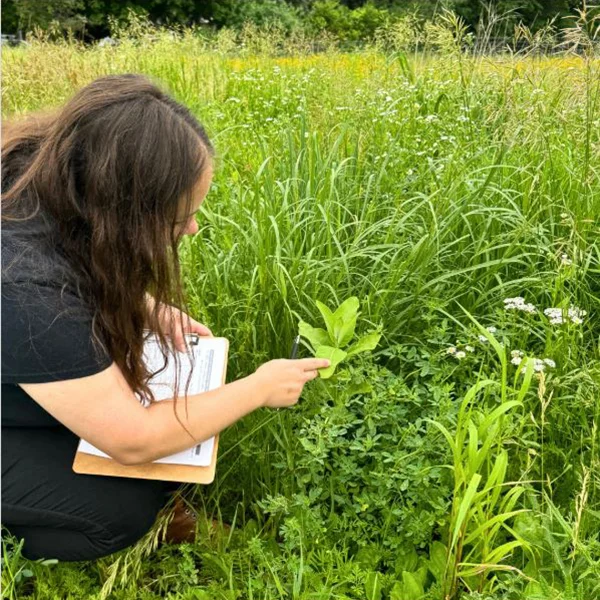
We monitored milkweed at 5 properties that are managed by Wissahickon Trails






Partners
The Monarch Blitz is organized by a collaboration of organizations across North America, including: the Commission for Environmental Cooperation (CEC), the Insectarium de Montréal | Espace pour la vie, Environment and Climate Change Canada (ECCC), the Canadian Wildlife Federation (CWF), the Monarch Joint Venture, Journey North, the U.S. Fish and Wildlife Service (USFWS), the Xerces Society for Invertebrate Conservation, Profauna, A.C. and Mexico’s National Commission of Protected Natural Areas (CONANP).
Contact
Georgina O’Farrill
Head, Communications, Outreach and Engagement
(514) 350-4336