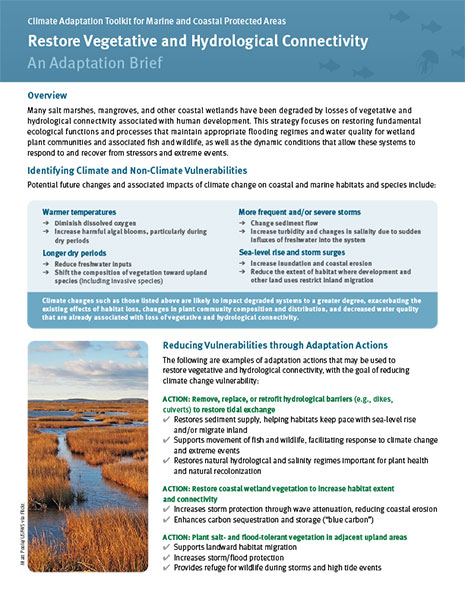
Restore Vegetative and Hydrological Connectivity
March 24, 2022
Status: Completed
Operational Plan: 2021
Project Duration: 47 months
Start date: December 2021
The marine environment is inherently connected and transboundary in nature, causing threats to biodiversity to have impacts at local, regional, and global scales. Climate change has increased the need for collaboration across seascapes, as climate change impacts can affect the distribution and movement of species and cause habitat shifts. Marine Protected Areas (MPAs) are key to conserving and restoring coastal and marine ecosystems, delivering many natural and socio-economic co-benefits. Strengthening collaboration and capacity across MPAs in North America has been an ongoing priority for the CEC. Previous work has included the development of tools to identify vulnerabilities in coastal and marine ecosystems and develop targeted adaptation strategies. Building on this past work, the current project aims to support the development of an ecologically and socially inclusive network of MPAs for the benefit of coastal and marine ecosystems, coastal communities, and a more resilient North America. Recognizing the leadership role of Indigenous and local communities in the management and conservation of coastal and marine areas, the project aims to increase Indigenous and local community engagement in North American MPA networks. The project will provide opportunities for knowledge sharing and capacity building to enhance the role of coastal and marine protected areas as nature-based solutions for climate adaptation and mitigation, while ensuring socio-economic co-benefits to fisheries, tourism, and other sectors.
To find out more about this project, here is the complete project description.
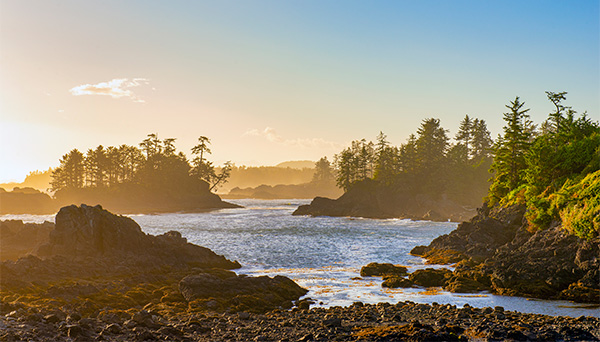
The project expanded collaboration in North America for greater connectivity and inclusiveness in coastal and marine conservation, to the benefit of coastal communities and ecosystems. Collaboration on Pacific whale migratory corridors was expanded, and new collaboration on migratory sharks was created. New data on the range of several Pacific shark species gathered through this project will provide evidence for decision-makers to support efficient conservation. Indigenous and local leaders in coastal conservation, from under-represented communities, reached broader audiences, and Indigenous communities shared their unique experiences with their peers across seascapes and Pacific ecoregions.
March 24, 2022
March 24, 2022
March 24, 2022
March 24, 2022



Lucie Robidoux
Head, Ecosystems